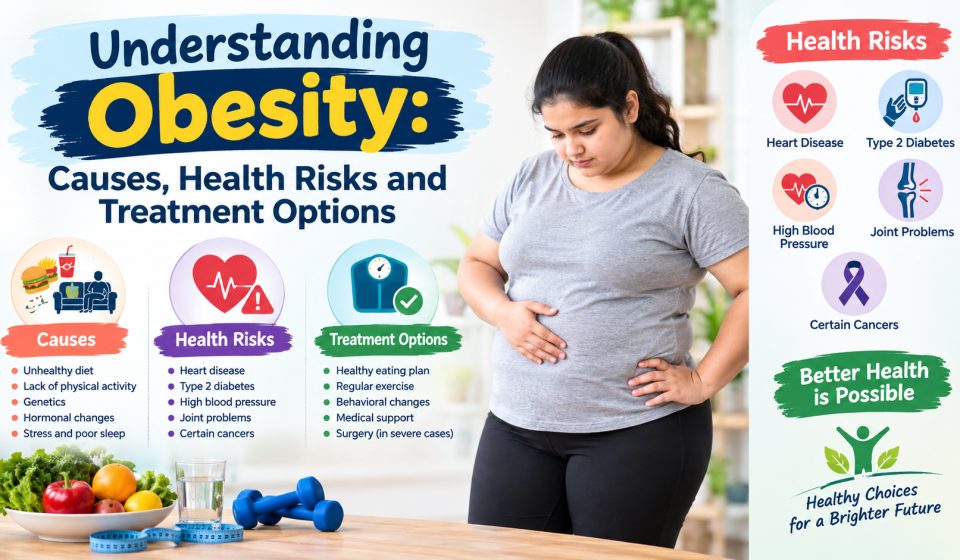

Understanding obesity, including its causes, health risks, prevention strategies and treatment options such as healthy eating, exercise, medications and surgery.
Obesity is more than simply having extra body weight. It is a complex, chronic health condition that can affect nearly every part of the body. Although eating habits and physical activity play an important role, obesity can also be influenced by genetics, hormones, sleep, stress, medications, medical conditions, environment, and socioeconomic factors.
According to the World Health Organization (WHO), obesity is generally identified in adults using body mass index (BMI), with a BMI of 30 or higher classified as obesity. However, BMI is only a screening measure and does not tell the complete story about an individual’s health or body composition.
Obesity can increase the risk of several serious health problems, including type 2 diabetes, high blood pressure, heart disease, stroke, sleep apnea, osteoarthritis, certain cancers, and other chronic conditions. The good news is that obesity can be managed. A combination of healthy eating, regular physical activity, behavioral changes, medical treatment, and, when appropriate, prescription medications or surgery can help people achieve and maintain healthier weight levels.
What Is Obesity?
Obesity occurs when excessive body fat accumulates to a level that may negatively affect health. It develops through a complex interaction between energy intake, energy expenditure, genetics, biological factors, behavior, and the surrounding environment.
For adults, BMI is commonly used as an initial screening tool:
- Underweight: BMI below 18.5
- Healthy weight: BMI 18.5–24.9
- Overweight: BMI 25.0–29.9
- Obesity: BMI 30.0 or higher
These categories are useful for population-level screening, but BMI does not directly measure body fat. Muscle mass, age, sex, body composition, and fat distribution can affect how BMI relates to individual health. A healthcare professional may therefore consider waist circumference, medical history, blood pressure, laboratory results, lifestyle, and other factors when assessing obesity.
Obesity should not be viewed simply as a lack of willpower. WHO describes it as a chronic, relapsing disease involving complex interactions between genetics, biology, eating behavior, environmental conditions, and other factors.
How Common Is Obesity?
Obesity has become a major global public health concern. WHO reports that in 2022, approximately 2.5 billion adults worldwide were overweight, including about 890 million adults living with obesity. Around 16% of adults globally were living with obesity in 2022.
The increase has occurred alongside changes in food systems, physical activity, transportation, work patterns, urbanization, and daily lifestyles. Easy access to highly processed, calorie-dense foods combined with increasingly sedentary lifestyles can make maintaining a healthy weight more difficult.
Obesity also affects children and adolescents. Excess weight during childhood can increase the likelihood of obesity and related health problems later in life. Therefore, prevention and healthy lifestyle habits are important at every stage of life.
What Causes Obesity?
There is rarely one single cause of obesity. Instead, multiple factors can contribute to gradual weight gain.
1. Unhealthy Eating Patterns
Regular consumption of foods and beverages that are high in calories, added sugars, unhealthy fats, and salt can contribute to excess calorie intake.
Examples may include:
- Sugar-sweetened beverages
- Fast food
- Highly processed snacks
- Sweets and desserts
- Fried foods
- Large portion sizes
- Frequent high-calorie meals
- Foods with low nutritional value
This does not mean that a person must completely avoid favorite foods. Instead, overall dietary patterns, portion sizes, food quality, and frequency matter.
2. Lack of Physical Activity
Modern lifestyles often involve long periods of sitting, computer use, driving, and screen time. When physical activity decreases while calorie intake remains high, maintaining a healthy weight can become more difficult.
Regular movement helps the body use energy, maintain muscle, support cardiovascular health, and improve overall fitness.
3. Genetics
Genes can influence appetite, metabolism, fat storage, and how the body responds to food and physical activity. Certain rare genetic conditions can directly contribute to obesity, but common obesity generally results from interactions between many genes and environmental factors.
4. Poor Sleep
Sleep is another important factor. Inadequate or poor-quality sleep can affect appetite-regulating hormones, food choices, energy levels, and daily activity.
People who consistently sleep poorly may find it harder to maintain a healthy eating and exercise routine.
5. Stress
Long-term stress can influence eating behavior and biological processes associated with appetite and metabolism. Some people respond to stress by eating more, particularly calorie-dense comfort foods.
Chronic stress may therefore contribute to weight gain when combined with other risk factors.
6. Medical Conditions
Certain medical conditions can contribute to weight gain or make weight management more difficult. Examples include hypothyroidism, Cushing syndrome, and polycystic ovary syndrome (PCOS).
However, not every person with these conditions will develop obesity, and medical evaluation is important before assuming that a particular condition is responsible for weight gain.
7. Medications
Some medications may contribute to weight gain. Depending on the individual, these can include certain psychiatric medicines, steroids, some anti-seizure medications, and certain medicines used for other chronic conditions.
People should not stop prescribed medication because of weight concerns without discussing alternatives with their healthcare professional.
8. Environment and Lifestyle
The environment in which people live can influence their food choices and physical activity. Availability and affordability of healthy foods, access to safe spaces for exercise, work schedules, transportation, advertising, and socioeconomic conditions can all affect weight-related behaviors.
This is one reason obesity should not be considered solely an individual responsibility. WHO emphasizes that broader environmental and social conditions also influence obesity risk.
Health Risks of Obesity
Obesity can affect many organs and body systems. The risks generally increase as excess weight increases and when obesity persists over time.
1. Type 2 Diabetes
Obesity is strongly associated with an increased risk of type 2 diabetes. Excess body fat can contribute to insulin resistance, making it harder for the body to regulate blood glucose effectively.
Healthy weight management, physical activity, and dietary improvements can help reduce diabetes risk.
2. High Blood Pressure
Excess body weight can increase the workload on the cardiovascular system and is associated with hypertension. High blood pressure that remains uncontrolled can increase the risk of heart disease, stroke, and kidney problems.
3. Heart Disease and Stroke
Obesity is associated with several cardiovascular risk factors, including high blood pressure, abnormal cholesterol levels, and type 2 diabetes.
These factors can increase the likelihood of coronary heart disease, heart attacks, and strokes.
4. High Cholesterol
People with obesity may have unhealthy levels of LDL cholesterol, HDL cholesterol, and triglycerides. Abnormal blood lipid levels can contribute to the buildup of plaque inside arteries and increase cardiovascular risk.
5. Sleep Apnea
Obesity is a major risk factor for obstructive sleep apnea. This condition causes repeated interruptions in breathing during sleep and may result in loud snoring, daytime tiredness, morning headaches, and poor-quality sleep.
Untreated sleep apnea can affect overall health and quality of life.
6. Osteoarthritis and Joint Problems
Extra body weight places additional stress on weight-bearing joints such as the knees and hips. Obesity is associated with osteoarthritis and can contribute to pain, stiffness, and difficulty with movement.
7. Certain Cancers
Obesity is associated with an increased risk of several types of cancer. WHO identifies associations with cancers including endometrial, breast, ovarian, liver, gallbladder, kidney, prostate, and colon cancers.
8. Gallbladder Disease
People with obesity have a higher risk of gallbladder problems, including gallstones. Rapid weight loss can also increase gallstone risk, which is why extreme crash diets should be avoided.
9. Mental Health and Quality of Life
Obesity can affect emotional well-being and quality of life. People may experience body-image concerns, social stigma, discrimination, anxiety, or depression.
Mental health should be considered an important part of obesity treatment rather than an unrelated issue.
How Is Obesity Diagnosed?
BMI is commonly used as a starting point for identifying overweight and obesity in adults. However, a complete assessment may include:
- Height and weight
- BMI
- Waist circumference
- Blood pressure
- Blood glucose or HbA1c
- Cholesterol and triglyceride levels
- Medical history
- Medication history
- Eating patterns
- Physical activity
- Sleep habits
- Mental health
- Family history
A healthcare professional can use these factors to understand an individual’s overall health risk and develop an appropriate treatment plan.
Treatment Options for Obesity
Obesity treatment should be individualized. There is no single treatment that works for everyone.
1. Healthy Eating
A balanced eating pattern is one of the foundations of weight management.
A healthy diet can include:
- Vegetables
- Fruits
- Whole grains
- Beans and legumes
- Nuts and seeds
- Lean protein sources
- Low-fat or suitable dairy products
- Adequate water
It is generally helpful to reduce frequent consumption of sugary drinks, highly processed foods, excessive added sugars, and foods high in unhealthy fats.
Rather than following an extremely restrictive diet, focus on sustainable eating habits that can be maintained long term.
2. Regular Physical Activity
Physical activity supports weight management and provides benefits even when significant weight loss does not occur.
Activities can include:
- Walking
- Cycling
- Swimming
- Dancing
- Strength training
- Household activities
- Sports
- Other enjoyable forms of movement
Adults should aim for regular physical activity according to their abilities and health status. People with medical conditions or significant obesity may benefit from discussing an exercise plan with a healthcare professional.
3. Behavioral Changes
Long-term weight management often involves changing daily habits.
Useful strategies include:
- Planning meals in advance
- Eating mindfully
- Monitoring portion sizes
- Limiting unnecessary snacking
- Keeping a food or activity record
- Setting realistic goals
- Improving sleep habits
- Managing stress
- Reducing prolonged sitting
- Building a supportive environment
Small, consistent changes can be more sustainable than attempting major lifestyle changes overnight.
4. Prescription Weight-Loss Medications
For some adults, healthcare professionals may recommend prescription medications as part of a comprehensive obesity treatment plan.
Medication may be considered depending on factors such as BMI, existing health conditions, previous weight-management efforts, and individual risks.
WHO published guidance in 2025 regarding the use of GLP-1 therapies for obesity in adults, emphasizing that medications should be used as part of comprehensive obesity care rather than as a standalone solution.
Prescription weight-loss medications should only be used under appropriate medical supervision.
5. Bariatric or Metabolic Surgery
For some people with severe obesity, metabolic or bariatric surgery may be an appropriate treatment option.
These procedures can help reduce food intake and/or alter digestive and hormonal processes. They may produce substantial weight loss and can improve certain obesity-related conditions.
However, surgery is not appropriate for everyone. A specialist evaluation is necessary to determine whether it is suitable.
6. Managing Related Health Conditions
Obesity treatment should also address related health problems.
Depending on individual needs, healthcare professionals may monitor or treat:
- High blood pressure
- Diabetes
- High cholesterol
- Sleep apnea
- Joint problems
- Fatty liver disease
- Mental health conditions
Treating these conditions alongside weight management can improve overall health and reduce complications.
Can Obesity Be Prevented?
Many factors contributing to obesity can be modified, although not every risk factor is under an individual’s control.
Helpful preventive habits include:
- Eating a balanced diet
- Eating more vegetables and fruits
- Choosing whole grains and legumes
- Limiting sugary beverages
- Staying physically active
- Getting sufficient quality sleep
- Managing stress
- Limiting excessive screen time
- Maintaining healthy routines
- Monitoring weight changes
- Seeking professional advice when necessary
WHO recommends healthy eating, regular physical activity, adequate sleep, and other healthy lifestyle behaviors as important parts of obesity prevention and management.
When Should You Talk to a Doctor?
Consider speaking with a healthcare professional if:
- Your weight has increased significantly over a short period.
- You have difficulty losing weight despite consistent lifestyle changes.
- You have high blood pressure or high blood sugar.
- You experience loud snoring or breathing interruptions during sleep.
- You have persistent joint pain.
- You have symptoms that may indicate an underlying medical condition.
- You are considering weight-loss medication or surgery.
- Weight concerns are affecting your mental health or daily activities.
A doctor, dietitian, or qualified healthcare professional can help identify possible causes and create a safe, realistic treatment plan.
Sources
https://l1nq.com/7a64355
https://l1nq.com/bi01q6s
Conclusion
Obesity is a complex chronic health condition influenced by eating patterns, physical activity, genetics, sleep, stress, medical conditions, medications, and environmental factors. It is not simply a matter of willpower or personal choice.
Because obesity can increase the risk of conditions such as type 2 diabetes, high blood pressure, heart disease, stroke, sleep apnea, osteoarthritis, gallbladder disease, and certain cancers, addressing excess weight can be an important part of protecting long-term health.
The most effective approach is usually a long-term, personalized strategy rather than a quick-fix diet. Healthy eating, regular physical activity, behavioral support, adequate sleep, and stress management form the foundation of treatment. For some individuals, healthcare professionals may also recommend prescription medications or bariatric surgery.
If you are concerned about your weight or related health risks, talk with a qualified healthcare professional. With appropriate support and a sustainable plan, obesity can be managed, and improvements in health and quality of life are possible.
Frequently Asked Questions (FAQs)
1. What is the main cause of obesity?
There is no single cause of obesity. It usually results from a combination of factors, including excess calorie intake, low physical activity, genetics, poor sleep, stress, certain medical conditions, medications, and environmental influences.
2. What BMI is considered obese?
For adults, a BMI of 30 or higher is generally classified as obesity. BMI is a screening tool and should be interpreted alongside other health factors rather than used as the only measure of health.
3. What health problems can obesity cause?
Obesity can increase the risk of type 2 diabetes, high blood pressure, abnormal cholesterol, heart disease, stroke, sleep apnea, osteoarthritis, gallbladder disease, certain cancers, and other health conditions.
4. Can obesity be treated without surgery?
Yes. Many people manage obesity through lifestyle changes such as healthier eating, increased physical activity, behavioral support, and improved sleep. Depending on individual circumstances, doctors may also recommend prescription weight-management medications. Surgery is an option for some people with severe obesity but is not required for everyone.
5. What is the best treatment for obesity?
There is no single best treatment for everyone. The appropriate approach depends on BMI, medical conditions, medications, lifestyle, previous weight-management efforts, and individual goals. A healthcare professional can help create a personalized treatment plan that may include lifestyle changes, medication, or surgery when appropriate.