
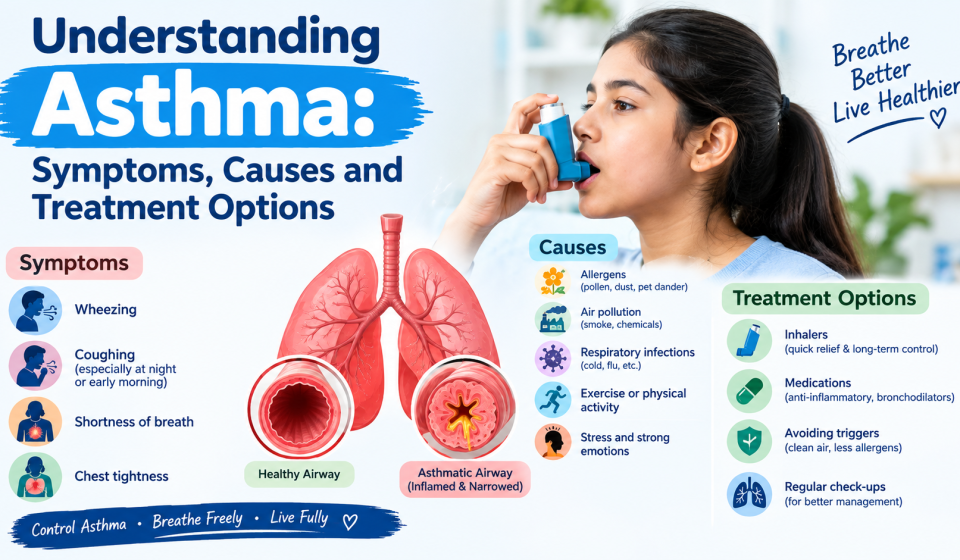

Understanding asthma, its symptoms, causes, triggers and treatment options. Learn how asthma affects breathing, diagnosis, medicines, prevention and effective management.
Asthma is a common long-term condition that affects the lungs and makes breathing more difficult. It can affect children as well as adults and may cause symptoms such as wheezing, coughing, chest tightness, and shortness of breath. Asthma symptoms can come and go, and certain environmental factors, allergies, infections, exercise, or weather conditions may make them worse.
Although asthma cannot always be cured, it can often be managed effectively with appropriate treatment, lifestyle changes, and by avoiding known triggers. Understanding the symptoms, causes, diagnosis, and treatment options can help people recognize asthma early and work with a healthcare professional to control it.
According to the Centers for Disease Control and Prevention (CDC), asthma affects the airways that carry air into and out of the lungs. During an asthma episode, the airways can become swollen and narrower, while mucus may also contribute to blockage, making breathing harder.
What Is Asthma?
Asthma is a chronic respiratory condition in which the airways become inflamed and overly sensitive. When a person with asthma encounters a trigger, the muscles surrounding the airways may tighten, the airway lining can swell, and additional mucus may be produced. These changes can restrict airflow and lead to breathing difficulties.
Asthma does not affect everyone in exactly the same way. Some people may have occasional symptoms, while others may experience symptoms more frequently. Symptoms can also change over time.
Common asthma symptoms include:
- Wheezing or a whistling sound while breathing
- Shortness of breath
- Chest tightness or pressure
- Persistent or recurring cough
- Coughing at night or early in the morning
- Difficulty breathing during physical activity
The National Heart, Lung, and Blood Institute (NHLBI) notes that asthma symptoms often follow a pattern and may become worse during viral infections, exercise, exposure to allergens, cold air, or at night.
Common Symptoms of Asthma
Recognizing asthma symptoms is important because early diagnosis and treatment can help prevent symptoms from becoming more severe.
1. Wheezing
Wheezing is a high-pitched whistling sound that can occur while breathing, particularly when breathing out. It is one of the commonly recognized symptoms of asthma.
However, wheezing does not always mean a person has asthma because other respiratory conditions can also cause it.
2. Shortness of Breath
People with asthma may feel as though they cannot get enough air into their lungs. Shortness of breath may happen during an asthma flare-up, after exercise, or following exposure to a particular trigger.
3. Chest Tightness
Some people describe asthma as a feeling of pressure, tightness, or heaviness in the chest. This sensation may occur together with coughing or wheezing.
4. Persistent Cough
Asthma can cause repeated coughing, particularly at night or early in the morning. In some individuals, coughing may be one of the main symptoms.
5. Symptoms That Become Worse at Night
Nighttime coughing, wheezing, or breathing difficulty can occur in people whose asthma is not well controlled. Frequently waking up because of asthma symptoms is a reason to discuss asthma control with a healthcare professional.
What Causes Asthma?
There is no single cause of asthma. The exact reasons why some people develop asthma are not completely understood. Genetics, immune-system responses, environmental exposures, allergies, and respiratory infections can all play a role.
NHLBI explains that several factors may contribute to the development of asthma, including family history, allergies, viral respiratory infections, environmental exposures, and occupational hazards.
Family History
People with a family history of asthma may have a higher risk of developing the condition. Genetics can influence how the immune system and airways respond to environmental substances.
Allergies
Allergies are closely associated with certain types of asthma. Common allergens include pollen, dust mites, mold, pet dander, and other substances.
Respiratory Infections
Viral infections affecting the respiratory system, such as colds and influenza, can trigger asthma symptoms in some people.
Environmental Pollution
Air pollution, smoke, and other airborne irritants may worsen asthma symptoms. People who live or work in areas with poor air quality may need to take additional precautions.
Occupational Exposure
Some people develop or experience worsening asthma because of substances encountered at work. Workplace triggers can include dust, chemical fumes, cleaning products, gases, molds, and other irritants.
Common Asthma Triggers
A trigger is something that causes asthma symptoms to start or become worse. Triggers vary from person to person, so identifying individual triggers can be an important part of asthma management.
Common triggers include:
- Dust mites
- Pollen
- Mold
- Pet dander
- Cigarette smoke
- Air pollution
- Cold air
- Respiratory infections
- Strong odors or chemical fumes
- Certain medicines
- Physical activity
- Emotional stress
- Workplace dust and chemicals
NHLBI identifies indoor and outdoor allergens, infections, exercise, emotional stress, poor air quality, cold air, and certain medications among possible asthma triggers.
Keeping a record of when symptoms occur can sometimes help identify patterns. For example, if coughing repeatedly happens after exposure to dust, during certain seasons, or in a particular workplace, this information can be useful when speaking with a healthcare professional.
How Is Asthma Diagnosed?
Asthma diagnosis generally involves discussing symptoms and medical history with a healthcare professional. A doctor may ask about when symptoms occur, possible triggers, family history, allergies, smoking exposure, and previous respiratory problems.
A physical examination may also be performed.
Doctors may use breathing tests to evaluate how well the lungs are working. One commonly used test is spirometry, which measures how much air a person can breathe out and how quickly they can do so.
Depending on the situation, additional tests may be recommended, including:
- Peak flow measurements
- Allergy testing
- Bronchial challenge tests
- Other lung-function tests
- Imaging or additional investigations when another condition is suspected
The exact diagnostic approach depends on the person’s age, symptoms, medical history, and other factors.
Asthma Treatment Options
There is no single treatment that works for everyone with asthma. Treatment depends on factors such as the severity and frequency of symptoms, age, triggers, and response to medicines.
The overall goals of asthma treatment are to control symptoms, reduce flare-ups, maintain normal activity, and protect lung function.
1. Quick-Relief Medicines
Quick-relief or rescue medicines are used to provide rapid relief from asthma symptoms during an episode.
Short-acting bronchodilators can relax airway muscles and help improve airflow. A healthcare professional may prescribe a reliever inhaler and explain when and how it should be used.
It is important to use inhalers exactly as prescribed and learn the correct inhaler technique.
2. Long-Term Controller Medicines
Some people require medicines regularly to prevent symptoms and reduce airway inflammation.
Inhaled corticosteroids are commonly used as controller medicines. Depending on the type and severity of asthma, doctors may also prescribe other medicines or combinations.
Possible long-term treatment options can include:
- Inhaled corticosteroids
- Leukotriene modifiers
- Long-acting bronchodilators used with appropriate controller therapy
- Long-acting muscarinic antagonists
- Biologic medicines for certain difficult-to-control asthma
- Allergy immunotherapy for selected people with allergic asthma
NHLBI emphasizes that treatment should be individualized and adjusted by a healthcare professional according to asthma control and response to treatment.
3. Allergy Treatment
For people whose asthma is strongly associated with allergies, reducing exposure to allergens can help control symptoms.
In selected cases, doctors may consider allergy shots, also known as immunotherapy. These treatments are not appropriate for everyone and should be discussed with a qualified healthcare professional.
4. Treatment for Severe Asthma
Some people have asthma that remains difficult to control despite standard treatment. Specialists may consider additional therapies, including biologic medicines or other advanced treatments.
The appropriate treatment depends on the specific type and severity of asthma.
How to Manage Asthma at Home
Medication is only one part of asthma management. Understanding personal triggers and following an asthma action plan can also be helpful.
Identify Your Triggers
Try to identify things that repeatedly make your symptoms worse. Keeping notes about symptoms and possible exposures can help you and your doctor recognize patterns.
Avoid Tobacco Smoke
Avoid smoking and secondhand smoke. Tobacco smoke can irritate the airways and make asthma symptoms more difficult to control.
Reduce Indoor Allergens
Regular cleaning, reducing dust accumulation, addressing dampness and mold, and managing exposure to pets or other allergens may help people whose asthma is triggered by indoor allergens.
Pay Attention to Air Quality
Poor outdoor or indoor air quality can worsen respiratory symptoms. On days when air pollution is high, people with asthma may need to follow their healthcare provider’s advice about reducing exposure.
Stay Physically Active
Exercise can trigger symptoms in some people, but having asthma does not necessarily mean avoiding physical activity. With appropriate asthma control and medical guidance, many people can remain active.
Follow an Asthma Action Plan
An asthma action plan can provide personalized instructions about daily medicines, recognizing worsening symptoms, and knowing when to seek medical help.
A healthcare professional can help create an action plan based on the individual’s symptoms and treatment.
Asthma and Exercise
Exercise can sometimes trigger asthma symptoms, particularly in people with exercise-induced symptoms. However, regular physical activity can still be an important part of a healthy lifestyle.
Proper asthma control, warming up before exercise, and following a healthcare professional’s recommendations can help reduce exercise-related symptoms.
If exercise repeatedly causes significant coughing, wheezing, chest tightness, or shortness of breath, it is important to discuss these symptoms with a healthcare professional rather than simply stopping all physical activity.
Asthma in Children
Asthma can begin during childhood, although adults can also develop asthma. Children may have symptoms such as recurring cough, wheezing, breathing difficulties, or symptoms that become worse during physical activity or respiratory infections.
Parents should pay attention to recurring symptoms and discuss them with a pediatrician or other healthcare professional.
A child’s treatment plan should be followed carefully, especially regarding inhaler technique and prescribed medicines.
When Is Asthma an Emergency?
Most asthma symptoms can be managed with an appropriate treatment plan, but severe asthma attacks can become medical emergencies.
Seek urgent medical care if breathing becomes extremely difficult, symptoms rapidly worsen, or prescribed quick-relief treatment does not provide adequate relief.
During a severe asthma attack, the airways can become significantly narrowed, making it difficult for air to move in and out of the lungs. NHLBI advises seeking emergency help when medicines are not relieving symptoms or breathing remains very difficult.
Warning signs can include:
- Severe difficulty breathing
- Extreme shortness of breath
- Difficulty speaking because of breathing problems
- Rapidly worsening symptoms
- Severe chest tightness
- Little or no improvement after prescribed rescue medication
- Feeling faint or confused
Emergency symptoms should never be managed solely with home remedies.
Can Asthma Be Prevented?
Because the exact causes of asthma are not completely understood, it is not always possible to prevent someone from developing the condition.
However, reducing exposure to known triggers may help prevent symptoms and flare-ups.
Helpful steps may include:
- Avoiding cigarette smoke
- Reducing exposure to known allergens
- Keeping indoor spaces free from excessive dampness and mold
- Maintaining good indoor ventilation
- Following prescribed medication schedules
- Monitoring symptoms
- Maintaining a healthy lifestyle
- Getting appropriate treatment for respiratory infections
- Following an individualized asthma action plan
People with asthma should work with their healthcare provider to understand their individual triggers and treatment needs.
Asthma Treatment: Why Regular Follow-Up Matters
Asthma can change over time. A treatment plan that works well at one point may need adjustment later.
Regular follow-up allows healthcare professionals to assess symptom control, medication use, inhaler technique, possible side effects, and changes in triggers.
Frequent nighttime symptoms, increasing use of a reliever inhaler, or difficulty performing normal activities may indicate that asthma is not adequately controlled. These changes should be discussed with a healthcare professional.
People should not stop or change prescribed asthma medicines without discussing the change with their healthcare provider.
Sources
CDC – About Asthma
NHLBI – Asthma: Treatment and Action Plan
Conclusion
Asthma is a chronic lung condition that can cause wheezing, coughing, chest tightness, and shortness of breath. Symptoms may appear occasionally or frequently and can be triggered by allergens, respiratory infections, exercise, cold air, pollution, smoke, workplace exposures, and other factors.
Although asthma does not currently have a universal cure, modern treatment can help many people control their symptoms and maintain normal daily activities. Treatment may include quick-relief medicines, long-term controller medicines, allergy management, trigger avoidance, and personalized asthma action plans.
Recognizing symptoms early, understanding personal triggers, using medicines correctly, and maintaining regular medical follow-up are important parts of asthma management. If breathing becomes severely difficult or prescribed medication does not relieve a serious asthma attack, emergency medical attention is necessary.
Medical disclaimer: This article is for general educational purposes only and does not replace diagnosis or treatment from a qualified healthcare professional. Asthma symptoms can overlap with other medical conditions, so persistent or severe breathing problems should be evaluated by a healthcare professional.
Frequently Asked Questions (FAQs)
1. What are the most common symptoms of asthma?
The most common asthma symptoms include wheezing, shortness of breath, chest tightness, and coughing. Coughing may be particularly noticeable at night or early in the morning. Symptoms can come and go and may worsen after exposure to specific triggers.
2. What can trigger an asthma attack?
Common triggers include dust mites, pollen, mold, pet dander, cigarette smoke, air pollution, respiratory infections, cold air, exercise, emotional stress, and certain workplace chemicals or irritants. Triggers differ from person to person.
3. Can asthma be cured permanently?
Asthma is generally considered a chronic condition, and there is no universal permanent cure. However, appropriate treatment and trigger management can help control symptoms and reduce asthma flare-ups. Some people’s symptoms may change significantly over time.
4. Is an inhaler enough to treat asthma?
It depends on the type and severity of asthma. Some people may need quick-relief inhalers for occasional symptoms, while others need regular controller medicines to reduce airway inflammation and prevent symptoms. A healthcare professional should determine the appropriate treatment plan.
5. When should someone with asthma seek emergency medical help?
Emergency care may be necessary when breathing becomes very difficult, symptoms rapidly worsen, or prescribed medicines are not providing relief. Severe asthma attacks can be life-threatening, so serious breathing difficulty should be treated as an emergency.