
Discover how clinics use modern technology to improve patient care, enhance diagnosis accuracy, reduce waiting times, and provide better healthcare experiences for patients.
Technology has transformed almost every industry, and healthcare is no exception. Today’s clinics are no longer dependent solely on paper records, manual appointment systems, and traditional methods of communication. Modern healthcare clinics are increasingly using advanced technologies to improve patient care, increase efficiency, and provide better medical outcomes.
From electronic health records and telemedicine services to artificial intelligence and digital diagnostic tools, technology is helping healthcare professionals deliver faster, safer, and more personalized treatment. Patients also benefit from easier access to healthcare services, shorter waiting times, and improved communication with doctors.
In India and across the world, clinics of all sizes are embracing digital transformation to meet growing healthcare demands. Whether it is a family clinic in a small town or a multi-specialty healthcare center in a metropolitan city, technology is becoming an essential part of patient care.
This article explores how clinics use technology to improve patient care and why these innovations are shaping the future of healthcare.
The Growing Importance of Technology in Healthcare Clinics
Healthcare providers face several challenges, including increasing patient numbers, complex medical conditions, and rising expectations for quality care. Technology helps clinics address these challenges effectively.
Modern healthcare technologies allow clinics to:
- Improve patient safety
- Reduce administrative errors
- Enhance communication
- Speed up diagnosis and treatment
- Improve patient satisfaction
- Support preventive healthcare
By integrating digital tools into daily operations, clinics can focus more on patient care and less on paperwork.
Electronic Health Records (EHRs)
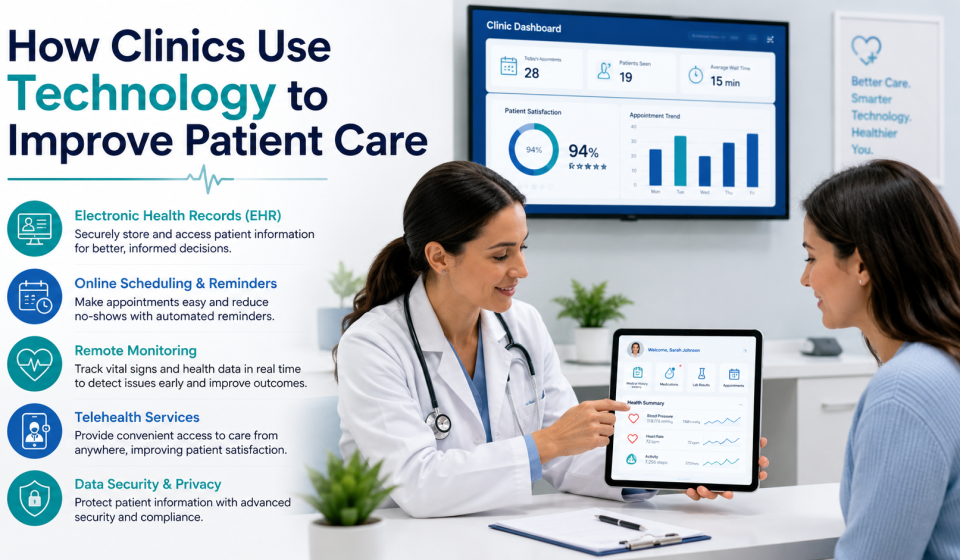
One of the most significant technological advancements in healthcare is the use of Electronic Health Records (EHRs).
Instead of storing patient information in paper files, clinics now maintain digital records that can be accessed securely by authorized healthcare professionals.
Benefits of Electronic Health Records
Better Accuracy
Digital records reduce handwriting-related mistakes and ensure that patient information remains accurate and up to date.
Faster Access to Information
Doctors can quickly access a patient’s medical history, previous diagnoses, medications, allergies, and laboratory results.
Improved Coordination
If a patient visits multiple specialists within the same healthcare network, all providers can access relevant information, ensuring coordinated care.
Real-Life Example
A diabetic patient visiting a clinic for a routine check-up can have their entire medical history available instantly. The doctor can review previous blood sugar readings, medication history, and test results without searching through paper records.
Online Appointment Scheduling Systems
Many clinics now offer online appointment booking systems through websites or mobile applications.
How It Helps Patients
- Book appointments anytime
- Reduce waiting times
- Receive appointment reminders
- Easily reschedule visits
Benefits for Clinics
- Better management of patient flow
- Reduced no-show rates
- Improved scheduling efficiency
Patients appreciate the convenience of booking appointments without making multiple phone calls.
Telemedicine and Virtual Consultations
Telemedicine has become one of the most important healthcare innovations in recent years.
Through video calls, phone consultations, and secure messaging platforms, patients can receive medical advice without visiting a clinic physically.
Advantages of Telemedicine
Increased Accessibility
Patients living in rural areas can consult specialists without traveling long distances.
Convenience
Working professionals and elderly patients can receive care from the comfort of their homes.
Faster Follow-Ups
Doctors can conduct follow-up appointments quickly and efficiently.
Real-Life Example
A patient recovering from surgery may only need a follow-up discussion regarding medication and recovery progress. Instead of traveling to the clinic, a virtual consultation can provide the same guidance.
Digital Diagnostic Tools
Modern clinics increasingly rely on advanced diagnostic technologies.
These tools help healthcare professionals detect diseases earlier and make more accurate diagnoses.
Examples of Digital Diagnostic Technologies
- Digital X-rays
- Ultrasound imaging
- ECG monitoring systems
- Automated laboratory testing
- Portable diagnostic devices
Benefits
- Faster diagnosis
- Better accuracy
- Reduced chances of human error
- Improved treatment planning
Early diagnosis often leads to better health outcomes and lower treatment costs.
Artificial Intelligence in Patient Care
Artificial Intelligence (AI) is gradually becoming part of modern healthcare.
AI systems can analyze large amounts of medical data and assist doctors in making informed decisions.
How Clinics Use AI
Disease Detection
AI can help identify patterns in medical images and laboratory reports.
Risk Assessment
AI tools can identify patients who may be at higher risk for chronic diseases.
Treatment Recommendations
Some systems provide evidence-based suggestions to support clinical decisions.
Important Note
AI does not replace doctors. Instead, it serves as a powerful tool that helps healthcare professionals make better decisions.
Patient Portals and Mobile Health Apps
Many clinics provide patient portals and mobile applications that allow patients to manage their healthcare information.
Features
- Access medical records
- View test results
- Request prescription refills
- Schedule appointments
- Communicate with healthcare providers
Benefits
Patients become more involved in their healthcare decisions and can monitor their health more effectively.
Remote Patient Monitoring
Remote patient monitoring allows healthcare providers to track patient health data outside the clinic.
Common Monitoring Devices
- Blood pressure monitors
- Glucose monitoring systems
- Heart rate monitors
- Fitness trackers
- Pulse oximeters
Benefits
Better Chronic Disease Management
Patients with diabetes, hypertension, or heart disease can be monitored regularly.
Early Detection of Problems
Doctors can identify concerning trends before they become serious health issues.
Real-Life Example
A patient with hypertension can upload daily blood pressure readings through a mobile app. The clinic can monitor these readings and adjust treatment when necessary.
Automated Prescription Management
Technology has improved prescription management significantly.
Electronic prescribing systems allow doctors to send prescriptions directly to pharmacies.
Benefits
- Reduces prescription errors
- Improves medication safety
- Saves time
- Enhances patient convenience
Patients are less likely to receive incorrect medications due to illegible handwriting or communication mistakes.
Secure Communication Systems
Communication plays a vital role in quality healthcare.
Modern clinics use secure digital communication systems to connect with patients.
Examples
- Secure messaging platforms
- SMS reminders
- Email notifications
- Patient chat portals
Benefits
- Improved patient engagement
- Faster responses to questions
- Better follow-up care
- Increased patient satisfaction
Patients can receive reminders for appointments, vaccinations, screenings, and medication schedules.
Data Analytics for Better Healthcare Decisions
Healthcare clinics collect large amounts of patient data.
Advanced analytics tools help clinics identify trends and improve healthcare delivery.
Uses of Data Analytics
Population Health Management
Clinics can identify common health issues affecting their patient population.
Preventive Care
Data analysis can help detect patients who may need screenings or vaccinations.
Quality Improvement
Healthcare providers can measure treatment outcomes and improve services accordingly.
Data-driven decision-making helps clinics provide more effective and personalized care.
Enhanced Patient Safety Through Technology
Patient safety remains a top priority for healthcare providers.
Technology contributes significantly to safer healthcare delivery.
Examples
- Allergy alerts in electronic records
- Medication interaction warnings
- Automated clinical reminders
- Infection control monitoring systems
These tools reduce the risk of preventable medical errors and improve overall patient safety.
Future Technologies Shaping Healthcare Clinics
The future of healthcare technology looks promising.
Emerging technologies include:
- Wearable health devices
- AI-powered diagnostics
- Robotics-assisted procedures
- Predictive analytics
- Internet of Medical Things (IoMT)
- Virtual Reality for therapy and training
As these innovations become more accessible, clinics will continue improving healthcare quality and patient experiences.
Sources
https://sl1nk.com/uwlgj0j
https://sl1nk.com/5amomwa
Conclusion
Technology has become an essential component of modern healthcare clinics. From electronic health records and telemedicine to artificial intelligence and remote patient monitoring, technological advancements are helping clinics provide safer, faster, and more personalized patient care.
Patients benefit from improved access to healthcare services, better communication with providers, accurate diagnoses, and convenient treatment options. Meanwhile, healthcare professionals can work more efficiently and make better-informed clinical decisions.
As technology continues to evolve, clinics will be able to deliver even higher levels of care while meeting the changing needs of patients. The successful integration of technology into healthcare is not just improving medical services today—it is shaping the future of patient care for generations to come.
FAQs
1. How does technology improve patient care in clinics?
Technology improves patient care by enhancing diagnosis accuracy, reducing errors, improving communication, enabling telemedicine, and providing faster access to medical information.
2. What are Electronic Health Records (EHRs)?
Electronic Health Records are digital versions of patient medical records that allow healthcare providers to access and update patient information securely and efficiently.
3. How does telemedicine benefit patients?
Telemedicine allows patients to consult doctors remotely, reducing travel time, improving accessibility, and making healthcare more convenient.
4. Can artificial intelligence replace doctors in clinics?
No. Artificial intelligence supports doctors by analyzing data and identifying patterns, but medical decisions and patient care remain the responsibility of healthcare professionals.
5. What is remote patient monitoring?
Remote patient monitoring uses connected devices to track patient health data, such as blood pressure or glucose levels, allowing healthcare providers to monitor patients outside the clinic.