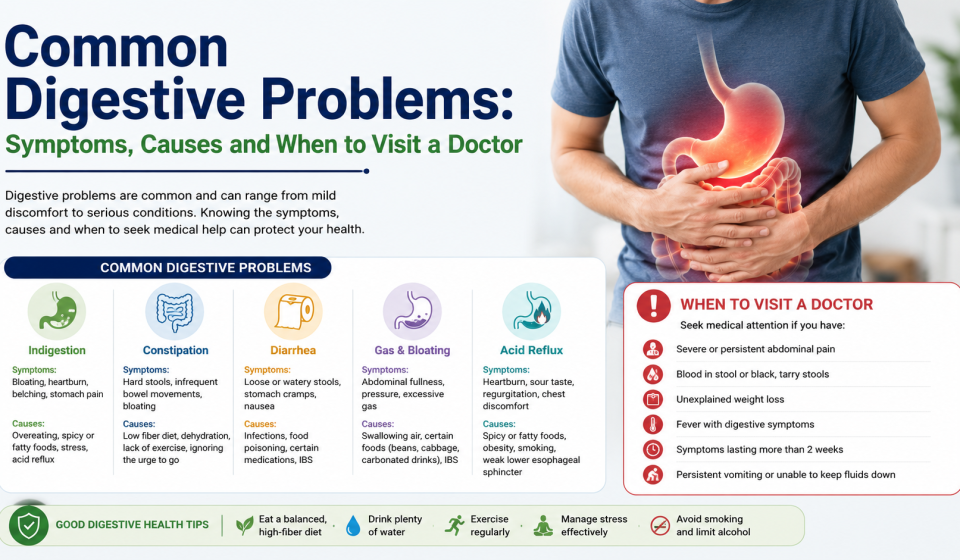

Learn about common digestive problems, their symptoms, causes, treatment options, and when to visit a doctor. Discover practical tips to improve digestive health and prevent gastrointestinal disorders.
The digestive system plays a vital role in maintaining overall health by breaking down food, absorbing nutrients, and eliminating waste. When the digestive system functions properly, the body receives the energy and nutrients it needs to perform daily activities. However, digestive issues are among the most common health concerns affecting millions of people worldwide.
Occasional stomach discomfort after eating is usually not a cause for concern. However, persistent digestive symptoms such as abdominal pain, bloating, constipation, diarrhea, acid reflux, or nausea may indicate an underlying digestive disorder that requires medical attention.
Many digestive conditions can be effectively managed with lifestyle changes, dietary improvements, and timely medical care. Recognizing the early signs of digestive problems and knowing when to seek professional help can prevent complications and improve your quality of life.
In this article, you’ll learn about the most common digestive problems, their symptoms, causes, risk factors, diagnostic methods, and when it’s time to consult a healthcare professional.
Understanding the Digestive System
The digestive system consists of several organs that work together to digest food and absorb nutrients. These include:
- Mouth
- Esophagus
- Stomach
- Small intestine
- Large intestine (colon)
- Rectum
- Liver
- Gallbladder
- Pancreas
Each organ has a specific role. If one part doesn’t function correctly, it can affect the entire digestive process and lead to various gastrointestinal disorders.
A healthy digestive system not only supports proper nutrition but also strengthens the immune system, regulates hormones, and contributes to overall well-being.
Why Digestive Health Matters
Good digestive health helps your body:
- Absorb essential vitamins and minerals
- Maintain a healthy immune system
- Regulate bowel movements
- Remove toxins efficiently
- Support energy production
- Improve overall physical and mental health
Ignoring digestive symptoms may allow minor problems to develop into chronic conditions that require more extensive treatment.
Common Digestive Problems
Several digestive disorders affect people of all ages. Some are temporary, while others require long-term management.
1. Acid Reflux (GERD)
Acid reflux occurs when stomach acid flows backward into the esophagus, causing irritation and discomfort. Frequent acid reflux may develop into Gastroesophageal Reflux Disease (GERD).
Common Symptoms
- Burning sensation in the chest (heartburn)
- Sour taste in the mouth
- Difficulty swallowing
- Chronic cough
- Hoarseness
- Sore throat
- Chest discomfort after meals
Common Causes
- Obesity
- Large meals
- Smoking
- Pregnancy
- Spicy or fatty foods
- Alcohol
- Caffeine
- Hiatal hernia
Without treatment, GERD can damage the esophagus and increase the risk of complications.
2. Constipation
Constipation is one of the most common digestive complaints. It generally refers to infrequent bowel movements or difficulty passing stools.
Symptoms
- Fewer than three bowel movements per week
- Hard, dry stools
- Straining during bowel movements
- Feeling of incomplete evacuation
- Abdominal discomfort
- Bloating
Causes
- Low-fiber diet
- Dehydration
- Lack of exercise
- Certain medications
- Ignoring the urge to pass stool
- Hormonal changes
- Stress
Increasing dietary fiber, drinking enough water, and regular physical activity often help relieve constipation.
3. Diarrhea
Diarrhea involves loose, watery stools occurring more frequently than normal. It may be acute or chronic.
Symptoms
- Frequent loose stools
- Abdominal cramps
- Urgent need for bowel movement
- Dehydration
- Fever (in some cases)
- Nausea
Causes
- Viral infections
- Bacterial infections
- Food poisoning
- Food intolerance
- Certain medications
- Irritable Bowel Syndrome (IBS)
- Inflammatory bowel disease
Persistent diarrhea lasting more than two days in adults or accompanied by blood, fever, or severe dehydration requires medical evaluation.
4. Irritable Bowel Syndrome (IBS)
IBS is a chronic digestive disorder affecting the large intestine. Although it doesn’t permanently damage the intestines, it can significantly impact daily life.
Symptoms
- Abdominal pain
- Bloating
- Gas
- Constipation
- Diarrhea
- Alternating constipation and diarrhea
- Mucus in stool
Possible Causes
Experts believe IBS may result from a combination of factors, including:
- Stress
- Gut-brain interaction problems
- Food sensitivities
- Abnormal intestinal muscle contractions
- Changes in gut bacteria
Managing stress and identifying food triggers often improve symptoms.
5. Gastritis
Gastritis refers to inflammation of the stomach lining.
Symptoms
- Upper abdominal pain
- Burning sensation
- Nausea
- Vomiting
- Loss of appetite
- Feeling full quickly
Causes
- Helicobacter pylori infection
- Long-term NSAID use
- Excessive alcohol consumption
- Smoking
- Stress
- Autoimmune disorders
Untreated gastritis may lead to stomach ulcers or bleeding.
6. Peptic Ulcers
Peptic ulcers are open sores that develop in the stomach or upper small intestine.
Symptoms
- Burning stomach pain
- Indigestion
- Bloating
- Heartburn
- Nausea
- Weight loss
Causes
- H. pylori infection
- Long-term use of pain relievers
- Smoking
- Excess alcohol
- Chronic stress (may worsen symptoms)
Proper diagnosis is essential because untreated ulcers can cause internal bleeding.
7. Gallstones
Gallstones are hardened deposits that form inside the gallbladder.
Symptoms
- Sudden pain in the upper right abdomen
- Pain after fatty meals
- Nausea
- Vomiting
- Pain radiating to the shoulder or back
Risk Factors
- Obesity
- High-fat diet
- Female gender
- Pregnancy
- Diabetes
- Family history
- Age over 40
Large or symptomatic gallstones often require medical treatment.
8. Lactose Intolerance
People with lactose intolerance cannot properly digest lactose, the sugar found in milk and dairy products.
Symptoms
- Gas
- Bloating
- Diarrhea
- Stomach cramps
- Nausea
Symptoms usually appear within a few hours after consuming dairy products.
Treatment mainly involves limiting lactose-containing foods or using lactase enzyme supplements.
What Causes Digestive Problems?
Digestive disorders can develop for many different reasons. In many cases, several factors contribute to the condition.
Some of the most common causes include:
Poor Diet
Eating excessive processed foods, fried foods, sugary snacks, and low-fiber meals can disrupt digestion and increase the risk of constipation, acid reflux, and obesity.
Dehydration
Water helps soften stool and supports healthy digestion. Inadequate fluid intake increases the risk of constipation and digestive discomfort.
Lack of Physical Activity
Regular exercise stimulates intestinal movement and supports healthy bowel function.
Stress and Anxiety
The digestive system is closely connected to the brain. Chronic stress can trigger symptoms such as stomach pain, diarrhea, constipation, bloating, and indigestion.
Food Intolerances
Some people have difficulty digesting certain foods such as:
- Dairy
- Gluten
- Artificial sweeteners
- High-fat foods
- Spicy foods
Identifying trigger foods can significantly improve digestive symptoms.
Infections
Viruses, bacteria, and parasites may cause temporary digestive illnesses leading to diarrhea, vomiting, and abdominal pain.
Medications
Certain medicines can affect digestion, including:
- Antibiotics
- Pain relievers
- Iron supplements
- Antidepressants
- Blood pressure medications
Always consult your healthcare provider before stopping prescribed medications.
Risk Factors for Digestive Disorders
Some individuals have a higher likelihood of developing digestive problems due to certain lifestyle and medical factors.
Major risk factors include:
- Smoking
- Heavy alcohol consumption
- Obesity
- Sedentary lifestyle
- Aging
- Family history of digestive diseases
- Chronic stress
- Diabetes
- Autoimmune disorders
- Poor dietary habits
Understanding these risk factors can help individuals make healthier lifestyle choices and reduce the likelihood of developing chronic digestive conditions.
How Doctors Diagnose Digestive Problems
Diagnosing digestive disorders begins with a detailed medical history and physical examination. Your healthcare provider will ask about your symptoms, eating habits, medications, family history, and lifestyle.
Depending on your symptoms, additional tests may include:
Blood Tests
Blood tests help detect infections, inflammation, anemia, nutritional deficiencies, and liver or pancreatic problems.
Stool Tests
A stool sample can identify infections, parasites, blood in the stool, or signs of inflammatory bowel disease.
Breath Tests
Breath tests are commonly used to diagnose Helicobacter pylori infection or lactose intolerance.
Endoscopy
An upper endoscopy allows doctors to examine the esophagus, stomach, and upper small intestine using a thin, flexible tube with a camera. It is commonly recommended for persistent acid reflux, ulcers, unexplained stomach pain, or difficulty swallowing.
Colonoscopy
A colonoscopy examines the large intestine and rectum. It helps detect polyps, colorectal cancer, inflammatory bowel disease, and other abnormalities, especially in individuals with chronic bowel symptoms or those over certain screening ages.
Sources
https://l1nq.com/mmyjmwn
https://l1nq.com/uhy4r1y
Conclusion
Maintaining good digestive health is essential for your overall well-being. While occasional digestive discomfort is common, persistent symptoms such as heartburn, abdominal pain, bloating, constipation, diarrhea, or unexplained weight loss should never be ignored. Many digestive disorders can be effectively managed through a balanced diet, regular exercise, proper hydration, stress management, and timely medical care. Early diagnosis and treatment not only help relieve symptoms but also reduce the risk of serious complications. If your digestive problems persist or worsen, consult a qualified healthcare professional to receive an accurate diagnosis and personalized treatment plan. Taking proactive steps today can lead to a healthier digestive system and a better quality of life.
Frequently Asked Questions (FAQs)
1. What are the most common digestive problems?
Some of the most common digestive problems include acid reflux (GERD), constipation, diarrhea, irritable bowel syndrome (IBS), gastritis, peptic ulcers, gallstones, and lactose intolerance. These conditions can range from mild and temporary to chronic and require medical attention.
2. When should I see a doctor for digestive symptoms?
You should consult a doctor if you experience persistent abdominal pain, severe bloating, ongoing diarrhea or constipation, difficulty swallowing, blood in your stool, unexplained weight loss, frequent vomiting, or symptoms that last for more than a few weeks.
3. How can I improve my digestive health naturally?
You can support healthy digestion by eating a fiber-rich diet, drinking plenty of water, exercising regularly, managing stress, avoiding smoking and excessive alcohol, limiting processed foods, and eating meals at regular times.
4. Can stress affect digestion?
Yes. Stress can significantly impact the digestive system by disrupting normal gut function. It may contribute to symptoms such as stomach pain, bloating, nausea, constipation, diarrhea, and may even worsen conditions like IBS and acid reflux.
5. Which foods are good for digestive health?
Foods that promote healthy digestion include fruits, vegetables, whole grains, legumes, yogurt with probiotics, fermented foods, nuts, seeds, and lean proteins. These foods provide fiber and beneficial nutrients that support a healthy gut.