
Learn about low blood pressure, including common symptoms, causes, types, diagnosis, treatment, prevention tips, and when hypotension requires urgent medical attention.
Low blood pressure, medically known as hypotension, is a condition in which blood pressure is lower than the usual range. Blood pressure is important because it helps deliver oxygen and nutrients through the bloodstream to organs such as the brain, heart, and kidneys. When blood pressure becomes too low, some people may experience dizziness, weakness, blurred vision, nausea, or even fainting.
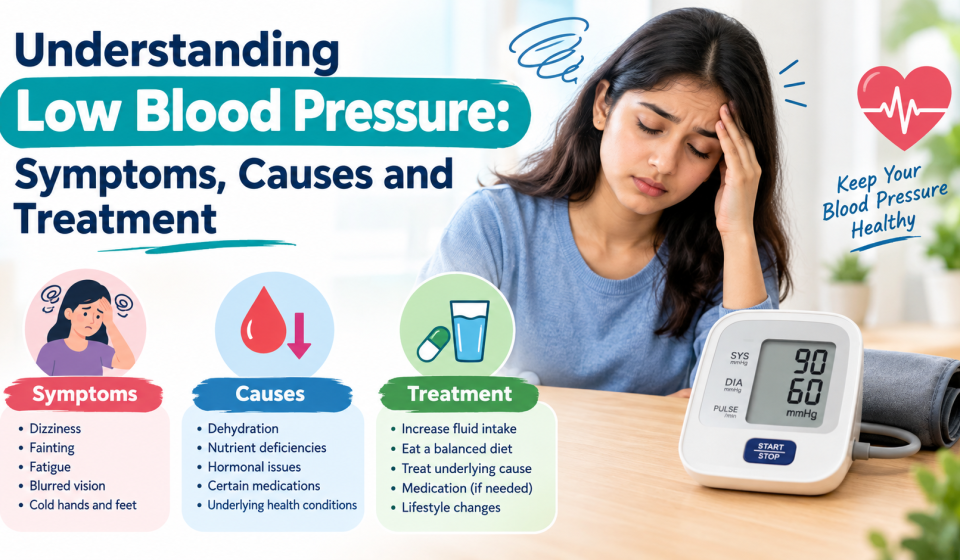
A blood pressure reading below 90/60 mmHg is commonly considered low blood pressure. However, a low reading does not necessarily mean there is a health problem. Some healthy people naturally have lower blood pressure and experience no symptoms. The concern generally arises when low blood pressure causes symptoms or occurs because of an underlying medical condition.
Understanding the symptoms, causes, types, risk factors, diagnosis, and treatment of low blood pressure can help people recognize when medical attention may be necessary.
What Is Low Blood Pressure?
Blood pressure is measured using two numbers:
- Systolic pressure: The pressure in the arteries when the heart contracts and pumps blood.
- Diastolic pressure: The pressure in the arteries when the heart relaxes between beats.
For example, a reading of 120/80 mmHg represents a systolic pressure of 120 and a diastolic pressure of 80.
Low blood pressure is generally defined as a reading below 90/60 mmHg. However, blood pressure varies from person to person and can change throughout the day depending on activity, body position, hydration, meals, medications, stress, and other factors.
A person may have naturally low blood pressure without experiencing any problems. In such cases, treatment may not be necessary. On the other hand, a sudden or significant drop in blood pressure can reduce blood flow to vital organs and may require urgent medical evaluation.
Common Symptoms of Low Blood Pressure
Some people with low blood pressure have no symptoms. Others may experience symptoms when blood pressure drops significantly or suddenly.
Common symptoms include:
1. Dizziness or Lightheadedness
Dizziness is one of the most common symptoms of low blood pressure. It may be particularly noticeable when getting up quickly after sitting or lying down.
2. Fainting
A significant decrease in blood pressure can temporarily reduce blood flow to the brain and cause a person to faint. Repeated fainting should always be evaluated by a healthcare professional.
3. Blurred Vision
Low blood pressure can sometimes affect blood flow to the eyes and brain, leading to temporary blurred or impaired vision.
4. Weakness and Fatigue
People with low blood pressure may feel unusually weak, tired, or lacking in energy, especially when the condition is related to dehydration, illness, blood loss, or another underlying problem.
5. Nausea
Some people experience nausea or a sick feeling when their blood pressure becomes too low.
6. Confusion
Very low blood pressure can affect blood flow to the brain and may cause confusion or difficulty concentrating.
7. Cold or Clammy Skin
Extremely low blood pressure, particularly during shock, may be associated with pale, cold, or clammy skin.
8. Rapid or Weak Pulse
When blood pressure falls, the body may attempt to compensate by increasing the heart rate. A weak or rapid pulse can be a warning sign when accompanied by other serious symptoms.
Main Causes of Low Blood Pressure
Low blood pressure can occur for many different reasons. Some causes are temporary and relatively simple to correct, while others may require medical treatment.
Dehydration
Not drinking enough fluids can reduce the amount of blood circulating through the body. Dehydration may happen because of excessive sweating, vomiting, diarrhea, fever, or inadequate fluid intake.
Increasing fluids may help some people, but persistent or severe dehydration requires medical assessment.
Blood Loss
Significant blood loss can cause blood pressure to fall because the amount of circulating blood decreases. Heavy bleeding from an injury, surgery, gastrointestinal bleeding, or other causes can lead to severe hypotension.
Certain Medications
Some medications can lower blood pressure. These may include certain medicines used for high blood pressure, heart conditions, diuretics, some antidepressants, anti-anxiety medicines, and certain pain medications.
If you think medication is causing low blood pressure, do not stop taking it on your own. Talk with your doctor about whether the dose or medication needs to be changed.
Heart Problems
Certain heart conditions can contribute to low blood pressure. These may include heart failure, abnormal heart rhythms, or other problems that affect the heart’s ability to pump blood effectively.
Endocrine or Hormonal Problems
Conditions affecting hormones can sometimes contribute to low blood pressure. Problems involving the adrenal or thyroid glands, for example, may influence blood pressure regulation.
Severe Infection
A serious infection can sometimes cause a dangerous drop in blood pressure. Severe infection-associated hypotension can become part of a medical emergency known as shock.
Pregnancy
Blood pressure may decrease during pregnancy because of changes in the circulatory system. However, significant symptoms should still be discussed with a healthcare professional.
Diabetes and Nervous System Conditions
Diabetes and some nervous-system disorders can affect the body’s ability to regulate blood pressure, particularly when changing position.
Types of Low Blood Pressure
Low blood pressure is not one single condition. Several types can occur.
Orthostatic or Postural Hypotension
Orthostatic hypotension occurs when blood pressure falls after a person stands up from sitting or lying down.
Symptoms may include:
- Dizziness
- Lightheadedness
- Blurred vision
- Weakness
- Fainting
It may occur because the body does not adjust blood circulation quickly enough after a change in position. Dehydration, medications, certain medical conditions, and aging can contribute to this problem.
Postprandial Hypotension
Postprandial hypotension refers to a drop in blood pressure after eating. It is more commonly seen in older adults and people with certain health conditions.
Eating smaller meals and discussing symptoms with a healthcare professional may help identify appropriate management strategies.
Neurally Mediated Hypotension
This type of hypotension can occur after standing for a long period. It is more frequently seen in children and young adults. Symptoms may include dizziness, weakness, or fainting.
Who Is More Likely to Experience Low Blood Pressure?
Low blood pressure can affect anyone, but certain factors may increase the likelihood.
These include:
- Older age
- Dehydration
- Pregnancy
- Certain medications
- Heart conditions
- Diabetes
- Nervous system disorders
- Severe infection
- Significant blood loss
- Prolonged standing
- Certain hormonal conditions
Some healthy and physically fit individuals naturally have lower blood pressure without experiencing symptoms. Therefore, the blood pressure number should be considered together with the person’s symptoms and overall health.
How Is Low Blood Pressure Diagnosed?
A healthcare professional usually begins by measuring blood pressure and asking about symptoms, medications, medical history, diet, fluid intake, and recent illnesses.
The doctor may want to know:
- When the symptoms started
- Whether symptoms occur after standing
- Whether fainting has occurred
- What medications are being taken
- Whether there has been vomiting or diarrhea
- Whether there has been significant bleeding
- Whether there are heart-related symptoms
- What the person’s usual blood pressure is
Depending on the suspected cause, additional tests may be recommended. These can include blood tests, an electrocardiogram (ECG), urine tests, or other investigations.
How to Manage Low Blood Pressure at Home
The appropriate management depends on the cause. For mild symptoms, some general measures may help.
Stay Hydrated
Drinking adequate fluids can help maintain blood volume. This is particularly important during hot weather, exercise, fever, vomiting, or diarrhea.
However, people with heart, kidney, or other medical conditions should ask their healthcare professional how much fluid is appropriate.
Get Up Slowly
If you often feel dizzy when standing, avoid getting up suddenly.
A better approach is:
- Sit up slowly.
- Remain seated for a short time.
- Move your legs gently.
- Stand up carefully.
This can reduce symptoms associated with postural hypotension.
Eat Smaller, More Frequent Meals
Large meals can contribute to blood-pressure drops in some people. Smaller meals spread throughout the day may be helpful, particularly for people who experience symptoms after eating.
Avoid Excessive Alcohol
Alcohol can contribute to dehydration and may lower blood pressure. Limiting or avoiding alcohol may help reduce symptoms in some people.
Avoid Standing for Long Periods
If prolonged standing triggers dizziness or weakness, take regular breaks and sit down when possible.
Discuss Salt Intake With Your Doctor
Increasing salt may raise blood pressure in some circumstances, but it is not appropriate for everyone. People with heart, kidney, or blood-pressure conditions should not significantly increase salt intake without medical advice.
Medical Treatment for Low Blood Pressure
Treatment depends on the underlying cause.
If dehydration is responsible, healthcare professionals may recommend fluid replacement. If medication is contributing to the problem, the doctor may adjust the dose or change the medication.
Compression stockings may sometimes be recommended to help reduce blood pooling in the legs, particularly in people with orthostatic hypotension.
In severe cases, treatment may involve intravenous fluids, medications to support blood pressure, or treatment for the underlying condition.
Blood-pressure-raising medication is not usually required for every person with low blood pressure. The primary goal is generally to identify and treat the reason for the low blood pressure.
When Is Low Blood Pressure an Emergency?
A sudden and severe drop in blood pressure can be dangerous because vital organs may not receive enough oxygen-rich blood.
Seek urgent medical attention if low blood pressure is accompanied by:
- Fainting or loss of consciousness
- Chest pain
- Severe shortness of breath
- Severe confusion
- Very weak or rapid pulse
- Cold, clammy skin
- Significant bleeding
- Severe weakness
- Signs of severe infection
- A sudden major deterioration in health
Severe hypotension associated with shock can be life-threatening and requires emergency medical treatment.
How to Prevent Low Blood Pressure Episodes
Not every cause of low blood pressure can be prevented, but certain habits may reduce symptoms.
Helpful measures can include:
- Drinking enough water
- Eating balanced meals
- Avoiding prolonged standing
- Changing positions slowly
- Avoiding excessive alcohol
- Taking medications exactly as prescribed
- Monitoring blood pressure when recommended
- Treating underlying medical conditions
- Discussing recurring dizziness or fainting with a healthcare professional
People who repeatedly experience low blood pressure should keep track of their readings and symptoms. Recording the time, blood pressure measurement, activity, meals, and symptoms may help a doctor identify patterns.
Low Blood Pressure and Lifestyle
A healthy lifestyle can support stable blood pressure. A balanced diet containing vegetables, fruits, whole grains, protein, and appropriate amounts of fluids can support overall cardiovascular health.
Regular physical activity is also beneficial for general health. However, people who frequently experience dizziness or fainting should discuss appropriate exercise with their healthcare provider before beginning intense workouts.
Adequate sleep and avoiding excessive alcohol can also support healthy circulation and overall well-being.
Is Low Blood Pressure Always Dangerous?
No. Low blood pressure is not automatically dangerous.
Some people naturally have blood pressure below 90/60 mmHg and feel completely healthy. In these cases, treatment may not be necessary. The important question is whether the low reading is causing symptoms or is related to another health problem.
A sudden change from a person’s usual blood pressure can be more concerning than a consistently low reading without symptoms.
Sources
https://l1nq.com/d345wq2
https://sl1nk.com/rhd2m2g
Conclusion
Low blood pressure, or hypotension, is a common condition that can range from harmless to potentially serious depending on its cause and severity. A reading below 90/60 mmHg is generally considered low, but not everyone with a low reading requires treatment.
Symptoms such as dizziness, weakness, blurred vision, nausea, confusion, and fainting can indicate that blood pressure is affecting blood flow to the body. Dehydration, medications, pregnancy, heart problems, blood loss, diabetes, hormonal conditions, and severe infections are among the possible causes.
Simple measures such as staying adequately hydrated, getting up slowly, avoiding prolonged standing, and eating smaller meals may help some people. However, recurring symptoms should be evaluated by a healthcare professional rather than treated solely with home remedies.
Most importantly, sudden severe hypotension, fainting, chest pain, severe breathing difficulty, confusion, or signs of shock require urgent medical attention.
Frequently Asked Questions
1. What blood pressure is considered low?
A blood pressure reading below 90/60 mmHg is generally considered low. However, some healthy people naturally have lower readings without symptoms. Whether treatment is necessary depends on symptoms and the underlying cause.
2. What are the most common symptoms of low blood pressure?
Common symptoms include dizziness, lightheadedness, weakness, blurred vision, nausea, confusion, and fainting. Some people with low blood pressure have no symptoms at all.
3. Can dehydration cause low blood pressure?
Yes. Dehydration reduces the amount of fluid circulating in the bloodstream and can contribute to low blood pressure. Drinking adequate fluids may help when dehydration is the cause, although severe dehydration requires medical care.
4. What should I do if I suddenly feel dizzy because of low blood pressure?
Sit or lie down immediately to reduce the risk of falling. If possible, raise your feet above heart level. If symptoms are severe, persistent, or associated with fainting, chest pain, breathing difficulty, confusion, or other serious symptoms, seek urgent medical care.
5. Can low blood pressure be treated?
Yes. Treatment depends on the cause. It may involve improving hydration, changing a medication under medical supervision, using compression stockings, treating an underlying condition, or using specific medications in severe or persistent cases.