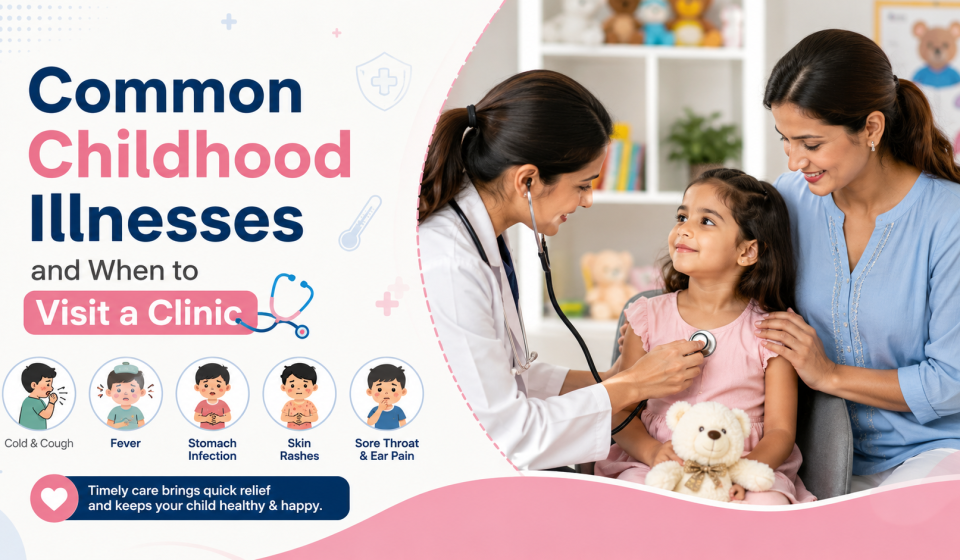

Learn about the most common childhood illnesses, their symptoms, home care tips, warning signs, and when parents should visit a clinic. A complete guide to keeping children healthy and safe.
Every parent wants their child to grow up healthy and happy. However, childhood is often accompanied by several illnesses that can cause worry and stress for families. From common colds and ear infections to stomach bugs and seasonal allergies, children experience a variety of health conditions as their immune systems develop.
While many childhood illnesses can be managed safely at home, some symptoms require medical attention. Understanding the difference between minor illnesses and potentially serious conditions can help parents make informed decisions about when to visit a healthcare clinic.
This guide explains the most common childhood illnesses, their symptoms, home care options, and the warning signs that indicate it’s time to seek professional medical care.
Why Children Get Sick More Often
Children, especially those attending daycare centers and schools, are exposed to numerous viruses and bacteria. Their immune systems are still developing, making them more susceptible to infections than adults.
Several factors contribute to frequent childhood illnesses, including:
- Developing immune systems
- Close contact with other children
- Poor hand hygiene habits
- Seasonal changes
- Exposure to allergens
- Nutritional deficiencies
- Environmental factors
Experts estimate that young children may experience six to eight respiratory infections annually, which is considered normal.
1. Common Cold
The common cold is one of the most frequent childhood illnesses. It is caused by various viruses and usually resolves within 7 to 10 days.
Symptoms
- Runny or blocked nose
- Sneezing
- Mild cough
- Sore throat
- Low-grade fever
- Mild fatigue
- Reduced appetite
Home Care
Parents can help children recover by:
- Ensuring adequate rest
- Encouraging fluid intake
- Using saline nasal drops
- Running a humidifier
- Providing healthy foods
When to Visit a Clinic
Seek medical attention if:
- Fever lasts more than three days
- Breathing becomes difficult
- Symptoms worsen after initial improvement
- The child becomes unusually sleepy
- The child refuses fluids
2. Fever
Fever itself is not a disease but a sign that the body is fighting an infection.
Common Causes of Fever
- Viral infections
- Bacterial infections
- Ear infections
- Influenza
- Urinary tract infections
- Childhood vaccinations
Home Management
- Dress the child in light clothing
- Offer plenty of fluids
- Allow adequate rest
- Monitor temperature regularly
When to Visit a Clinic
Consult a doctor if:
- A baby under three months develops any fever
- Fever exceeds 104°F (40°C)
- Fever persists for more than three days
- The child experiences seizures
- The child appears confused or lethargic
3. Ear Infections
Ear infections are extremely common among infants and young children due to the structure of their developing ears.
Symptoms
- Ear pain
- Pulling or tugging the ear
- Fever
- Difficulty sleeping
- Irritability
- Temporary hearing problems
Home Care
- Provide adequate rest
- Use pain relief medications as recommended
- Apply warm compresses
When to Visit a Clinic
Visit a healthcare provider if:
- Ear pain is severe
- Symptoms continue beyond 48 hours
- Fluid drains from the ear
- Hearing problems develop
- Fever accompanies ear pain
4. Influenza (Flu)
Influenza is more severe than a common cold and spreads rapidly among children.
Symptoms
- High fever
- Chills
- Body aches
- Severe fatigue
- Cough
- Headache
- Sore throat
Home Care
- Encourage bed rest
- Provide fluids frequently
- Offer nutritious meals
- Monitor symptoms closely
When to Visit a Clinic
Medical evaluation is necessary if:
- Breathing difficulty develops
- The child appears dehydrated
- Symptoms suddenly worsen
- The child becomes unusually sleepy
- Fever remains high despite treatment
5. Stomach Infection (Gastroenteritis)
Stomach infections, commonly called stomach flu, frequently affect children and are usually caused by viruses.
Symptoms
- Vomiting
- Diarrhea
- Abdominal pain
- Fever
- Loss of appetite
- Fatigue
Home Care
- Encourage oral rehydration solutions
- Avoid oily or spicy foods
- Offer small amounts of fluid frequently
- Allow the child to rest
When to Visit a Clinic
Seek medical help if:
- Vomiting persists for more than 24 hours
- Severe dehydration develops
- Blood appears in stool
- The child cannot keep fluids down
- Severe abdominal pain occurs
6. Allergies
Childhood allergies have become increasingly common worldwide.
Common Allergies Include
- Dust allergies
- Food allergies
- Pollen allergies
- Pet allergies
- Skin allergies
Symptoms
- Sneezing
- Itchy eyes
- Skin rash
- Wheezing
- Runny nose
- Swelling
Home Management
- Avoid known triggers
- Maintain household cleanliness
- Follow prescribed allergy treatments
- Monitor symptoms regularly
When to Visit a Clinic
Consult a doctor if:
- Symptoms interfere with daily activities
- Breathing difficulties occur
- Swelling develops
- Reactions worsen over time
7. Hand, Foot, and Mouth Disease
This viral infection commonly affects children under five years old.
Symptoms
- Fever
- Mouth ulcers
- Skin rash
- Blisters on hands and feet
- Reduced appetite
Home Care
- Encourage fluids
- Provide soft foods
- Maintain good hygiene
- Allow adequate rest
When to Visit a Clinic
Visit a healthcare professional if:
- The child becomes dehydrated
- Fever remains high
- Mouth sores prevent eating or drinking
- Symptoms become severe
8. Chickenpox
Although vaccination has reduced cases significantly, chickenpox still occurs in some children.
Symptoms
- Itchy rash
- Fever
- Fatigue
- Headache
- Loss of appetite
Home Care
- Prevent scratching
- Maintain hydration
- Keep fingernails trimmed
- Use soothing lotions if recommended
When to Visit a Clinic
Medical attention is needed if:
- Rash spreads to the eyes
- Breathing difficulties occur
- High fever persists
- Skin infections develop
9. Asthma and Breathing Problems
Many children experience asthma symptoms during childhood.
Symptoms
- Wheezing
- Persistent cough
- Chest tightness
- Difficulty breathing
- Exercise intolerance
Home Management
- Avoid triggers
- Follow treatment plans
- Use prescribed inhalers
- Monitor symptoms
When to Visit a Clinic
Seek immediate medical care if:
- Breathing becomes difficult
- Lips turn blue
- Wheezing worsens
- Rescue medications fail to help
10. Skin Infections and Rashes
Children commonly develop skin conditions ranging from harmless rashes to infections.
Common Conditions
- Eczema
- Ringworm
- Impetigo
- Heat rash
- Contact dermatitis
Symptoms
- Redness
- Itching
- Swelling
- Blisters
- Dry skin
When to Visit a Clinic
Consult a healthcare provider if:
- The rash spreads rapidly
- Fever accompanies the rash
- The rash becomes painful
- Infection is suspected
Warning Signs Parents Should Never Ignore
Parents should seek immediate medical care if a child experiences:
- Difficulty breathing
- Severe dehydration
- Persistent high fever
- Seizures
- Unconsciousness
- Severe headache with vomiting
- Blue lips or skin
- Severe abdominal pain
- Persistent chest pain
- Confusion or unusual drowsiness
How Clinics Help Children Recover
Modern healthcare clinics provide comprehensive care for childhood illnesses through:
- Physical examinations
- Laboratory testing
- Vaccination services
- Pediatric consultations
- Prescription medications
- Follow-up care
- Preventive health advice
- Nutritional counseling
Early medical evaluation can prevent complications and help children recover more quickly.
Prevention Tips for Parents
Preventing childhood illnesses is always better than treating them. Parents can reduce the risk of infections by:
- Encouraging frequent hand washing
- Keeping vaccinations up to date
- Providing balanced nutrition
- Ensuring adequate sleep
- Promoting physical activity
- Maintaining proper hygiene
- Avoiding exposure to sick individuals
- Scheduling regular health check-ups
Sources
https://l1nq.com/5d870aa
https://sl1nk.com/dtowznc
Conclusion
Childhood illnesses are a normal part of growing up, and most children recover quickly with proper care and attention. However, recognizing when symptoms require professional medical evaluation is essential for preventing complications and ensuring a child’s safety. Parents should trust their instincts and seek medical advice whenever they feel concerned about their child’s condition.
Regular clinic visits, preventive healthcare, vaccinations, and healthy lifestyle habits can significantly reduce the risk of serious illnesses. By understanding common childhood diseases and their warning signs, parents can make informed decisions that protect their children’s health and well-being.
Frequently Asked Questions (FAQs)
1. How often do children usually get sick?
Most young children experience approximately 6 to 8 illnesses per year as their immune systems develop.
2. When should I worry about my child’s fever?
You should seek medical advice if your child is younger than three months, has a fever above 104°F, or if the fever lasts more than three days.
3. Can childhood illnesses be prevented completely?
No, but proper hygiene, vaccinations, balanced nutrition, and regular health check-ups can significantly reduce the risk.
4. Should I take my child to the clinic for every cough and cold?
No. Mild colds often improve at home. However, severe symptoms, breathing problems, or prolonged illness require medical evaluation.
5. What is the biggest sign that a child needs urgent medical attention?
Difficulty breathing, severe dehydration, seizures, or unusual drowsiness require immediate medical care.