
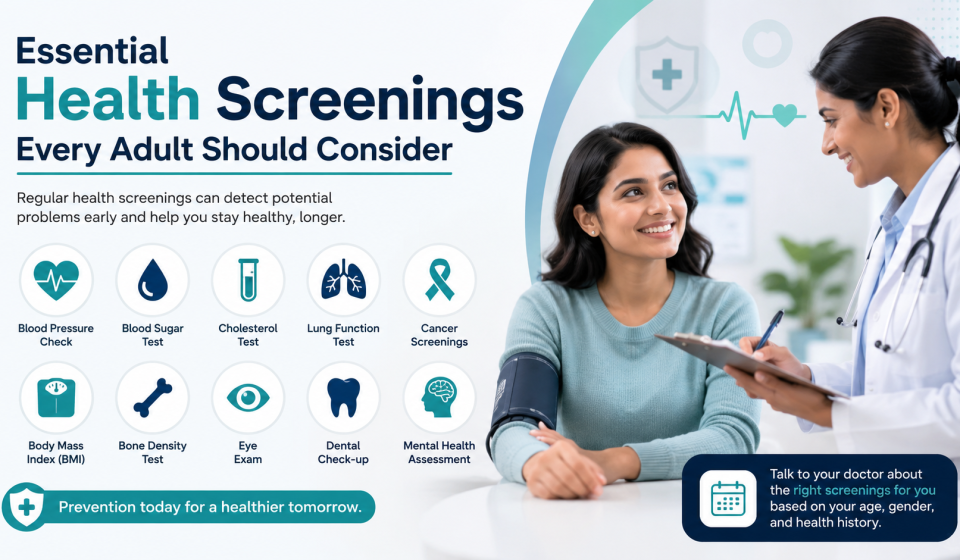

Learn about the essential health screenings every adult should consider to detect diseases early, prevent health complications, and maintain long-term wellness. Discover recommended tests, their benefits, and when to get screened.
In today’s fast-paced world, many people prioritize work, family, and daily responsibilities over their health. While maintaining a healthy diet and exercising regularly are important, preventive healthcare plays an equally crucial role in ensuring a long and healthy life. One of the most effective ways to protect your health is through regular health screenings.
Health screenings help identify potential medical conditions before symptoms appear, allowing doctors to provide early treatment and prevent serious complications. Many diseases, including diabetes, hypertension, cancer, and heart disease, can develop silently over several years. Early detection through screening can significantly improve treatment outcomes and quality of life.
This comprehensive guide explores the essential health screenings every adult should consider, why they matter, and when you should schedule them.
Why Are Health Screenings Important?
Health screenings are preventive medical tests performed to detect diseases or risk factors in otherwise healthy individuals. Their primary purpose is to identify health problems early, when treatment is often easier, less expensive, and more effective.
Regular screenings can help:
- Detect diseases before symptoms develop
- Prevent serious health complications
- Reduce healthcare costs over time
- Improve treatment success rates
- Promote healthier lifestyle choices
- Increase life expectancy
For example, someone with high blood pressure may feel perfectly healthy, but untreated hypertension can eventually lead to heart attacks, strokes, and kidney disease. A simple blood pressure check can prevent years of health complications.
1. Blood Pressure Screening
High blood pressure, also known as hypertension, is often called the “silent killer” because it typically causes no symptoms until significant damage has occurred.
Why It Matters
Uncontrolled blood pressure increases the risk of:
- Heart disease
- Stroke
- Kidney disease
- Heart failure
- Vision problems
Who Should Get Screened?
All adults aged 18 years and older should have their blood pressure checked regularly. People with diabetes, obesity, or a family history of heart disease may require more frequent monitoring.
Recommended Frequency
- Ages 18–39: Every 3–5 years if normal
- Age 40 and older: Annually
- High-risk individuals: As advised by a healthcare provider
2. Blood Sugar (Diabetes) Screening
Type 2 diabetes affects millions of adults worldwide, and many individuals remain undiagnosed for years.
Why It Matters
Early diagnosis can prevent:
- Kidney failure
- Heart disease
- Nerve damage
- Vision loss
- Stroke
Common Tests
- Fasting Blood Sugar Test
- HbA1c Test
- Oral Glucose Tolerance Test
Who Should Get Screened?
Adults who:
- Are over 35 years old
- Are overweight or obese
- Have a family history of diabetes
- Have high blood pressure
- Have PCOS or gestational diabetes history
Recommended Frequency
Every three years for average-risk adults, or more frequently for high-risk individuals.
3. Cholesterol Screening
High cholesterol contributes significantly to heart disease and stroke.
Why It Matters
Excess cholesterol can build up in arteries and lead to:
- Heart attacks
- Stroke
- Peripheral artery disease
Tests Included
A lipid profile typically measures:
- Total cholesterol
- LDL (“bad”) cholesterol
- HDL (“good”) cholesterol
- Triglycerides
Recommended Frequency
- Adults aged 20 and above: Every 4–6 years
- High-risk adults: More frequently
4. Body Mass Index (BMI) and Obesity Screening
Obesity has become one of the leading health concerns globally.
Why It Matters
Being overweight increases the risk of:
- Diabetes
- Heart disease
- High blood pressure
- Sleep apnea
- Certain cancers
Assessment Methods
Healthcare providers evaluate:
- BMI
- Waist circumference
- Body composition
- Lifestyle factors
Recommended Frequency
During annual health checkups.
5. Cancer Screenings
Cancer screening helps identify cancer at its earliest stages.
Breast Cancer Screening
Women should discuss mammography with their doctor based on age and risk factors.
Recommended:
- Ages 40–74: Mammogram every 1–2 years
Cervical Cancer Screening
Women should undergo:
- Pap smear
- HPV testing
Recommended:
- Ages 21–29: Pap test every 3 years
- Ages 30–65: HPV/Pap testing as advised
Colorectal Cancer Screening
Screening options include:
- Colonoscopy
- Stool tests
- Sigmoidoscopy
Recommended:
- Adults aged 45 and older
Prostate Cancer Screening
Men should discuss PSA testing with their healthcare provider, especially if they have risk factors or family history.
Skin Cancer Screening
Regular skin examinations can help detect melanoma and other skin cancers early.
6. Heart Disease Screening
Cardiovascular disease remains one of the leading causes of death worldwide.
Important Screenings Include:
- Blood pressure testing
- Cholesterol testing
- Blood sugar testing
- ECG (if recommended)
- Cardiovascular risk assessment
Who Needs It?
Individuals with:
- Family history of heart disease
- Smoking history
- Obesity
- Diabetes
- Hypertension
7. Bone Density Screening
Bone density testing identifies osteoporosis and fracture risk.
Why It Matters
Weak bones can lead to:
- Hip fractures
- Spine fractures
- Loss of mobility
- Chronic pain
Recommended For:
- Women aged 65+
- Men aged 70+
- Adults with osteoporosis risk factors
8. Eye Examination
Regular eye exams can detect both vision problems and serious diseases.
Conditions Detected
- Glaucoma
- Cataracts
- Diabetic retinopathy
- Macular degeneration
Recommended Frequency
- Ages 18–39: Every 2–4 years
- Ages 40–64: Every 2 years
- Age 65+: Annually
9. Dental Screening
Oral health directly affects overall health.
Benefits of Dental Checkups
- Prevent tooth decay
- Detect gum disease
- Identify oral cancer
- Improve overall health
Recommended Frequency
Every six months.
10. Mental Health Screening
Mental health is equally important as physical health.
Common Conditions Screened
- Anxiety disorders
- Depression
- Stress-related disorders
- Sleep disorders
Warning Signs
Seek professional help if you experience:
- Persistent sadness
- Anxiety
- Sleep problems
- Loss of interest in activities
- Difficulty concentrating
11. Thyroid Function Screening
Thyroid disorders are common and often overlooked.
Symptoms May Include
- Fatigue
- Weight changes
- Hair loss
- Mood swings
- Irregular periods
Tests Include
- TSH
- T3
- T4
Adults with symptoms, family history, or hormonal concerns should consider thyroid screening.
12. Liver and Kidney Function Tests
These tests assess how well your organs function.
Liver Function Tests Detect:
- Fatty liver disease
- Hepatitis
- Liver damage
Kidney Function Tests Detect:
- Chronic kidney disease
- Kidney failure risk
- Diabetes-related kidney complications
Age-Wise Health Screening Recommendations
Ages 18–30
- Blood pressure
- BMI assessment
- Mental health screening
- Dental examination
- Eye examination
Ages 30–45
- Diabetes screening
- Cholesterol testing
- Thyroid screening
- Cancer risk assessment
Ages 45–60
- Colon cancer screening
- Heart disease evaluation
- Bone health assessment
- Liver and kidney function tests
Age 60+
- Comprehensive annual health examination
- Bone density testing
- Cancer screening
- Vision and hearing assessment
- Cardiovascular evaluation
Lifestyle Habits That Support Better Screening Results
Health screenings are most effective when combined with healthy habits:
- Exercise regularly
- Eat a balanced diet
- Maintain a healthy weight
- Avoid tobacco products
- Limit alcohol consumption
- Sleep 7–8 hours daily
- Manage stress effectively
- Follow your doctor’s recommendations
Real-Life Example
Rajesh, a 42-year-old office employee from Ahmedabad, felt perfectly healthy and rarely visited doctors. During a routine health check-up organized by his company, he discovered he had high blood pressure and prediabetes. Because these conditions were detected early, he adopted healthier eating habits, started exercising regularly, and followed medical advice. Within one year, he successfully controlled both conditions and significantly reduced his risk of developing serious health complications.
His experience demonstrates how preventive screenings can save lives.
Sources
https://sl1nk.com/cma839l
https://sl1nk.com/jpg5irb
Conclusion
Regular health screenings are one of the smartest investments you can make in your future health. Many serious illnesses develop silently and remain undetected until complications occur. Routine screenings help identify problems early, allowing for timely treatment and better outcomes.
Whether you are in your twenties or your sixties, scheduling regular health checkups can significantly improve your quality of life and reduce the risk of serious diseases. Prevention is always better, safer, and less expensive than treatment after a disease has progressed. Speak with your healthcare provider to create a personalized screening plan based on your age, medical history, family history, and lifestyle.
Frequently Asked Questions (FAQs)
1. How often should adults undergo a complete health check-up?
Most adults should have a general health check-up once every year, although the frequency may vary depending on age, lifestyle, and existing medical conditions.
2. At what age should cancer screenings begin?
The age varies depending on the type of cancer. For example, colorectal cancer screening generally starts at age 45, while breast cancer screening often begins around age 40.
3. Are health screenings necessary if I feel healthy?
Yes. Many serious conditions such as diabetes, hypertension, and certain cancers may not show symptoms during their early stages.
4. Which health screening is most important?
There is no single most important screening. Blood pressure, blood sugar, cholesterol, cancer screenings, and routine physical examinations are all essential.
5. Can regular screenings prevent diseases?
While screenings do not prevent all diseases directly, they help identify risk factors and detect diseases early, allowing timely intervention and better health outcomes.