
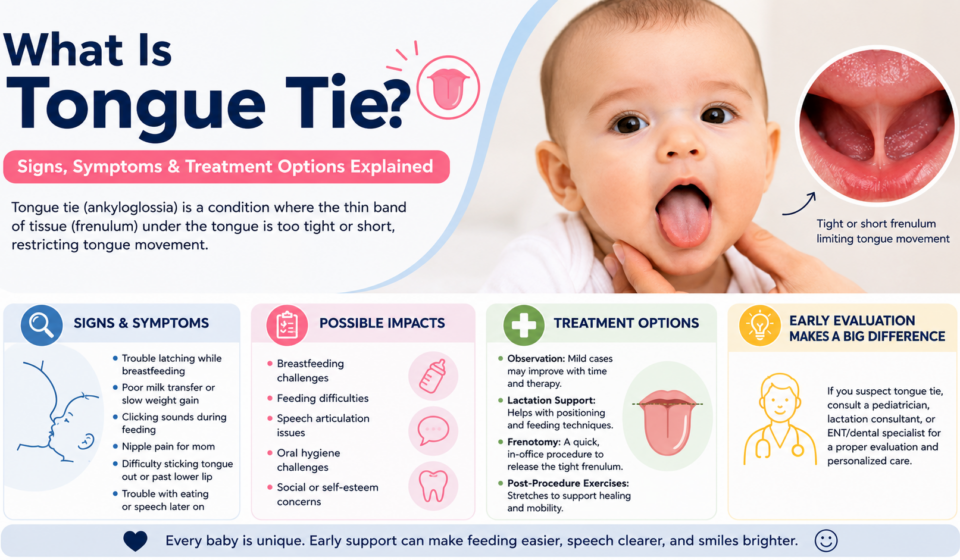

Tongue tie, medically known as ankyloglossia, is a common condition present at birth that can affect a baby’s ability to breastfeed, speak, eat, and perform normal tongue movements. While some cases are mild and require no treatment, others can significantly impact oral function and quality of life.
Many parents first learn about tongue tie when they notice feeding difficulties in their newborn or receive a recommendation from a pediatrician, lactation consultant, or dentist. Understanding the signs, symptoms, and available treatment options can help families make informed healthcare decisions.
In this article, we’ll explain what tongue tie is, how it affects children and adults, the common symptoms to watch for, and the treatment options available.
What Is Tongue Tie?
Tongue tie (ankyloglossia) occurs when the thin band of tissue connecting the underside of the tongue to the floor of the mouth, known as the lingual frenulum, is shorter, tighter, or thicker than normal.
This restricted tissue limits the tongue’s range of motion. Depending on the severity, tongue tie may interfere with feeding, swallowing, speech development, oral hygiene, and other everyday functions.
Tongue tie is a congenital condition, meaning it develops before birth and is present from infancy. It can occur in both boys and girls, although some studies suggest it may be slightly more common in males.
How Common Is Tongue Tie?
Tongue tie is more common than many people realize. Research estimates that approximately 4% to 11% of newborns are born with some degree of tongue tie.
With increased awareness among healthcare providers and parents, more cases are being identified today than in previous decades. However, not every tongue tie causes symptoms or requires treatment.
What Causes Tongue Tie?
The exact cause of tongue tie is not always known. During fetal development, the lingual frenulum typically separates and allows greater tongue mobility. In babies with tongue tie, this process remains incomplete.
Potential contributing factors include:
- Genetic influences
- Family history of tongue tie
- Developmental variations during pregnancy
While researchers continue to study the condition, tongue tie is generally considered a natural variation in oral anatomy rather than a preventable disorder.
Signs and Symptoms of Tongue Tie in Babies
Tongue tie often becomes noticeable during infancy, particularly when feeding challenges arise.
Common Signs in Babies
Parents may observe:
- Difficulty latching during breastfeeding
- Frequent slipping off the breast
- Clicking sounds while feeding
- Extended feeding sessions
- Poor weight gain
- Fussiness during feeds
- Inadequate milk transfer
- Difficulty sticking the tongue out past the lower gums
Signs Experienced by Breastfeeding Mothers
Mothers may also notice symptoms, including:
- Painful breastfeeding
- Cracked or damaged nipples
- Frequent nipple soreness
- Reduced milk supply
- Engorgement due to ineffective feeding
When feeding difficulties persist, an evaluation by a healthcare professional is recommended.
Symptoms of Tongue Tie in Toddlers and Children
As children grow, tongue tie can continue to affect oral function.
Speech Difficulties
Some children may struggle with sounds that require tongue mobility, including:
- T
- D
- L
- R
- S
- Z
- TH sounds
Not every child with tongue tie develops speech problems, but restricted tongue movement can contribute to articulation challenges.
Eating Difficulties
Children may experience:
- Trouble licking ice cream
- Difficulty clearing food from teeth
- Problems chewing certain foods
- Messy eating habits
- Difficulty swallowing
Oral Hygiene Issues
Limited tongue mobility can make it harder to:
- Remove food debris naturally
- Clean the mouth effectively
- Maintain optimal oral hygiene
This may increase the risk of cavities, plaque buildup, and gum problems.
Tongue Tie Symptoms in Adults
Some individuals reach adulthood without receiving a diagnosis.
Adults with tongue tie may experience:
- Speech concerns
- Jaw tension
- Difficulty kissing
- Challenges with oral hygiene
- Restricted tongue movement
- Neck discomfort
- Sleep-related breathing concerns in certain cases
Many adults discover they have tongue tie during dental evaluations or while seeking treatment for ongoing oral function issues.
How Is Tongue Tie Diagnosed?
Diagnosis typically involves a physical examination performed by a pediatrician, dentist, ENT specialist, oral surgeon, or lactation consultant.
Healthcare providers evaluate:
- Tongue appearance
- Tongue mobility
- Feeding effectiveness
- Speech function
- Oral anatomy
Several assessment tools may be used to determine the severity of restriction and whether treatment is necessary.
Early evaluation is important when symptoms are affecting feeding, growth, speech, or daily activities.
Types of Tongue Tie
Tongue ties can vary in severity and location.
Anterior Tongue Tie
This is the most visible form. The frenulum attaches near the tip of the tongue, making restriction easier to identify during examination.
Posterior Tongue Tie
Posterior tongue tie occurs deeper beneath the tongue and may be more difficult to diagnose. Although less obvious visually, it can still cause significant feeding and functional challenges.
A thorough assessment by an experienced healthcare provider is often necessary for accurate diagnosis.
Treatment Options for Tongue Tie
Not every tongue tie requires intervention.
Treatment recommendations depend on:
- Severity of restriction
- Presence of symptoms
- Feeding difficulties
- Speech concerns
- Overall impact on quality of life
Observation and Monitoring
For mild cases without symptoms, healthcare providers may recommend monitoring rather than immediate treatment.
Regular follow-up appointments can help determine whether intervention becomes necessary later.
Lactation Support
For infants experiencing breastfeeding challenges, lactation consultants often provide techniques that improve feeding effectiveness.
Supportive measures may include:
- Positioning adjustments
- Latch improvement strategies
- Feeding guidance
- Milk transfer assessment
In some cases, these interventions significantly improve feeding without surgery.
Speech Therapy
Children experiencing speech difficulties may benefit from speech-language therapy.
Speech therapists can help improve articulation, tongue coordination, and oral motor function.
Frenotomy
A frenotomy is the most common procedure used to treat tongue tie.
During the procedure:
- The restrictive frenulum is released using sterile scissors or a laser.
- The procedure is typically quick.
- In newborns, it often takes only a few minutes.
- Recovery is usually rapid.
Many babies can feed immediately after treatment.
Frenuloplasty
For more complex or severe cases, a frenuloplasty may be recommended.
This procedure:
- Involves surgical correction of the frenulum
- May require sutures
- Is often performed under anesthesia
- Provides greater correction when needed
Healthcare providers determine the most appropriate treatment based on individual circumstances.
What Happens After Tongue Tie Treatment?
Most patients recover quickly following treatment.
After a frenotomy or frenuloplasty, providers may recommend:
- Tongue mobility exercises
- Feeding support
- Follow-up appointments
- Oral function therapy
Parents often notice improvements in:
- Breastfeeding comfort
- Feeding efficiency
- Weight gain
- Tongue movement
For older children and adults, improvements may occur gradually as oral function adapts.
Are There Risks Associated with Tongue Tie Procedures?
Tongue tie treatment is generally considered safe when performed by qualified healthcare professionals.
Potential risks may include:
- Minor bleeding
- Temporary discomfort
- Infection (rare)
- Scar tissue formation
- Reattachment of the frenulum
Healthcare providers discuss potential risks and benefits before recommending treatment.
Can Tongue Tie Affect Speech Development?
This is one of the most common questions parents ask.
While tongue tie does not automatically cause speech delays, restricted tongue movement may contribute to articulation difficulties in some children.
A comprehensive speech evaluation can help determine whether tongue tie is affecting communication skills.
Early intervention often leads to better outcomes when speech concerns are present.
When Should You See a Healthcare Provider?
Consider scheduling an evaluation if your child experiences:
- Breastfeeding difficulties
- Poor weight gain
- Feeding frustration
- Limited tongue movement
- Speech concerns
- Persistent oral function problems
Adults experiencing ongoing symptoms may also benefit from professional assessment.
Early diagnosis can help prevent complications and support healthy development.
Sources
NHS – Tongue-tie
Mayo Clinic – Tongue-tie: Diagnosis and Treatment
Final Thoughts
Tongue tie is a common condition that can affect feeding, speech, oral health, and overall quality of life. While not every case requires treatment, recognizing the signs and symptoms early can help families access appropriate care when needed.
If you suspect your child may have tongue tie, consulting a qualified healthcare provider can provide clarity and guidance. With proper evaluation and treatment when necessary, most individuals experience significant improvements in oral function, feeding success, and daily comfort.
Early diagnosis and personalized care remain the key to achieving the best outcomes for both children and adults living with tongue tie.
Frequently Asked Questions
Does every tongue tie need treatment?
No. Many mild tongue ties do not cause symptoms and may not require intervention.
Is tongue tie painful?
Tongue tie itself is usually not painful. However, it can contribute to feeding difficulties, discomfort during breastfeeding, or oral function problems.
Can tongue tie improve on its own?
Some mild cases become less problematic as children grow. However, significant restrictions generally do not disappear completely without treatment.
How long does tongue tie surgery take?
A simple frenotomy often takes only a few minutes, especially in infants.
Is tongue tie hereditary?
Research suggests there may be a genetic component, and tongue tie can sometimes run in families.