

Breastfeeding is one of the most important aspects of a newborn’s growth and development. It provides essential nutrients, strengthens the immune system, and creates a strong bond between mother and baby. However, for some families, breastfeeding can become a challenging experience due to a condition known as tongue tie.
Tongue tie, medically referred to as ankyloglossia, is a common oral condition that can significantly impact a baby’s ability to breastfeed effectively. Many parents struggle to understand why their baby has difficulty latching, feeds frequently, or fails to gain weight properly. In many cases, an untreated tongue tie may be the underlying cause.
This article explains how tongue tie affects breastfeeding in newborn babies, its symptoms, potential complications, and available treatment options.
What Is Tongue Tie?
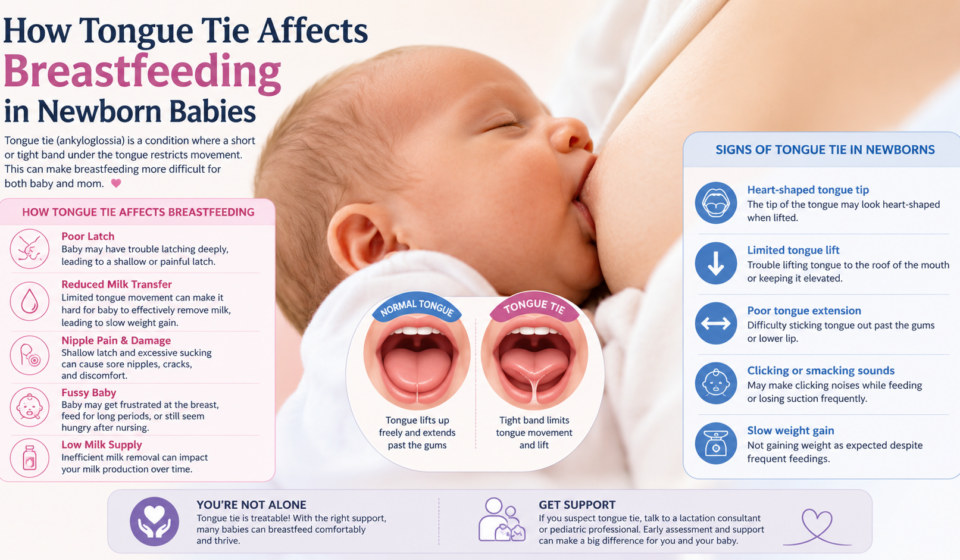
Tongue tie occurs when the thin piece of tissue connecting the underside of the tongue to the floor of the mouth, known as the lingual frenulum, is unusually short, thick, or tight. This restriction limits the tongue’s range of motion.
A newborn relies heavily on proper tongue movement to latch onto the breast and extract milk efficiently. When the tongue cannot move freely, breastfeeding difficulties often arise.
Tongue tie can range from mild to severe. While some babies experience minimal issues, others may face significant feeding challenges that affect both the infant and the mother.
How Breastfeeding Normally Works
To understand the impact of tongue tie, it’s important to know how breastfeeding functions.
During breastfeeding, a baby must:
- Open the mouth wide.
- Extend the tongue over the lower gum.
- Create a secure latch around the breast.
- Generate suction.
- Use coordinated tongue movements to transfer milk.
A healthy tongue plays a crucial role in maintaining suction and effectively removing milk from the breast.
When tongue movement is restricted, these natural processes become difficult, leading to breastfeeding problems.
Signs of Tongue Tie in Newborn Babies
Many parents may not immediately recognize tongue tie. Some common signs include:
In Babies
- Difficulty latching onto the breast
- Frequent loss of latch
- Clicking sounds while feeding
- Prolonged feeding sessions
- Falling asleep during feeds
- Poor weight gain
- Excessive gassiness
- Milk leaking from the mouth
- Frustration during feeding
- Constant hunger after feeding
In Mothers
- Nipple pain during breastfeeding
- Cracked or bleeding nipples
- Flattened nipples after feeding
- Recurrent mastitis
- Reduced milk supply
- Breast engorgement
- Emotional stress and frustration
If multiple symptoms are present, a professional tongue tie assessment may be beneficial.
How Tongue Tie Affects Breastfeeding
1. Difficulty Achieving a Proper Latch
A proper latch is essential for successful breastfeeding.
Babies with tongue tie often struggle to extend their tongue far enough to create a deep latch. Instead of drawing in a large portion of the breast, they may latch only onto the nipple.
This shallow latch can cause:
- Poor milk transfer
- Increased nipple pain
- Frequent feeding interruptions
- Reduced feeding efficiency
Without a proper latch, breastfeeding can become uncomfortable and ineffective.
2. Inefficient Milk Transfer
One of the tongue’s primary functions during breastfeeding is to compress and move milk from the breast.
A restricted tongue cannot perform these movements effectively.
As a result:
- The baby may not receive enough milk.
- Feeding sessions may become excessively long.
- Babies may remain hungry despite frequent feeding.
Over time, inadequate milk intake can affect growth and development.
3. Poor Weight Gain
Insufficient milk transfer often leads to poor weight gain.
Newborns require adequate nutrition to support healthy growth during the first months of life. If breastfeeding difficulties continue without intervention, babies may fail to gain weight at expected rates.
Healthcare providers often investigate feeding issues when weight gain becomes a concern.
Early identification of tongue tie can help prevent long-term feeding challenges.
4. Increased Maternal Nipple Pain
Nipple pain is one of the most common complaints among mothers of tongue-tied babies.
When the tongue cannot maintain a deep latch, the baby may compensate by using excessive gum pressure.
This can lead to:
- Sore nipples
- Cracked skin
- Bleeding
- Severe discomfort during feeding
Many mothers mistakenly assume pain is a normal part of breastfeeding. However, persistent pain often signals an underlying issue that deserves professional evaluation.
5. Reduced Milk Supply
Breast milk production depends on effective milk removal.
When a tongue-tied baby cannot efficiently drain the breast, the body receives signals to produce less milk.
Consequences may include:
- Reduced milk supply
- Breast fullness
- Engorgement
- Increased supplementation needs
Maintaining adequate milk production becomes increasingly difficult when feeding problems persist.
6. Frequent Feeding Sessions
Babies with tongue tie often compensate for poor milk transfer by feeding more frequently.
Parents may notice:
- Feeding every hour
- Very long feeding sessions
- Constant hunger cues
- Difficulty establishing feeding routines
This can lead to exhaustion for both mother and baby.
7. Air Intake and Digestive Issues
A poor latch often allows excessive air to enter the baby’s mouth during feeding.
This may result in:
- Gas
- Reflux symptoms
- Burping difficulties
- Fussiness
- Colic-like behavior
Many digestive symptoms improve once feeding mechanics are addressed.
Long-Term Effects of Untreated Tongue Tie
Although breastfeeding difficulties are often the first concern, untreated tongue tie may contribute to other oral function issues later in life.
Potential long-term effects include:
- Speech difficulties
- Oral development concerns
- Mouth breathing
- Swallowing challenges
- Sleep-disordered breathing
- Dental problems
Not every child with tongue tie will experience these issues, but early assessment can help identify potential risks.
Diagnosing Tongue Tie
Diagnosis typically involves a comprehensive evaluation of:
- Tongue mobility
- Feeding behavior
- Oral anatomy
- Breastfeeding effectiveness
- Maternal symptoms
An experienced healthcare provider can determine whether the tongue restriction is affecting feeding function.
Because every baby is unique, diagnosis should focus on both structure and function rather than appearance alone.
Treatment Options for Tongue Tie
Lactation Support
In some cases, breastfeeding support and positioning adjustments can improve feeding outcomes.
A lactation consultant may help with:
- Latch optimization
- Feeding techniques
- Milk supply management
- Maternal comfort
However, if tongue restriction remains significant, additional intervention may be necessary.
Tongue Tie Release Procedure
A tongue tie release, often called a frenotomy or frenectomy, is a procedure designed to free the tongue’s movement.
Modern laser technology is frequently used because it offers:
- Precision
- Minimal discomfort
- Reduced bleeding
- Faster healing
The procedure is generally quick and can often be completed within minutes.
Many parents report noticeable improvements in breastfeeding shortly after treatment.
Benefits of Early Treatment
Addressing tongue tie early may provide several benefits:
- Improved breastfeeding success
- Better milk transfer
- Reduced nipple pain
- Enhanced weight gain
- Increased maternal confidence
- Improved oral function
Early intervention can help families establish a more comfortable and rewarding breastfeeding experience.
When Should Parents Seek Professional Help?
Parents should consider a professional evaluation if they notice:
- Persistent breastfeeding pain
- Poor infant weight gain
- Difficulty latching
- Frequent feeding struggles
- Clicking sounds during feeding
- Excessive gas or reflux symptoms
Seeking help early can prevent ongoing frustration and support healthy infant development.
How Lumicare Clinic Can Help
At Lumicare Clinic, our team understands the challenges families face when breastfeeding difficulties arise. We provide comprehensive tongue tie assessments and personalized treatment plans designed to support both mothers and babies.
Using advanced diagnostic techniques and modern treatment approaches, we focus on improving oral function, feeding efficiency, and overall well-being.
Our goal is to help families achieve a comfortable and successful breastfeeding journey from the very beginning.
Conclusion
Tongue tie is a common condition that can significantly affect breastfeeding in newborn babies. Restricted tongue movement may lead to poor latching, inadequate milk transfer, nipple pain, frequent feeding sessions, and poor weight gain.
Fortunately, early identification and appropriate treatment can dramatically improve breastfeeding outcomes. Parents who notice feeding difficulties should seek a professional evaluation to determine whether tongue tie may be contributing to the problem.
With proper care and support, most babies with tongue tie can experience improved feeding, healthier growth, and a stronger start in life.
Meta Title:
How Tongue Tie Affects Breastfeeding in Newborn Babies | Complete Guide
Meta Description:
Learn how tongue tie affects breastfeeding in newborn babies, including symptoms, feeding challenges, diagnosis, treatment options, and benefits of early intervention.