
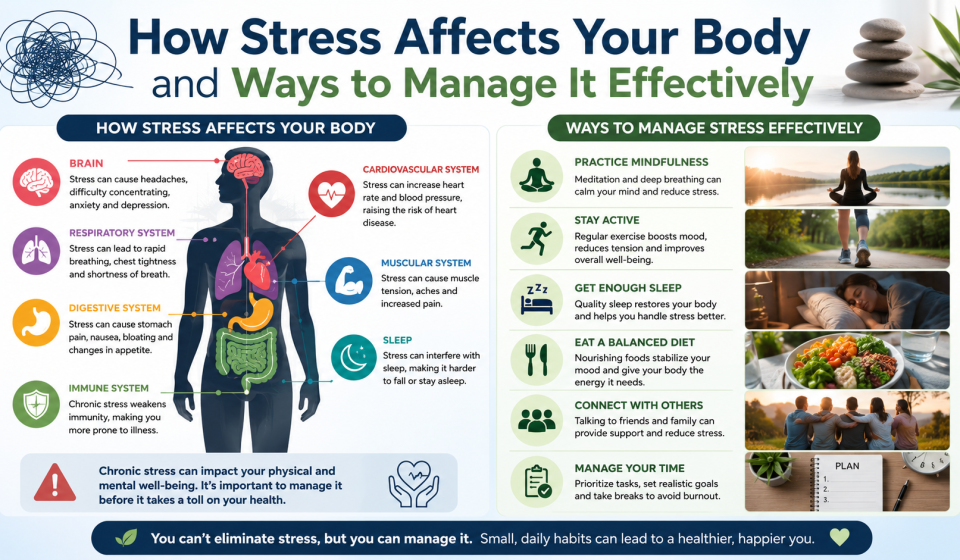

Learn how stress affects your body, mind, and overall health. Discover the physical and emotional symptoms of stress, long-term health risks, and practical, science-backed ways to manage stress effectively for a healthier and happier life.
Stress has become an unavoidable part of modern life. Whether it comes from work deadlines, financial responsibilities, family obligations, health concerns, or personal relationships, almost everyone experiences stress at some point. While a small amount of stress can motivate us to perform better and overcome challenges, chronic or unmanaged stress can negatively impact nearly every system in the body.
Many people assume stress only affects their emotions, but the truth is far more complex. Long-term stress can influence your heart, immune system, digestive health, sleep quality, hormones, skin, and even memory. Understanding how stress works and learning effective stress management techniques can significantly improve your physical and mental well-being.
In this article, we’ll explore how stress affects the body, recognize common symptoms, understand the long-term consequences of chronic stress, and discuss practical ways to manage stress effectively.
What Is Stress?
Stress is your body’s natural response to situations that are challenging, demanding, or threatening. When you encounter a stressful event, your brain activates the “fight-or-flight” response.
During this process:
- The brain releases stress hormones like cortisol and adrenaline.
- Your heart beats faster.
- Blood pressure rises.
- Muscles tighten.
- Breathing becomes quicker.
- Energy levels temporarily increase.
This response is helpful during emergencies because it prepares your body to react quickly. However, when stress continues for weeks or months without relief, your body remains in a constant state of alertness, leading to numerous health problems.
Types of Stress
1. Acute Stress
This is short-term stress caused by immediate situations like:
- Job interviews
- Exams
- Public speaking
- Traffic jams
- Sports competitions
Acute stress usually disappears once the situation ends.
2. Episodic Acute Stress
Some people frequently experience repeated episodes of acute stress due to busy lifestyles or constant worrying.
Examples include:
- Tight work schedules
- Frequent deadlines
- Parenting challenges
- Managing multiple responsibilities
3. Chronic Stress
Chronic stress lasts for weeks, months, or even years.
Common causes include:
- Financial difficulties
- Unhappy relationships
- Long-term caregiving
- Chronic illness
- Workplace pressure
- Emotional trauma
This is the most dangerous type because it continuously affects the body’s systems.
How Stress Affects Your Brain
The brain is one of the first organs influenced by stress.
Difficulty Concentrating
High cortisol levels interfere with attention and focus, making it difficult to complete everyday tasks.
Symptoms include:
- Forgetfulness
- Poor concentration
- Confusion
- Slow decision-making
Anxiety and Mood Changes
Persistent stress increases the risk of:
- Anxiety
- Depression
- Irritability
- Mood swings
- Emotional exhaustion
People often become less patient and more emotionally reactive.
Memory Problems
Research shows that long-term stress may affect the hippocampus—the brain region responsible for learning and memory.
This can result in:
- Forgetting appointments
- Difficulty remembering names
- Reduced learning ability
Effects of Stress on the Heart
Stress places additional strain on the cardiovascular system.
During stressful situations:
- Heart rate increases.
- Blood pressure rises.
- Blood vessels constrict.
If this continues over time, it may contribute to:
- Hypertension
- Heart disease
- Heart attack
- Stroke
People experiencing chronic stress may also adopt unhealthy habits such as smoking, overeating, or avoiding exercise, further increasing cardiovascular risk.
Stress and the Immune System
Short-term stress can temporarily strengthen immune function, but chronic stress weakens the body’s defense system.
As a result, people may experience:
- Frequent colds
- Viral infections
- Slow wound healing
- Increased inflammation
- Reduced resistance to illness
Stress also affects how the body responds to vaccines and infections.
How Stress Affects the Digestive System
The digestive system is highly sensitive to emotional changes.
Stress may cause:
- Stomach pain
- Acid reflux
- Heartburn
- Nausea
- Bloating
- Diarrhea
- Constipation
People with conditions such as Irritable Bowel Syndrome (IBS) often notice symptoms worsening during stressful periods.
Stress and Weight Changes
Stress affects appetite differently for different individuals.
Some people:
- Eat significantly more
- Crave sugary foods
- Consume more processed snacks
Others:
- Lose appetite
- Skip meals
- Experience unintended weight loss
High cortisol levels encourage fat storage, particularly around the abdomen.
Sleep Problems Caused by Stress
Stress is one of the leading causes of poor sleep.
Common sleep issues include:
- Difficulty falling asleep
- Frequent nighttime waking
- Nightmares
- Restless sleep
- Early morning awakening
Poor sleep then increases stress, creating a harmful cycle.
How Stress Affects Your Muscles
When stressed, muscles automatically tighten.
Long-term muscle tension may cause:
- Neck pain
- Shoulder pain
- Lower back pain
- Jaw clenching
- Headaches
- Migraines
Many people unknowingly carry stress in their shoulders and neck throughout the day
Stress and Hormonal Balance
Stress hormones influence many other hormones in the body.
Long-term stress may contribute to:
Women
- Irregular periods
- PMS symptoms
- Reduced fertility
- Hormonal imbalance
Men
- Reduced testosterone
- Lower libido
- Erectile dysfunction
Skin Problems Related to Stress
Stress can worsen several skin conditions.
These include:
- Acne
- Eczema
- Psoriasis
- Rosacea
- Skin irritation
Stress-induced inflammation often makes existing skin problems more severe.
Emotional Symptoms of Stress
Besides physical effects, stress influences emotional health.
Common emotional signs include:
- Constant worry
- Feeling overwhelmed
- Anger
- Irritability
- Low motivation
- Sadness
- Restlessness
- Loss of enjoyment
Ignoring emotional symptoms may eventually lead to burnout.
Behavioral Signs of Stress
Stress often changes daily habits.
People may notice:
- Procrastination
- Nail biting
- Increased alcohol consumption
- Smoking
- Emotional eating
- Social withdrawal
- Poor work performance
- Lack of exercise
Recognizing these changes early allows for timely intervention.
Long-Term Health Risks of Chronic Stress
Without proper management, chronic stress may contribute to:
- High blood pressure
- Heart disease
- Diabetes
- Obesity
- Depression
- Anxiety disorders
- Digestive disorders
- Weakened immunity
- Chronic pain
- Sleep disorders
Stress itself may not directly cause every disease, but it significantly increases the risk of developing many health conditions.
Effective Ways to Manage Stress
Managing stress doesn’t mean eliminating every stressful situation—it means improving your ability to cope with life’s challenges.
1. Exercise Regularly
Physical activity naturally reduces stress hormones while increasing endorphins, which improve mood.
Aim for:
- 30 minutes of walking
- Cycling
- Swimming
- Yoga
- Dancing
Most days of the week.
2. Practice Deep Breathing
Slow breathing activates the body’s relaxation response.
Try:
- Inhale for 4 seconds.
- Hold for 4 seconds.
- Exhale for 6 seconds.
Repeat for five to ten minutes.
3. Get Enough Sleep
Adults should aim for 7–9 hours of quality sleep each night.
Improve sleep by:
- Keeping a consistent bedtime
- Avoiding caffeine late in the day
- Limiting screen time before bed
- Sleeping in a cool, dark room
4. Eat a Balanced Diet
Healthy nutrition supports both brain and body during stressful periods.
Include:
- Fruits
- Vegetables
- Whole grains
- Lean proteins
- Healthy fats
- Nuts
- Seeds
Limit:
- Sugary drinks
- Processed foods
- Excess caffeine
- Alcohol
5. Practice Mindfulness and Meditation
Mindfulness teaches you to stay present instead of worrying about the future.
Even 10 minutes daily may help reduce:
- Anxiety
- Blood pressure
- Cortisol levels
Meditation apps and guided breathing exercises can make it easier for beginners.
6. Stay Connected with Others
Talking to trusted people provides emotional support.
Reach out to:
- Family
- Friends
- Support groups
- Counselors
Social connection helps reduce feelings of isolation.
7. Manage Your Time
Poor time management often increases stress.
Helpful strategies include:
- Prioritizing important tasks
- Breaking large projects into smaller steps
- Using calendars
- Avoiding multitasking
- Taking regular breaks
8. Limit News and Social Media
Constant exposure to negative news and social media comparisons may increase stress and anxiety.
Consider:
- Setting screen time limits
- Taking digital breaks
- Following positive, educational content
9. Learn to Say No
Overcommitting leads to burnout.
Protect your energy by:
- Setting healthy boundaries
- Declining unnecessary responsibilities
- Prioritizing self-care
10. Seek Professional Help
If stress begins interfering with daily life, consult a healthcare professional or mental health specialist.
Professional support may include:
- Cognitive Behavioral Therapy (CBT)
- Stress management counseling
- Lifestyle coaching
- Medication (when appropriate)
Seeking help is a proactive step toward better health.
Daily Stress Management Habits
Simple daily routines can make a significant difference over time.
Healthy habits include:
- Starting the day with gratitude
- Drinking enough water
- Spending time outdoors
- Stretching every morning
- Listening to calming music
- Journaling your thoughts
- Reading a book
- Practicing hobbies
- Spending time with pets
- Laughing more often
Small habits performed consistently often have the greatest long-term impact.
When Should You See a Doctor?
Seek medical advice if you experience:
- Panic attacks
- Chest pain
- Persistent insomnia
- Ongoing sadness
- Thoughts of self-harm
- Significant weight changes
- Constant fatigue
- Inability to function at work or home
Early treatment can prevent stress from leading to more serious health conditions.
Sources
https://sl1nk.com/ro1ubhu
https://www.apa.org/topics/stress
Conclusion
Stress is a natural part of life, but when it becomes constant, it can affect nearly every organ and system in your body. From headaches and digestive problems to heart disease, sleep disturbances, weakened immunity, and emotional burnout, chronic stress has far-reaching consequences that should never be ignored.
The good news is that stress can be managed effectively through healthy lifestyle habits, regular physical activity, balanced nutrition, quality sleep, mindfulness practices, and strong social support. Recognizing stress early and taking proactive steps can improve your overall health, increase resilience, and enhance your quality of life. Remember that seeking professional help is a sign of strength, not weakness, especially if stress begins interfering with your daily routine or emotional well-being.
Frequently Asked Questions (FAQs)
1. What are the first physical signs of stress?
Common early signs include headaches, muscle tension, rapid heartbeat, fatigue, digestive discomfort, trouble sleeping, and difficulty concentrating.
2. Can stress cause serious health problems?
Yes. Chronic stress can increase the risk of high blood pressure, heart disease, anxiety, depression, diabetes, obesity, digestive disorders, and weakened immunity.
3. What is the fastest way to reduce stress?
Deep breathing exercises, short walks, meditation, stretching, and talking to a trusted friend or family member can help reduce stress quickly.
4. How much exercise helps reduce stress?
Most health experts recommend at least 150 minutes of moderate-intensity exercise per week, which can significantly improve stress levels and overall health.
5. When should I seek professional help for stress?
You should consult a healthcare provider if stress persists for several weeks, affects your relationships or work, causes severe anxiety or depression, disrupts sleep consistently, or leads to thoughts of self-harm.