
Learn about the most common nutritional deficiencies, their symptoms, causes, health risks, and practical prevention tips. Discover how a balanced diet and healthy lifestyle can help you avoid vitamin and mineral deficiencies naturally.
Good nutrition is one of the most important foundations of a healthy life. Every cell, tissue, and organ in our body depends on vitamins, minerals, proteins, fats, and carbohydrates to function properly. However, millions of people worldwide unknowingly suffer from nutritional deficiencies because their bodies do not receive enough essential nutrients.
A nutritional deficiency develops when the body lacks the necessary vitamins or minerals required for normal growth, metabolism, immunity, and overall health. These deficiencies can affect anyone regardless of age, though children, pregnant women, older adults, and people with chronic illnesses are often at higher risk.
Many symptoms of nutrient deficiencies are subtle in the beginning. Feeling tired all the time, frequent infections, brittle nails, hair loss, muscle weakness, poor concentration, or slow wound healing may all indicate that your body is lacking essential nutrients.
Fortunately, most nutritional deficiencies are preventable through healthy eating habits, proper lifestyle choices, and regular health check-ups.
In this comprehensive guide, we’ll explore the most common nutritional deficiencies, their symptoms, causes, health effects, and practical ways to prevent them.
What Is a Nutritional Deficiency?
A nutritional deficiency occurs when your body doesn’t receive or absorb enough essential nutrients needed for proper functioning.
These nutrients include:
- Vitamins
- Minerals
- Protein
- Healthy fats
- Essential amino acids
- Trace elements
Even mild deficiencies can negatively affect your physical health, mental well-being, immune system, and energy levels.
Why Nutritional Deficiencies Are Becoming More Common
Several modern lifestyle habits contribute to nutrient deficiencies, including:
- Eating processed and fast foods regularly
- Skipping meals
- Restrictive dieting
- Poor digestive health
- Chronic stress
- Sedentary lifestyle
- Excessive alcohol consumption
- Smoking
- Certain medications that reduce nutrient absorption
People often consume enough calories but not enough nutrients—a condition sometimes referred to as “hidden hunger.”
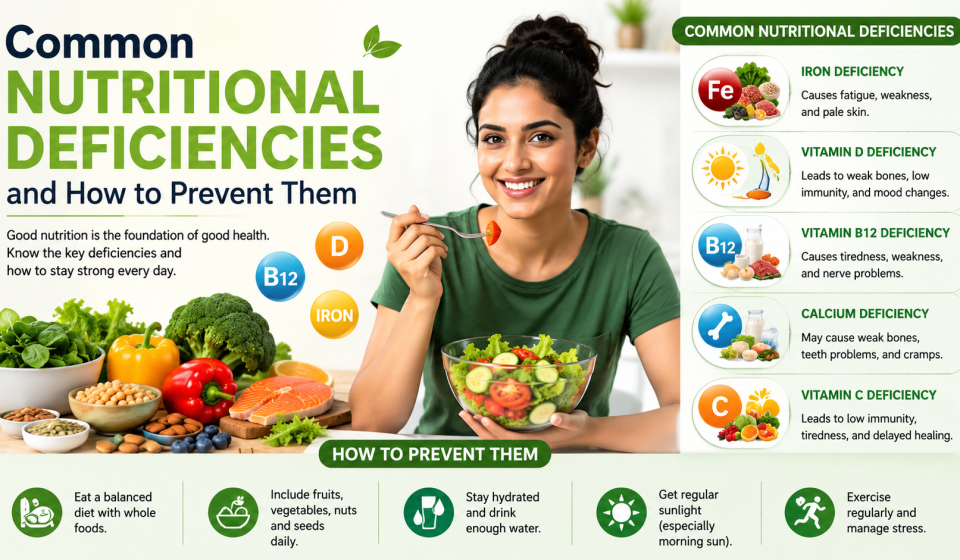
1. Iron Deficiency
Iron deficiency is one of the most common nutritional deficiencies worldwide and is the leading cause of anemia.
Why Iron Is Important
Iron helps produce hemoglobin, the protein in red blood cells that carries oxygen throughout the body.
Common Symptoms
- Constant fatigue
- Weakness
- Pale skin
- Shortness of breath
- Cold hands and feet
- Frequent headaches
- Dizziness
- Hair loss
- Brittle nails
Who Is at Risk?
- Women with heavy menstrual periods
- Pregnant women
- Children
- Vegetarians and vegans
- Frequent blood donors
Iron-Rich Foods
- Lean red meat
- Chicken
- Fish
- Spinach
- Lentils
- Beans
- Tofu
- Pumpkin seeds
- Iron-fortified cereals
Prevention Tips
- Eat vitamin C-rich foods with iron-rich meals.
- Avoid drinking tea or coffee immediately after meals.
- Include both plant and animal sources of iron.
2. Vitamin D Deficiency
Vitamin D deficiency affects billions of people globally.
Why Vitamin D Matters
Vitamin D helps the body absorb calcium and supports:
- Bone health
- Immune function
- Muscle strength
- Brain health
Symptoms
- Bone pain
- Muscle weakness
- Frequent illness
- Fatigue
- Mood changes
- Depression
- Slow healing
Causes
- Limited sunlight exposure
- Sunscreen overuse
- Indoor lifestyle
- Aging
- Darker skin pigmentation
Best Sources
- Sunlight
- Fatty fish
- Egg yolks
- Mushrooms
- Fortified milk
- Fortified cereals
Prevention
Spend 15–30 minutes in sunlight several days a week (depending on skin type, location, and weather), consume vitamin D-rich foods, and discuss supplementation with a healthcare professional if recommended.
3. Vitamin B12 Deficiency
Vitamin B12 is essential for nerve function and red blood cell production.
Symptoms
- Tingling in hands and feet
- Memory problems
- Fatigue
- Weakness
- Difficulty walking
- Mood changes
- Poor concentration
High-Risk Groups
- Vegans
- Vegetarians
- Older adults
- People with digestive disorders
- Individuals taking certain acid-reducing medications long-term
Food Sources
- Meat
- Fish
- Eggs
- Dairy products
- Fortified cereals
- Fortified plant-based milk
Prevention
Vegetarians and vegans should include fortified foods and consult a healthcare provider about B12 supplements if needed.
4. Calcium Deficiency
Calcium is vital for:
- Strong bones
- Healthy teeth
- Muscle contraction
- Heart function
- Nerve signaling
Symptoms
- Muscle cramps
- Weak nails
- Tooth decay
- Bone pain
- Numbness
- Osteoporosis in severe cases
Calcium Sources
- Milk
- Yogurt
- Cheese
- Tofu
- Almonds
- Sesame seeds
- Broccoli
- Kale
Prevention
Pair calcium-rich foods with adequate vitamin D intake to improve absorption.
5. Magnesium Deficiency
Magnesium participates in over 300 biochemical reactions in the body.
Symptoms
- Muscle cramps
- Fatigue
- Anxiety
- Poor sleep
- Headaches
- Irregular heartbeat
- Weakness
Food Sources
- Nuts
- Seeds
- Whole grains
- Spinach
- Dark chocolate
- Avocados
- Legumes
Prevention
Limit highly processed foods and include magnesium-rich whole foods regularly.
6. Zinc Deficiency
Zinc supports:
- Immune system
- Wound healing
- Growth
- Reproductive health
- Taste and smell
Symptoms
- Frequent infections
- Hair loss
- Poor wound healing
- Loss of appetite
- Reduced sense of taste
- Skin problems
Zinc-Rich Foods
- Meat
- Seafood
- Pumpkin seeds
- Chickpeas
- Beans
- Dairy
- Whole grains
7. Folate (Vitamin B9) Deficiency
Folate is particularly important during pregnancy.
Symptoms
- Fatigue
- Mouth ulcers
- Poor concentration
- Anemia
- Irritability
Food Sources
- Spinach
- Broccoli
- Lentils
- Beans
- Citrus fruits
- Avocados
Pregnant women often require folic acid supplementation as advised by their healthcare provider.
8. Iodine Deficiency
Iodine helps produce thyroid hormones.
Symptoms
- Fatigue
- Weight gain
- Cold intolerance
- Swelling in the neck (goiter)
- Dry skin
Sources
- Iodized salt
- Seafood
- Dairy products
- Eggs
- Seaweed (consume in moderation)
9. Potassium Deficiency
Potassium supports:
- Heart function
- Muscle contractions
- Blood pressure regulation
- Nerve function
Symptoms
- Muscle weakness
- Fatigue
- Constipation
- Heart rhythm disturbances
- Muscle cramps
Sources
- Bananas
- Sweet potatoes
- Coconut water
- Oranges
- Tomatoes
- Beans
- Yogurt
- Spinach
Protein Deficiency
Although less common in many developed settings, protein deficiency can occur in people with poor diets, certain illnesses, or increased nutritional needs.
Symptoms
- Muscle loss
- Weak immunity
- Swelling
- Hair thinning
- Slow wound healing
- Fatigue
Healthy Protein Sources
- Eggs
- Fish
- Chicken
- Lentils
- Beans
- Greek yogurt
- Cottage cheese
- Soy products
- Nuts
Common Warning Signs of Nutritional Deficiencies
Watch for these signs:
- Persistent tiredness
- Hair fall
- Dry skin
- Frequent illness
- Mouth ulcers
- Muscle cramps
- Poor concentration
- Weak nails
- Bone pain
- Slow healing
- Mood swings
- Tingling sensations
These symptoms can have many causes, so consult a healthcare professional for proper evaluation rather than self-diagnosing.
How Doctors Diagnose Nutritional Deficiencies
Healthcare providers may recommend:
- Blood tests
- Vitamin level assessments
- Iron studies
- Thyroid function tests
- Bone density scans (if indicated)
- Dietary assessment
- Medical history review
Early diagnosis allows treatment before complications develop.
Practical Tips to Prevent Nutritional Deficiencies
Preventing deficiencies is often easier than treating them. Consider these habits:
Eat a Colorful Plate
Include fruits and vegetables of different colors every day to obtain a wide variety of vitamins, minerals, and antioxidants.
Choose Whole Foods
Prefer:
- Whole grains
- Fresh fruits
- Vegetables
- Lean proteins
- Healthy fats
- Nuts
- Seeds
- Legumes
Limit ultra-processed foods high in sugar, salt, and unhealthy fats.
Include Protein in Every Meal
Protein supports muscle health, immunity, and tissue repair.
Don’t Skip Breakfast
A balanced breakfast provides essential nutrients and helps maintain energy levels throughout the day.
Stay Hydrated
Water supports digestion, nutrient transport, and overall body function.
Get Safe Sun Exposure
Moderate sun exposure can help the body produce vitamin D. The amount needed varies based on factors like skin tone, season, and location.
Exercise Regularly
Physical activity supports bone health, muscle strength, and overall well-being.
Manage Stress
Long-term stress can affect appetite, digestion, and healthy eating habits.
Avoid Smoking and Excessive Alcohol
Both can interfere with nutrient absorption and increase the body’s nutritional needs.
Consider Supplements Carefully
Supplements may be beneficial for some people but should generally be taken based on medical advice, especially at higher doses.
Who Should Be Extra Careful?
Some groups have higher nutritional needs or may absorb nutrients less effectively, including:
- Pregnant women
- Breastfeeding mothers
- Infants and children
- Teenagers
- Older adults
- Vegetarians and vegans
- People with digestive disorders
- Individuals with chronic illnesses
- Athletes
- People recovering from surgery or illness
They may benefit from individualized nutrition advice from a qualified healthcare professional.
Healthy Eating Habits for Lifelong Nutrition
Good nutrition is about long-term consistency rather than perfection. Aim to:
- Plan balanced meals.
- Eat a variety of foods.
- Read nutrition labels.
- Cook at home more often.
- Practice portion control.
- Avoid crash diets.
- Have periodic health check-ups if you are at risk of deficiencies.
Small, sustainable habits can significantly improve your nutritional status over time.
Sources
https://ods.od.nih.gov
https://sl1nk.com/uq5fzqg
Conclusion
Nutritional deficiencies are more common than many people realize, yet they are often preventable with balanced eating habits, healthy lifestyle choices, and timely medical guidance. Deficiencies in iron, vitamin D, vitamin B12, calcium, magnesium, zinc, folate, iodine, potassium, and protein can lead to fatigue, weakened immunity, poor bone health, and many other health concerns if left unaddressed.
The best way to maintain optimal nutrition is to eat a varied diet rich in fruits, vegetables, whole grains, lean proteins, healthy fats, dairy or fortified alternatives, nuts, and seeds. Individuals at higher risk—including pregnant women, older adults, vegetarians, and people with certain medical conditions—should consider regular health check-ups and consult healthcare professionals before taking supplements.
By recognizing early warning signs and making informed dietary choices, you can support your energy levels, strengthen your immune system, and promote long-term health and well-being.
Frequently Asked Questions (FAQs)
1. What is the most common nutritional deficiency worldwide?
Iron deficiency is considered the most common nutritional deficiency globally and is a leading cause of anemia, especially among women and children.
2. Can nutritional deficiencies cause fatigue?
Yes. Deficiencies in iron, vitamin B12, vitamin D, folate, and magnesium are among the common nutrient shortages that can contribute to persistent tiredness and low energy.
3. Should everyone take vitamin supplements?
Not necessarily. Many people can meet their nutritional needs through a balanced diet. Supplements should ideally be taken based on individual needs and the advice of a healthcare professional.
4. How can I naturally prevent nutritional deficiencies?
Eat a balanced diet with a variety of fruits, vegetables, whole grains, lean proteins, healthy fats, dairy or fortified alternatives, stay hydrated, exercise regularly, and have routine health check-ups when appropriate.
5. Who is most at risk of developing nutritional deficiencies?
Higher-risk groups include pregnant women, young children, older adults, vegetarians and vegans, people with digestive disorders, individuals with chronic illnesses, and those following restrictive diets.