
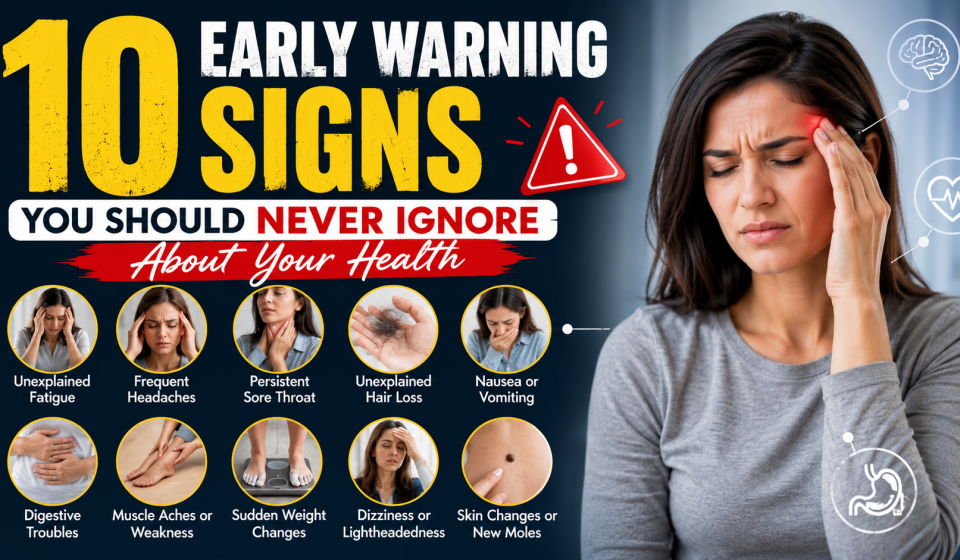

Learn the 10 early warning signs you should never ignore about your health. Discover symptoms that may indicate serious medical conditions, when to seek medical care, prevention tips, and expert health advice.
Our bodies constantly communicate with us. A persistent headache, unusual fatigue, unexplained weight loss, or chest discomfort might seem like minor inconveniences, but they can sometimes be early indicators of serious health conditions. Unfortunately, many people ignore these symptoms, hoping they will disappear on their own. While not every symptom signals a severe disease, recognizing warning signs early can make a significant difference in diagnosis, treatment, and recovery.
According to healthcare professionals, many life-threatening diseases—including heart disease, cancer, diabetes, stroke, and kidney disease—often begin with subtle symptoms that are easy to overlook. Paying attention to these early warning signs and seeking timely medical advice can help prevent complications and improve long-term health outcomes.
In this comprehensive guide, we’ll discuss 10 early warning signs you should never ignore, explain their possible causes, identify when immediate medical attention is needed, and provide practical tips for maintaining better health.
1. Persistent Chest Pain or Pressure
Chest pain is one of the most serious symptoms that should never be ignored.
While chest discomfort may result from acid reflux, muscle strain, or anxiety, it can also indicate a heart attack or other cardiovascular conditions.
Possible Causes
- Heart attack
- Angina
- Blood clot in the lungs
- Acid reflux
- Muscle injury
- Anxiety disorders
Warning Signs
- Pressure or tightness in the chest
- Pain spreading to the jaw, shoulder, neck, or arm
- Shortness of breath
- Cold sweat
- Nausea
- Dizziness
When to Seek Emergency Care
Call emergency medical services immediately if chest pain lasts more than a few minutes or is accompanied by difficulty breathing, fainting, or severe sweating.
2. Sudden Unexplained Weight Loss
Losing weight without changing your diet or exercise routine could indicate an underlying medical condition.
Experts recommend medical evaluation if you lose more than 5% of your body weight within six to twelve months without trying.
Possible Causes
- Diabetes
- Hyperthyroidism
- Cancer
- Depression
- Digestive disorders
- Chronic infections
Why It Matters
Unexpected weight loss may signal that your body isn’t absorbing nutrients properly or is fighting an illness.
3. Extreme or Persistent Fatigue
Everyone feels tired occasionally, but fatigue that lasts for weeks isn’t normal.
Persistent exhaustion can interfere with daily activities and may indicate an underlying disease.
Possible Causes
- Iron deficiency anemia
- Thyroid disorders
- Sleep apnea
- Diabetes
- Heart disease
- Chronic fatigue syndrome
- Depression
Additional Symptoms
- Weakness
- Poor concentration
- Shortness of breath
- Dizziness
- Pale skin
A healthcare provider can identify the cause through physical examination and laboratory testing.
4. Shortness of Breath
Difficulty breathing without obvious physical exertion should always be evaluated.
Possible Causes
- Asthma
- COPD
- Heart failure
- Pneumonia
- Pulmonary embolism
- Anxiety attacks
Emergency Symptoms
Seek immediate medical care if breathing difficulty occurs alongside:
- Chest pain
- Blue lips
- Confusion
- Loss of consciousness
- Severe wheezing
Early diagnosis may prevent life-threatening complications.
5. Persistent Changes in Bowel or Bladder Habits
Changes lasting more than a few weeks deserve medical attention.
Symptoms to Watch
- Blood in stool
- Black stool
- Chronic diarrhea
- Persistent constipation
- Painful urination
- Blood in urine
- Frequent urination
Possible Causes
- Colon cancer
- Urinary tract infection
- Kidney disease
- Inflammatory bowel disease
- Diabetes
- Enlarged prostate
Screening tests may detect problems before symptoms become severe.
6. Severe or Frequent Headaches
Not every headache is dangerous, but certain headache patterns require prompt evaluation.
Seek Medical Care If
- Headaches occur suddenly and intensely
- Pain follows a head injury
- Vision changes occur
- Weakness develops
- Speech becomes difficult
- Headaches become progressively worse
Possible Conditions
- Stroke
- Brain aneurysm
- Brain tumor
- Migraine
- High blood pressure
- Meningitis
Prompt diagnosis is critical in preventing permanent neurological damage.
7. Changes in Skin or Moles
Your skin often reflects your overall health.
Any mole or skin lesion that changes in appearance should be examined.
ABCDE Rule
- A: Asymmetry
- B: Border irregularity
- C: Color variation
- D: Diameter larger than 6 mm
- E: Evolving appearance
Other Skin Warning Signs
- Non-healing sores
- Persistent itching
- New growths
- Unusual bleeding
Regular skin checks increase the chances of early skin cancer detection.
8. Persistent Fever or Night Sweats
Occasional fever helps fight infection.
However, recurring fever without an obvious cause may indicate a more serious condition.
Possible Causes
- Tuberculosis
- Autoimmune diseases
- Certain cancers
- Chronic infections
- HIV
- Endocarditis
Night sweats combined with weight loss and fatigue warrant prompt medical evaluation.
9. Numbness or Weakness on One Side of the Body
Sudden numbness may indicate a stroke.
FAST Warning Signs
- F: Face drooping
- A: Arm weakness
- S: Speech difficulty
- T: Time to call emergency services
Additional Symptoms
- Vision loss
- Difficulty walking
- Severe dizziness
- Loss of balance
Immediate treatment can significantly reduce brain damage.
10. Persistent Cough or Hoarseness
A cough lasting more than three weeks should not be ignored.
Possible Causes
- Lung infection
- Asthma
- Acid reflux
- Smoking-related disease
- Lung cancer
- COVID-19 complications
Additional Warning Signs
- Blood in mucus
- Chest pain
- Weight loss
- Persistent wheezing
Early evaluation helps identify the underlying cause before complications develop.
Why Early Detection Matters
Ignoring warning signs often allows diseases to progress silently.
Benefits of early diagnosis include:
- More effective treatment
- Lower healthcare costs
- Reduced complications
- Improved survival rates
- Better quality of life
- Faster recovery
- Greater treatment options
Routine health screenings remain one of the most effective preventive healthcare strategies.
How to Protect Your Health
Healthy habits significantly reduce your risk of developing chronic diseases.
Follow These Preventive Tips
- Schedule annual health checkups.
- Monitor blood pressure regularly.
- Maintain a healthy weight.
- Exercise at least 150 minutes weekly.
- Eat fruits, vegetables, lean proteins, and whole grains.
- Stay hydrated.
- Sleep 7–9 hours every night.
- Avoid smoking and excessive alcohol.
- Manage stress through mindfulness or relaxation techniques.
- Stay current with recommended vaccinations and health screenings.
When Should You See a Doctor?
Arrange a medical appointment if you experience:
- Symptoms lasting longer than two weeks
- Symptoms interfering with daily activities
- Persistent pain
- Unexplained weight loss
- Repeated dizziness
- Blood in urine or stool
- Chronic fatigue
- Difficulty breathing
Seek emergency medical care immediately for:
- Severe chest pain
- Stroke symptoms
- Loss of consciousness
- Severe allergic reactions
- Sudden difficulty breathing
- Heavy bleeding
Sources
https://www.who.int
https://www.cdc.gov
Conclusion
Your body often provides warning signs long before a serious illness develops. Recognizing symptoms such as persistent chest pain, unexplained weight loss, chronic fatigue, sudden numbness, breathing difficulties, and unusual changes in your body can lead to earlier diagnosis and more successful treatment. While many symptoms have harmless explanations, it’s always safer to consult a healthcare professional when something feels unusual or persists longer than expected. Prevention, routine screenings, and healthy lifestyle choices remain the foundation of long-term wellness. Listening to your body today could protect your health for years to come.
Frequently Asked Questions (FAQs)
1. What health symptoms should never be ignored?
Chest pain, sudden numbness, difficulty breathing, unexplained weight loss, persistent fatigue, blood in urine or stool, severe headaches, and long-lasting coughs should always be evaluated by a healthcare provider.
2. How long should I wait before seeing a doctor for unusual symptoms?
If a symptom lasts longer than two weeks, worsens, or interferes with daily life, schedule a medical evaluation. Seek emergency care immediately for severe symptoms such as chest pain, stroke signs, or difficulty breathing.
3. Can fatigue alone indicate a serious illness?
Yes. Persistent fatigue may be linked to anemia, thyroid disorders, diabetes, heart disease, sleep apnea, infections, or mental health conditions. Medical evaluation can determine the cause.
4. Are all headaches dangerous?
No. Most headaches are not life-threatening, but sudden, severe headaches or headaches accompanied by vision changes, weakness, confusion, or speech problems require immediate medical attention.
5. How can I reduce my risk of serious diseases?
Maintain a healthy diet, exercise regularly, avoid smoking, limit alcohol, manage stress, get adequate sleep, stay up to date on vaccinations, and attend routine health screenings based on your age and risk factors.