
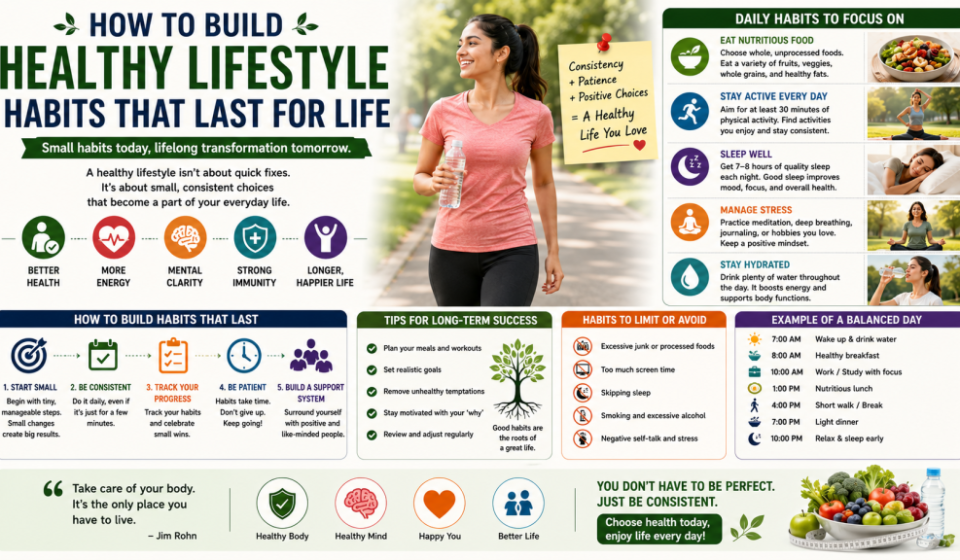
How to Build Healthy Lifestyle Habits That Last for Life: A Complete Guide to Sustainable Wellness and Long-Term Health

Living a healthy lifestyle is not about following strict diets, exercising intensely for a few weeks, or making temporary changes that are difficult to maintain.
Building lifelong healthy habits requires patience, consistency, and a willingness to make gradual improvements over time. Small actions repeated every day often produce better results than dramatic lifestyle changes that are difficult to sustain. Whether your goal is to improve fitness, eat healthier, sleep better, reduce stress, or simply feel more energetic, focusing on simple daily behaviors creates a strong foundation for long-term wellness. This comprehensive guide explains practical strategies for building healthy habits that last, helping you create a balanced lifestyle that supports better health throughout every stage of life.
Why Healthy Habits Matter
Every decision you make each day influences your long-term health. Healthy habits support nearly every system in the body and contribute to disease prevention.
Benefits include:
- Better heart health
- Improved immune function
- Increased energy
- Healthy weight management
- Stronger bones and muscles
- Better digestion
- Improved mental health
- Reduced risk of chronic diseases
- Better sleep quality
- Longer life expectancy
Consistent habits have a greater impact than occasional healthy choices.
Understand That Change Takes Time
One of the biggest mistakes people make is expecting immediate results.
Healthy habits develop gradually through repetition. Research suggests that forming a new habit may take weeks or even months depending on the individual and the behavior.
Focus on progress instead of perfection.
Start with Small Changes
Trying to change everything at once often leads to frustration.
Instead, begin with manageable goals such as:
- Drinking one extra glass of water
- Walking for 20–30 minutes
- Adding one serving of vegetables to dinner
- Going to bed 30 minutes earlier
Small improvements become easier to maintain and often lead to larger positive changes.
Set Realistic Goals
Healthy goals should be achievable and measurable.
Examples include:
- Exercise five days each week
- Eat fruit every morning
- Cook healthy meals at home three times weekly
- Reduce sugary drinks
Clear goals help maintain motivation and track progress.
Eat a Balanced Diet
Good nutrition forms the foundation of lifelong health.
A balanced diet should include:
- Fruits
- Vegetables
- Whole grains
- Lean proteins
- Legumes
- Nuts
- Seeds
- Healthy fats
- Low-fat dairy or fortified alternatives
Choose a variety of foods to ensure adequate vitamins and minerals.
Practice Portion Control
Even nutritious foods should be eaten in appropriate portions.
Helpful habits include:
- Using smaller plates
- Eating slowly
- Avoiding unnecessary second servings
- Paying attention to hunger and fullness signals
Mindful eating helps prevent overeating.
Stay Hydrated
Water supports every major function of the body.
Benefits include:
- Better digestion
- Improved circulation
- Healthy skin
- Temperature regulation
- Increased energy
- Better concentration
Carry a reusable water bottle to encourage regular hydration throughout the day.
Make Physical Activity a Daily Habit
Regular exercise improves physical and mental health.
Choose enjoyable activities such as:
- Walking
- Cycling
- Swimming
- Dancing
- Yoga
- Strength training
Adults should aim for at least 150 minutes of moderate-intensity physical activity each week along with muscle-strengthening exercises on two or more days.
Build Strength and Flexibility
In addition to cardiovascular exercise, include activities that improve:
- Muscle strength
- Balance
- Coordination
- Flexibility
Strength training helps preserve muscle mass and supports healthy aging.
Prioritize Quality Sleep
Sleep is essential for recovery, hormone regulation, and overall well-being.
Healthy sleep habits include:
- Sleeping seven to nine hours each night
- Following a regular sleep schedule
- Keeping the bedroom cool and quiet
- Limiting screen time before bedtime
Consistent sleep supports energy, mood, and immune function.
Learn Healthy Stress Management
Stress is unavoidable, but healthy coping strategies reduce its impact.
Helpful techniques include:
- Meditation
- Deep breathing
- Mindfulness
- Journaling
- Reading
- Spending time outdoors
- Listening to music
Managing stress supports both physical and emotional health.
Avoid Tobacco and Limit Alcohol
Smoking damages nearly every organ and significantly increases disease risk.
Limiting alcohol and avoiding tobacco contribute to:
- Better heart health
- Improved lung function
- Lower cancer risk
- Better sleep
- Healthier aging
These choices provide lifelong health benefits.
Maintain a Healthy Weight
Healthy weight management is easier through consistent habits rather than restrictive diets.
Focus on:
- Balanced meals
- Regular exercise
- Portion awareness
- Adequate sleep
- Stress management
Sustainable routines support gradual, lasting results.
Plan Your Meals
Meal planning helps maintain healthy eating.
Benefits include:
- Better nutrition
- Less fast food
- Portion control
- Reduced food waste
- Easier grocery shopping
Preparing meals in advance also saves time during busy weeks.
Reduce Processed Foods
Highly processed foods often contain excess:
- Added sugars
- Sodium
- Saturated fats
- Refined carbohydrates
Replace processed foods with whole, minimally processed alternatives whenever possible.
Increase Fiber Intake
Fiber supports:
- Healthy digestion
- Blood sugar control
- Heart health
- Healthy cholesterol
- Weight management
Good sources include:
- Oats
- Beans
- Lentils
- Fruits
- Vegetables
- Whole grains
Gradually increase fiber while drinking plenty of water.
Practice Mindful Eating
Mindful eating encourages awareness of hunger and fullness.
Helpful habits include:
- Eating without distractions
- Chewing slowly
- Appreciating flavors
- Avoiding emotional eating
Mindful eating often improves portion control.
Spend Time Outdoors
Nature provides physical and emotional health benefits.
Outdoor activities may include:
- Walking
- Gardening
- Hiking
- Cycling
Fresh air and natural sunlight also support overall well-being.
Build Strong Relationships
Supportive relationships contribute to healthier lifestyles.
Positive social connections can:
- Reduce stress
- Improve emotional health
- Increase motivation
- Encourage healthy behaviors
Spend time with family, friends, and supportive communities.
Limit Screen Time
Excessive screen use may reduce physical activity and affect sleep.
Healthy habits include:
- Taking regular screen breaks
- Avoiding devices before bedtime
- Spending more time on active hobbies
Balancing technology use supports overall wellness.
Schedule Preventive Health Checkups
Routine medical care helps detect health problems early.
Regular screenings may include:
- Blood pressure
- Blood sugar
- Cholesterol
- Weight assessment
- Age-appropriate health screenings
Preventive care supports long-term health.
Learn from Setbacks
Everyone experiences occasional setbacks.
Rather than giving up:
- Identify what caused the setback
- Adjust your routine
- Restart as soon as possible
- Focus on consistency
Long-term success depends on persistence rather than perfection.
Stay Motivated
Healthy habits become easier when connected to meaningful goals.
Motivation can be maintained by:
- Tracking progress
- Celebrating small achievements
- Exercising with friends
- Trying new healthy recipes
- Setting realistic milestones
Positive reinforcement encourages long-term consistency.
Healthy Habits for Every Age
Healthy lifestyle habits benefit people throughout life.
Children benefit from:
- Balanced nutrition
- Outdoor play
- Adequate sleep
Adults benefit from:
- Regular exercise
- Stress management
- Preventive healthcare
Older adults benefit from:
- Strength training
- Balance exercises
- Social engagement
- Nutrient-rich diets
Healthy habits remain valuable at every stage of life.
Common Myths About Healthy Living
Myth: Healthy living requires expensive foods and gym memberships.
Fact: Walking, home-cooked meals, and simple lifestyle changes can provide significant health benefits.
Myth: Missing one workout ruins progress.
Fact: Long-term consistency matters far more than occasional missed days.
Myth: Healthy eating means eliminating favorite foods forever.
Fact: Moderation and balance are more sustainable than strict restriction.
Daily Checklist for Lifelong Healthy Habits
Try to practice these habits every day:
- Eat balanced meals
- Drink enough water
- Exercise or stay active
- Sleep seven to nine hours
- Manage stress
- Eat fruits and vegetables
- Limit processed foods
- Practice gratitude
- Spend time outdoors
- Connect with family or friends
These simple habits can create lasting improvements in health and quality of life.
Source
https://www.who.int
https://www.cdc.gov/healthy-weight-growth
Conclusion
Building healthy lifestyle habits that last for life is not about achieving perfection or following temporary trends. It is about making realistic, sustainable choices that become part of your daily routine. Eating a balanced diet, staying physically active, sleeping well, managing stress, maintaining healthy relationships, attending regular health checkups, and remaining consistent over time all contribute to long-term wellness. Small daily improvements often lead to the greatest lifelong benefits. By focusing on gradual progress rather than quick fixes, you can improve your physical health, strengthen your mental well-being, reduce the risk of chronic disease, and enjoy a healthier, happier, and more fulfilling life.
FAQ
Q1. Why are healthy lifestyle habits important?
Healthy habits support physical and mental well-being, improve energy levels, reduce the risk of chronic diseases, and contribute to a longer, healthier life.
Q2. How long does it take to build a healthy habit?
The time varies from person to person, but developing a lasting habit often takes several weeks or months of consistent practice.
Q3. What are the most important healthy lifestyle habits?
Eating a balanced diet, exercising regularly, staying hydrated, getting enough sleep, managing stress, avoiding tobacco, limiting alcohol, and attending routine health checkups are among the most important habits.
Q4. Can small lifestyle changes really make a difference?
Yes. Small, consistent improvements practiced every day often produce significant long-term health benefits.
Q5. How can I stay motivated to maintain healthy habits?
Set realistic goals, track your progress, celebrate small achievements, build supportive routines, and focus on long-term benefits rather than quick results.
Q6. Does healthy living require giving up all favorite foods?
No. A balanced approach that emphasizes moderation and portion control is generally more sustainable than eliminating favorite foods completely.
Q7. Why is sleep considered part of a healthy lifestyle?
Quality sleep supports recovery, hormone regulation, immune function, brain health, energy levels, and emotional well-being.
Q8. Are preventive health checkups necessary if I feel healthy?
Yes. Routine health screenings can detect risk factors and medical conditions early, often before symptoms develop, allowing for timely treatment and better long-term health outcomes.