
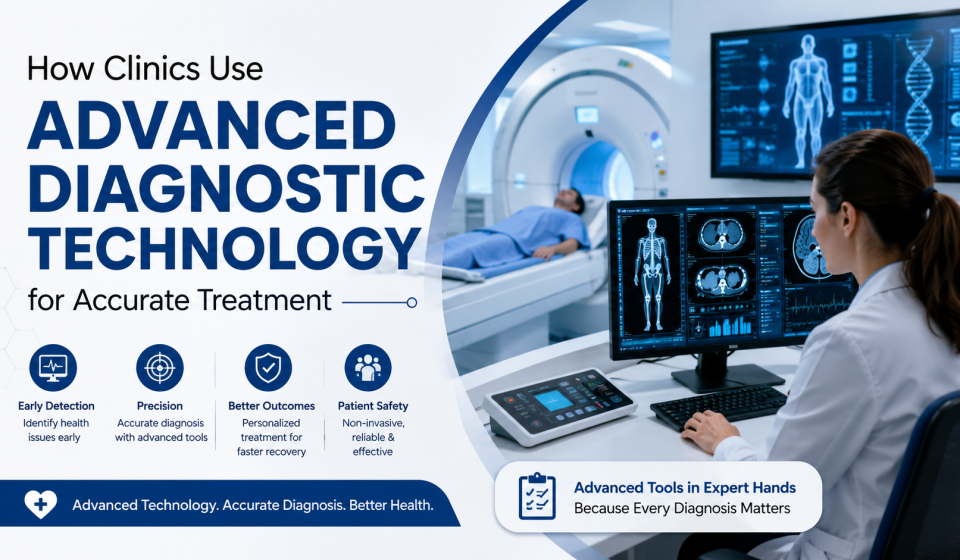

Discover how clinics use advanced diagnostic technology for accurate treatment. Learn about AI, imaging systems, laboratory testing, telemedicine, and innovative tools improving patient care.
Healthcare has changed dramatically over the last few decades. Modern clinics no longer rely only on physical examinations and patient symptoms to identify diseases. Today, advanced diagnostic technology plays a major role in helping doctors detect illnesses early, make accurate diagnoses, and provide personalized treatments.
From artificial intelligence (AI) and digital imaging systems to molecular testing and wearable devices, technology has transformed how healthcare professionals diagnose and treat patients. These innovations reduce errors, improve treatment outcomes, and help patients receive care faster than ever before.
In this article, we will explore how clinics use advanced diagnostic technology for accurate treatment and why these tools are shaping the future of healthcare.
What Is Advanced Diagnostic Technology?
Advanced diagnostic technology refers to modern medical tools, machines, software, and testing methods used to identify diseases and health conditions more accurately.
These technologies include:
- Artificial Intelligence (AI)
- MRI and CT scans
- Digital X-rays
- Ultrasound imaging
- Molecular diagnostics
- Genetic testing
- Wearable health devices
- Telemedicine platforms
- Robotic diagnostic systems
- Electronic Health Records (EHR)
The main goal of these technologies is to provide doctors with precise information so they can make better treatment decisions.
Why Accurate Diagnosis Matters
A correct diagnosis is the foundation of effective treatment. Misdiagnosis can lead to:
- Delayed treatment
- Wrong medication
- Increased healthcare costs
- Serious health complications
Advanced diagnostic technology helps reduce these risks by offering detailed insights into a patient’s condition.
Benefits include:
✔ Early disease detection
✔ Faster diagnosis
✔ Better treatment planning
✔ Reduced medical errors
✔ Improved patient outcomes
1. Medical Imaging Technologies
One of the most important advances in diagnostics is medical imaging.
Clinics use imaging systems to examine internal organs, bones, tissues, and blood vessels without surgery.
Common Imaging Technologies
MRI (Magnetic Resonance Imaging)
MRI uses magnetic fields and radio waves to create detailed images of organs and soft tissues.
Used for:
- Brain disorders
- Spinal problems
- Joint injuries
- Tumors
CT Scan (Computed Tomography)
CT scans combine X-rays with computer technology to produce cross-sectional images.
Used for:
- Cancer detection
- Internal injuries
- Lung diseases
- Heart conditions
Digital X-Rays
Digital X-rays provide faster and clearer images than traditional X-rays.
Benefits:
- Lower radiation exposure
- Immediate results
- Better image quality
Ultrasound
Ultrasound uses sound waves to create images of organs.
Common uses:
- Pregnancy monitoring
- Heart evaluation
- Liver examination
- Kidney diagnosis
These imaging technologies allow clinics to identify diseases accurately and begin treatment quickly.
2. Artificial Intelligence in Diagnostics
Artificial Intelligence is becoming one of the most powerful tools in healthcare.
AI systems analyze large amounts of medical data and help doctors identify diseases with greater precision.
How AI Helps Clinics
- Detects abnormalities in scans
- Predicts disease risks
- Assists in cancer diagnosis
- Supports treatment planning
- Reduces human errors
For example, AI can identify early signs of breast cancer, lung disease, or heart problems from medical images.
Doctors use AI as a support tool, combining machine intelligence with clinical expertise.
3. Laboratory Automation and Advanced Testing
Modern clinics use automated laboratory systems to improve testing accuracy.
Traditional manual testing often took several days. Automated systems now deliver results in hours or even minutes.
Common Advanced Tests
Blood Testing
Advanced blood tests detect:
- Diabetes
- Infections
- Hormone disorders
- Vitamin deficiencies
Molecular Diagnostics
Molecular tests identify diseases at the genetic level.
Used for:
- Cancer detection
- Viral infections
- Genetic disorders
PCR Testing
Polymerase Chain Reaction (PCR) technology became widely known during the COVID-19 pandemic.
PCR testing identifies viruses, bacteria, and genetic changes with high accuracy.
4. Genetic Testing and Precision Medicine
Genetic testing is changing how clinics treat patients.
Doctors can now analyze a patient’s DNA to understand disease risks and select the best treatments.
Benefits of Genetic Testing
- Identifies inherited diseases
- Predicts future health risks
- Supports cancer treatment
- Personalizes medications
This approach is known as precision medicine.
Instead of giving the same treatment to every patient, doctors create personalized treatment plans based on genetics, lifestyle, and medical history.
5. Wearable Health Devices
Wearable devices provide continuous health monitoring.
Examples include:
- Smartwatches
- Fitness trackers
- ECG monitors
- Blood pressure monitors
These devices help clinics collect real-time data.
They monitor:
- Heart rate
- Blood pressure
- Oxygen levels
- Sleep patterns
- Physical activity
Doctors can detect problems earlier and adjust treatments more effectively.
6. Electronic Health Records (EHR)
Electronic Health Records improve diagnosis by storing patient information digitally.
EHR systems include:
- Medical history
- Test results
- Prescriptions
- Imaging reports
Benefits:
- Quick access to patient records
- Better communication among doctors
- Reduced duplicate tests
- Improved treatment accuracy
Clinics can review complete patient histories before making medical decisions.
7. Telemedicine and Remote Diagnostics
Telemedicine has become increasingly popular.
Patients can consult doctors remotely through video calls and digital platforms.
Benefits include:
- Faster consultations
- Better access to specialists
- Reduced travel time
- Continuous monitoring
Remote diagnostic tools allow patients to send:
- Blood pressure readings
- Blood sugar levels
- Heart data
Doctors can evaluate conditions and provide treatment without requiring an in-person visit.
8. Point-of-Care Testing
Point-of-care testing allows clinics to perform diagnostic tests directly at the patient’s location.
Examples:
- Glucose testing
- Pregnancy tests
- Rapid infection tests
- Cholesterol tests
Advantages:
- Immediate results
- Faster treatment decisions
- Better patient convenience
This technology is especially useful in emergency situations.
9. Robotic and Automated Diagnostic Systems
Robotics is becoming part of modern healthcare.
Automated systems help:
- Analyze laboratory samples
- Process imaging data
- Improve surgical planning
Robotic technology reduces human errors and increases efficiency.
Many clinics use robotic systems to improve diagnostic speed and accuracy.
10. The Role of Big Data in Healthcare
Big Data helps clinics analyze millions of medical records.
This information helps identify:
- Disease trends
- Treatment outcomes
- Risk factors
Clinics use this data to make evidence-based decisions.
Big data also supports preventive healthcare by identifying patients at risk before symptoms appear.
Benefits of Advanced Diagnostic Technology
For Patients
- Faster diagnosis
- More accurate treatment
- Reduced complications
- Personalized care
For Doctors
- Better decision-making
- Improved efficiency
- Access to detailed information
For Clinics
- Lower costs
- Enhanced services
- Better patient satisfaction
Challenges of Advanced Diagnostic Technology
Despite many benefits, some challenges remain:
High Costs
Advanced machines and software require significant investment.
Data Privacy Concerns
Protecting patient information is essential.
Training Requirements
Healthcare professionals need proper training to use new technologies.
Technology Dependence
Doctors must balance technology with clinical judgment.
Future Trends in Diagnostic Technology
The future of diagnostics looks promising.
Emerging innovations include:
- AI-powered diagnostics
- Portable testing devices
- Nanotechnology
- Smart implants
- Digital pathology
- Advanced genetic analysis
These developments will improve healthcare quality and make diagnosis even more accurate.
Sources
https://l1nq.com/enft3pd
https://sl1nk.com/zr57lqk
Conclusion
Advanced diagnostic technology has revolutionized healthcare by helping clinics diagnose diseases faster and more accurately. Tools such as AI, imaging systems, molecular testing, genetic analysis, wearable devices, and telemedicine allow doctors to provide personalized and effective treatments.
As technology continues to evolve, clinics will become even better at preventing diseases, improving patient outcomes, and delivering high-quality care. Accurate diagnosis remains the key to successful treatment, and modern technology is making healthcare safer, smarter, and more efficient than ever before.
Frequently Asked Questions (FAQs)
1. What is advanced diagnostic technology?
Advanced diagnostic technology includes modern tools such as AI, MRI, CT scans, genetic testing, and digital health systems used to detect diseases accurately.
2. How does AI improve diagnosis?
AI analyzes medical data and images quickly, helping doctors identify diseases earlier and reduce diagnostic errors.
3. What is precision medicine?
Precision medicine uses genetic and health information to create personalized treatment plans for patients.
4. Are wearable devices useful for healthcare?
Yes, wearable devices monitor health data like heart rate, blood pressure, and oxygen levels, helping doctors detect issues early.
5. Why is accurate diagnosis important?
Accurate diagnosis ensures proper treatment, reduces medical errors, and improves patient outcomes.