
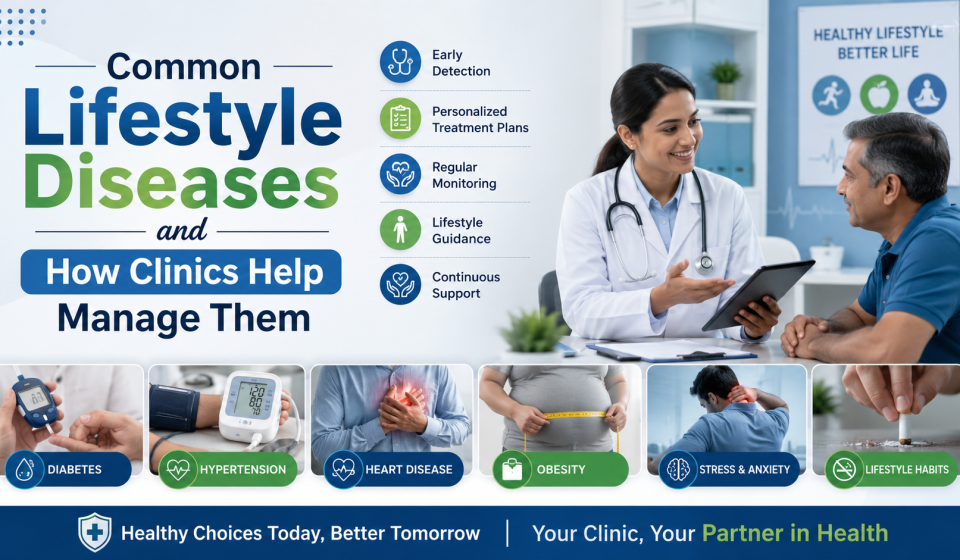

Learn about the most common lifestyle diseases, their causes, symptoms, prevention tips, and how modern clinics help manage diabetes, hypertension, obesity, heart disease, and more. A complete health guide.
Modern lifestyles have brought convenience, but they have also introduced serious health challenges. Long working hours, unhealthy eating habits, lack of exercise, stress, poor sleep, smoking, and excessive alcohol consumption have led to a significant rise in lifestyle diseases across the world.
Unlike infectious diseases, lifestyle diseases develop gradually due to unhealthy daily habits. Many people ignore early warning signs until the condition becomes severe. Fortunately, regular medical checkups and professional healthcare support can detect these diseases early and help manage them effectively.
Clinics today play a vital role in preventing, diagnosing, treating, and monitoring lifestyle-related illnesses. Through personalized treatment plans, regular screenings, nutritional counseling, and patient education, healthcare professionals help individuals live healthier and longer lives.
This comprehensive guide explains the most common lifestyle diseases, their causes, symptoms, risk factors, prevention strategies, and how modern clinics help patients effectively manage these chronic conditions.
What Are Lifestyle Diseases?
Lifestyle diseases are chronic health conditions primarily caused by unhealthy lifestyle choices rather than infections. These diseases usually develop over several years and often require long-term management instead of a complete cure.
Most lifestyle diseases are preventable with healthy habits and regular medical care.
Some of the most common lifestyle diseases include:
- Type 2 Diabetes
- Hypertension (High Blood Pressure)
- Obesity
- Heart Disease
- Stroke
- High Cholesterol
- Fatty Liver Disease
- Chronic Kidney Disease
- Osteoporosis
- Certain Types of Cancer
Major Causes of Lifestyle Diseases
Several factors contribute to the development of lifestyle diseases.
1. Poor Diet
Eating foods high in sugar, salt, saturated fats, and processed ingredients increases the risk of chronic illnesses.
Examples include:
- Fast food
- Sugary drinks
- Packaged snacks
- Processed meat
- Fried foods
2. Physical Inactivity
Sitting for long hours reduces calorie burning and weakens cardiovascular health.
Lack of exercise contributes to:
- Obesity
- Diabetes
- Heart disease
- Joint problems
3. Stress
Long-term stress increases cortisol levels, which may lead to:
- High blood pressure
- Anxiety
- Weight gain
- Poor sleep
- Heart disease
4. Smoking
Smoking damages nearly every organ in the body and significantly increases the risk of:
- Lung cancer
- COPD
- Stroke
- Heart attack
5. Excessive Alcohol Consumption
Heavy drinking can cause:
- Liver disease
- High blood pressure
- Heart problems
- Certain cancers
6. Poor Sleep
Sleeping fewer than 7 hours regularly can contribute to:
- Diabetes
- Obesity
- Depression
- Heart disease
Common Lifestyle Diseases
1. Type 2 Diabetes
Type 2 diabetes occurs when the body cannot effectively use insulin.
Symptoms
- Frequent urination
- Increased thirst
- Fatigue
- Blurred vision
- Slow wound healing
Risk Factors
- Obesity
- Family history
- Sedentary lifestyle
- Poor diet
How Clinics Help
Clinics provide:
- Blood sugar testing
- HbA1c monitoring
- Medication management
- Diet counseling
- Exercise planning
- Regular follow-up visits
2. Hypertension (High Blood Pressure)
Hypertension is often called the “silent killer” because it usually has no symptoms.
Possible Symptoms
- Headaches
- Dizziness
- Chest discomfort
- Vision problems
Many people experience no symptoms at all.
Clinic Management
Healthcare providers monitor:
- Blood pressure
- Kidney function
- Heart health
- Medication effectiveness
Patients also receive guidance on:
- Reducing salt intake
- Weight management
- Physical activity
- Stress reduction
3. Obesity
Obesity is a major contributor to several chronic illnesses.
Health Risks
- Diabetes
- Heart disease
- Sleep apnea
- Arthritis
- Fatty liver disease
Clinic Support
Weight management clinics offer:
- BMI assessment
- Body composition analysis
- Nutrition counseling
- Customized meal plans
- Exercise recommendations
- Behavioral therapy
- Medical treatment when necessary
4. Heart Disease
Heart disease remains one of the leading causes of death worldwide.
Symptoms
- Chest pain
- Shortness of breath
- Fatigue
- Irregular heartbeat
Clinic Services
Clinics may provide:
- ECG testing
- Cholesterol testing
- Blood pressure monitoring
- Cardiac risk assessment
- Lifestyle counseling
- Referral to specialists if needed
5. High Cholesterol
High cholesterol increases plaque buildup inside arteries.
Why It’s Dangerous
It raises the risk of:
- Heart attack
- Stroke
- Peripheral artery disease
How Clinics Help
Doctors recommend:
- Lipid profile tests
- Dietary changes
- Exercise plans
- Cholesterol-lowering medications
- Regular monitoring
6. Fatty Liver Disease
Non-alcoholic fatty liver disease (NAFLD) is increasingly common among overweight adults.
Symptoms
Often no symptoms initially.
Advanced cases may include:
- Fatigue
- Abdominal discomfort
- Liver inflammation
Clinic Management
Treatment focuses on:
- Weight loss
- Blood sugar control
- Cholesterol management
- Regular liver function tests
7. Chronic Kidney Disease
Diabetes and hypertension are the leading causes of kidney disease.
Warning Signs
- Swelling
- Fatigue
- Frequent urination
- High blood pressure
Clinic Care
Healthcare providers monitor:
- Kidney function tests
- Blood pressure
- Blood sugar
- Urine protein levels
Warning Signs You Should Never Ignore
Consult a healthcare provider if you experience:
- Persistent fatigue
- Sudden weight gain
- Chest pain
- Shortness of breath
- Frequent headaches
- Increased thirst
- Vision changes
- Swelling in legs
- Frequent urination
- Unexplained weight loss
Early diagnosis often prevents serious complications.
How Clinics Help Manage Lifestyle Diseases
Modern clinics focus on preventive healthcare alongside treatment.
Early Screening
Routine health screenings help identify diseases before symptoms appear.
Common screenings include:
- Blood pressure
- Blood sugar
- Cholesterol
- BMI
- Liver function
- Kidney function
Personalized Treatment Plans
Every patient has unique health needs.
Doctors create customized treatment plans based on:
- Age
- Medical history
- Lifestyle
- Risk factors
- Family history
Medication Management
Clinics ensure medications are:
- Effective
- Safe
- Properly adjusted
- Monitored for side effects
Nutrition Counseling
Registered dietitians help patients:
- Improve eating habits
- Reduce calorie intake
- Lower sugar consumption
- Increase fiber
- Build sustainable meal plans
Exercise Guidance
Healthcare providers recommend safe physical activity tailored to each individual’s fitness level.
Examples include:
- Walking
- Cycling
- Swimming
- Yoga
- Strength training
Mental Health Support
Stress significantly affects physical health.
Many clinics now offer:
- Stress management
- Counseling
- Anxiety support
- Depression screening
- Mindfulness education
Regular Follow-Up Visits
Chronic diseases require ongoing monitoring.
Routine appointments help:
- Track progress
- Adjust medications
- Prevent complications
- Reinforce healthy habits
Preventing Lifestyle Diseases
Prevention is often easier than treatment.
Follow these healthy habits:
Eat a Balanced Diet
Choose:
- Fruits
- Vegetables
- Whole grains
- Lean proteins
- Healthy fats
Limit:
- Sugar
- Salt
- Processed foods
- Sugary beverages
Exercise Regularly
Aim for at least:
- 150 minutes of moderate exercise each week
- Strength training twice weekly
Maintain a Healthy Weight
Even losing 5–10% of body weight can improve blood pressure, blood sugar, and cholesterol levels.
Quit Smoking
Stopping smoking greatly reduces the risk of:
- Cancer
- Heart disease
- Stroke
- Lung disease
Limit Alcohol
Drink in moderation or avoid alcohol altogether if advised by your healthcare provider.
Sleep Well
Adults should aim for 7–9 hours of quality sleep each night.
Manage Stress
Healthy stress-management techniques include:
- Meditation
- Yoga
- Deep breathing
- Walking
- Reading
- Spending time with loved ones
Schedule Regular Health Checkups
Annual preventive checkups help detect health issues before they become serious.
Benefits of Regular Clinic Visits
Routine healthcare visits offer several advantages:
- Early diagnosis
- Better disease control
- Reduced healthcare costs
- Lower risk of complications
- Improved quality of life
- Personalized medical advice
- Better medication adherence
- Increased life expectancy
The Future of Lifestyle Disease Management
Healthcare continues to evolve with innovative technologies that improve patient care.
Many clinics now offer:
- Telemedicine consultations
- Digital health records
- Remote blood pressure monitoring
- Wearable health device integration
- Continuous glucose monitoring
- AI-assisted risk assessment
- Personalized preventive care
These advancements make chronic disease management more accessible and efficient while empowering patients to take an active role in their health.
Sources
https://sl1nk.com/p0vdg0o
https://sl1nk.com/7r7pgkt
Conclusion
Lifestyle diseases have become one of the biggest health challenges of the modern era, but they are largely preventable through healthy habits and timely medical care. Conditions such as diabetes, hypertension, obesity, heart disease, and high cholesterol often develop silently, making regular health checkups essential.
Clinics play a critical role in early detection, personalized treatment, ongoing monitoring, nutritional guidance, and patient education. By combining professional medical support with healthier daily choices, individuals can significantly reduce their risk of complications, improve their quality of life, and enjoy better long-term health. Investing in preventive care today can lead to a healthier future for you and your family.
Frequently Asked Questions (FAQs)
1. What are the most common lifestyle diseases?
The most common lifestyle diseases include Type 2 diabetes, hypertension, obesity, heart disease, high cholesterol, fatty liver disease, stroke, and chronic kidney disease.
2. Can lifestyle diseases be prevented?
Yes. Most lifestyle diseases can be prevented by eating a balanced diet, exercising regularly, maintaining a healthy weight, avoiding tobacco, limiting alcohol, managing stress, and attending regular health checkups.
3. How often should I visit a clinic for preventive health checkups?
Healthy adults should generally have an annual health checkup. People with chronic conditions such as diabetes or hypertension may require more frequent visits based on their doctor’s advice.
4. How do clinics help manage chronic lifestyle diseases?
Clinics provide health screenings, diagnostic tests, medication management, nutrition counseling, exercise guidance, regular monitoring, and personalized treatment plans to help patients control chronic diseases and prevent complications.
5. Which lifestyle disease is considered the “silent killer”?
Hypertension (high blood pressure) is often called the “silent killer” because it usually causes no noticeable symptoms while increasing the risk of heart attack, stroke, and kidney disease.