
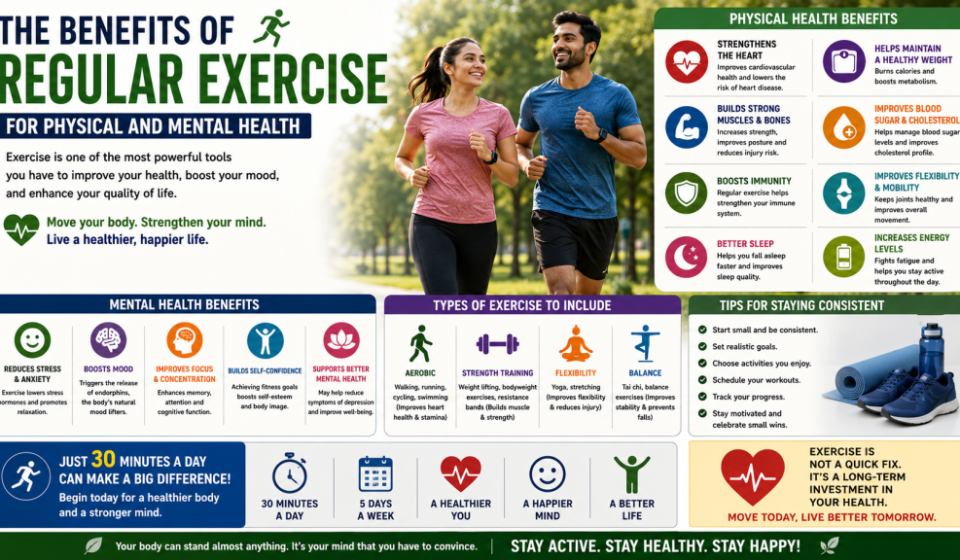

Regular exercise is one of the most effective ways to improve both physical and mental health. Whether it is a brisk walk, cycling, swimming, strength training, yoga, or dancing, consistent physical activity.
Exercise is not only beneficial for the body but also plays a vital role in maintaining emotional well-being and mental resilience. Physical activity stimulates the release of endorphins and other brain chemicals that help reduce stress, anxiety, and symptoms of depression while improving focus, memory, and sleep quality. People who exercise regularly often experience greater self-confidence, improved productivity, stronger immunity, healthier aging, and a better overall quality of life. Regardless of age or fitness level, making exercise a consistent part of your daily routine can help you build a healthier body and a happier mind. This comprehensive guide explains the many benefits of regular exercise and provides practical tips for creating a sustainable fitness routine.
Why Regular Exercise Is Important
Exercise keeps the body active and supports the normal function of the heart, lungs, muscles, bones, and brain. It also helps maintain a healthy balance between energy intake and energy expenditure.
Regular physical activity contributes to:
- Better overall health
- Disease prevention
- Improved mobility
- Increased energy
- Enhanced quality of life
- Healthy aging
Even moderate amounts of exercise performed consistently can produce significant long-term benefits.
Types of Exercise
A balanced fitness routine should include different forms of physical activity.
The main types include:
- Aerobic exercise
- Strength training
- Flexibility exercises
- Balance exercises
Each type offers unique health benefits and works together to improve overall fitness.
Benefits for Heart Health
Regular exercise strengthens the heart and improves blood circulation.
Cardiovascular benefits include:
- Lower blood pressure
- Improved cholesterol levels
- Better circulation
- Stronger heart muscle
- Reduced risk of heart disease
- Lower risk of stroke
Walking, jogging, swimming, cycling, and dancing are excellent aerobic activities for heart health.
Helps Maintain a Healthy Weight
Exercise helps burn calories while preserving lean muscle mass.
Combined with healthy eating, regular physical activity supports:
- Healthy weight management
- Reduced body fat
- Improved metabolism
- Better body composition
Gradual and consistent exercise is more effective than short periods of intense activity followed by inactivity.
Strengthens Muscles and Bones
Strength training and weight-bearing exercises help maintain muscle strength and bone density.
Benefits include:
- Stronger muscles
- Better posture
- Reduced risk of osteoporosis
- Improved balance
- Greater physical independence with aging
Exercises such as resistance training, bodyweight exercises, and stair climbing are particularly beneficial.
Improves Mental Health
Exercise has powerful effects on emotional well-being.
Physical activity helps:
- Reduce stress
- Lower anxiety
- Improve mood
- Decrease symptoms of depression
- Increase self-confidence
- Promote emotional resilience
Regular movement supports a healthier and more positive mindset.
Reduces Stress Naturally
Exercise lowers stress hormone levels while stimulating the release of endorphins, often called the body’s natural “feel-good” chemicals.
Stress-relieving activities include:
- Walking
- Yoga
- Stretching
- Swimming
- Cycling
Consistent exercise helps improve the body’s ability to cope with daily challenges.
Boosts Brain Function
Physical activity supports healthy brain function throughout life.
Benefits include:
- Better concentration
- Improved memory
- Faster learning
- Increased creativity
- Enhanced decision-making
- Reduced cognitive decline with aging
Exercise improves blood flow to the brain and supports healthy nerve function.
Supports Better Sleep
Regular physical activity can improve both sleep quality and sleep duration.
Exercise helps:
- Fall asleep faster
- Sleep more deeply
- Reduce daytime fatigue
- Improve energy levels
Avoid vigorous exercise immediately before bedtime if it interferes with sleep.
Strengthens the Immune System
Moderate exercise supports healthy immune function.
Benefits include:
- Improved circulation of immune cells
- Reduced inflammation
- Better resistance to common illnesses
- Faster recovery from minor infections
A balanced exercise routine combined with proper nutrition supports overall immunity.
Helps Control Blood Sugar
Exercise improves insulin sensitivity and supports healthy blood sugar regulation.
Benefits include:
- Better glucose control
- Reduced risk of type 2 diabetes
- Improved metabolic health
Both aerobic exercise and strength training contribute to healthier blood sugar levels.
Supports Healthy Blood Pressure
Regular exercise helps maintain healthy blood pressure by improving circulation and reducing strain on the heart.
Combined with healthy eating and stress management, physical activity is an important part of cardiovascular wellness.
Improves Flexibility and Mobility
Stretching and flexibility exercises improve joint movement and reduce stiffness.
Benefits include:
- Better posture
- Easier daily movement
- Reduced injury risk
- Improved athletic performance
Yoga and regular stretching routines help maintain flexibility.
Enhances Balance and Coordination
Balance exercises are especially important for older adults.
Benefits include:
- Reduced fall risk
- Better stability
- Improved coordination
- Increased confidence during movement
Simple balance exercises can be included in almost any fitness routine.
Increases Energy Levels
Although exercise requires energy, it ultimately improves overall vitality.
Regular activity enhances:
- Oxygen delivery
- Muscle efficiency
- Heart function
- Endurance
Many people notice greater energy throughout the day after establishing a consistent exercise routine.
Supports Digestive Health
Physical activity helps promote healthy digestion by encouraging normal bowel function and supporting metabolism.
Combined with a balanced diet and adequate hydration, exercise contributes to better digestive health.
Improves Self-Confidence
Achieving fitness goals, regardless of size, often improves self-esteem.
Benefits include:
- Greater body confidence
- Increased motivation
- Better emotional well-being
- Stronger sense of accomplishment
Consistency is more important than perfection.
Encourages Healthy Aging
Regular exercise helps maintain independence and mobility as people grow older.
Healthy aging benefits include:
- Stronger muscles
- Better bone density
- Improved memory
- Reduced risk of chronic disease
- Better balance
- Greater flexibility
Remaining physically active supports a higher quality of life throughout aging.
Reduces the Risk of Chronic Diseases
Exercise lowers the risk of numerous long-term health conditions, including:
- Heart disease
- Stroke
- Type 2 diabetes
- Obesity
- High blood pressure
- Osteoporosis
- Certain cancers
Combined with healthy nutrition, exercise is one of the most effective preventive health measures.
Exercise Recommendations for Adults
Health organizations generally recommend:
- At least 150 minutes of moderate-intensity aerobic activity each week or 75 minutes of vigorous-intensity activity.
- Muscle-strengthening activities involving major muscle groups on two or more days each week.
- Regular stretching and balance exercises as appropriate.
Consistency is more beneficial than occasional intense workouts.
Easy Ways to Become More Active
If you are new to exercise, start gradually.
Simple ideas include:
- Walking after meals
- Taking the stairs
- Gardening
- Cycling to nearby destinations
- Playing outdoor games
- Stretching during work breaks
Small daily activities add up over time.
Tips for Staying Motivated
Building an exercise habit is easier when you enjoy the activities you choose.
Helpful strategies include:
- Setting realistic goals
- Exercising with friends
- Tracking progress
- Trying new activities
- Scheduling workouts
- Celebrating milestones
Focus on creating a routine rather than relying on motivation alone.
Common Exercise Myths
Myth: You must spend hours in the gym to stay healthy.
Fact: Moderate physical activity performed consistently provides significant health benefits.
Myth: Exercise is only for weight loss.
Fact: Exercise benefits the heart, brain, muscles, bones, immune system, mental health, and overall well-being regardless of weight goals.
Myth: Older adults should avoid exercise.
Fact: Age-appropriate physical activity supports healthy aging, mobility, strength, and independence.
Daily Exercise Checklist
For better physical and mental health, aim to:
- Walk regularly
- Perform strength exercises twice weekly
- Stretch daily
- Stay hydrated
- Sleep well
- Eat balanced meals
- Limit prolonged sitting
- Practice stress management
- Stay consistent
- Enjoy the process
Healthy movement should become a lifelong habit rather than a temporary goal.
Source
https://www.who.int
https://www.nhlbi.nih.gov
Conclusion
Regular exercise is one of the most valuable investments you can make in your long-term health. From strengthening the heart and muscles to improving mental well-being, boosting immunity, enhancing sleep, supporting healthy weight management, and reducing the risk of chronic diseases, the benefits of consistent physical activity are extensive. The key to lasting success is choosing enjoyable activities, starting gradually, and making exercise a regular part of your daily routine. Combined with balanced nutrition, adequate sleep, stress management, and routine health checkups, regular exercise provides a strong foundation for a healthier, more energetic, and fulfilling life.
FAQ
Q1. How much exercise should adults get each week?
Most adults should aim for at least 150 minutes of moderate-intensity aerobic activity or 75 minutes of vigorous-intensity activity each week, along with muscle-strengthening exercises on two or more days.
Q2. What are the mental health benefits of regular exercise?
Regular exercise can help reduce stress, anxiety, and symptoms of depression while improving mood, self-confidence, focus, memory, and emotional well-being.
Q3. Can exercise help prevent heart disease?
Yes. Regular physical activity supports heart health by improving circulation, lowering blood pressure, improving cholesterol levels, and reducing the risk of cardiovascular disease.
Q4. Is walking enough to stay healthy?
Brisk walking is an excellent form of moderate exercise and provides many health benefits. Combining walking with strength and flexibility exercises creates a more balanced fitness routine.
Q5. Does exercise improve sleep?
Yes. Consistent physical activity can improve sleep quality, help people fall asleep more easily, and increase overall energy levels during the day.