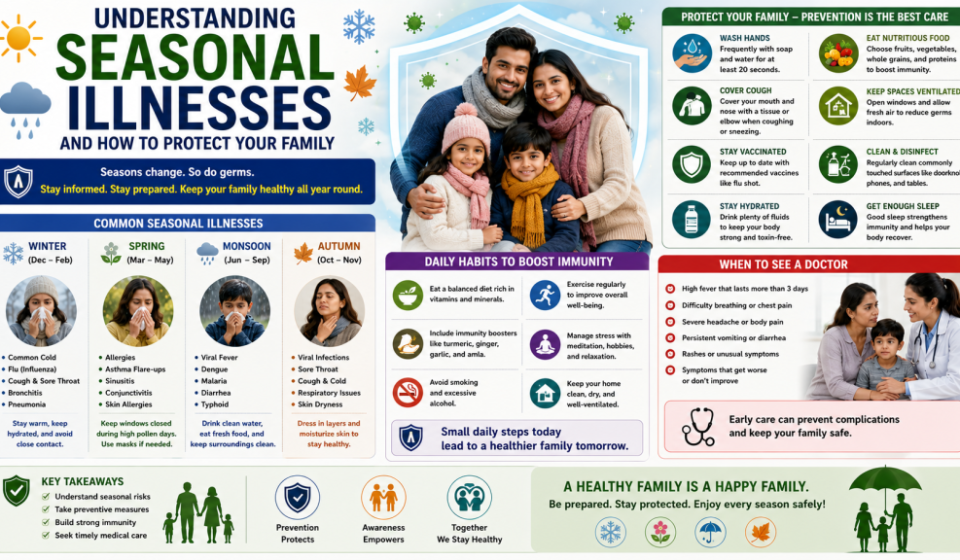

Seasonal illnesses affect millions of people every year and are among the most common reasons for doctor visits, missed school days, and workplace absences.
Protecting your family from seasonal illnesses requires more than simply treating symptoms after they appear. Preventive healthcare, good hygiene practices, balanced nutrition, quality sleep, regular exercise, recommended vaccinations, and early medical attention all play essential roles in reducing illness and supporting a strong immune system. By adopting healthy daily habits and preparing for seasonal changes, families can significantly lower their chances of becoming sick while promoting long-term health and well-being. This comprehensive guide explains common seasonal illnesses, their symptoms, prevention strategies, and practical ways to keep every member of your family healthy throughout the year.
What Are Seasonal Illnesses?
Seasonal illnesses are health conditions that become more common during specific times of the year due to changes in weather, environmental conditions, and increased circulation of infectious organisms.
These illnesses may include:
- Common cold
- Influenza (flu)
- Seasonal allergies
- Viral respiratory infections
- COVID-19
- Stomach infections
- Bronchitis
- Sinus infections
- Ear infections
- Seasonal asthma flare-ups
Many seasonal illnesses spread quickly through families, schools, workplaces, and communities.
Why Seasonal Illnesses Increase During Certain Times of the Year
Several factors contribute to seasonal disease outbreaks.
These include:
- Changes in temperature
- Increased indoor gatherings
- Lower humidity
- Reduced ventilation
- Seasonal allergens
- Increased circulation of viruses
- Weakened immunity due to poor sleep or stress
Understanding these factors helps families prepare before illness spreads.
Common Seasonal Illnesses
Common Cold
The common cold is one of the most frequent seasonal illnesses.
Symptoms may include:
- Runny nose
- Sneezing
- Sore throat
- Mild cough
- Nasal congestion
- Mild fatigue
Most colds improve with rest, hydration, and supportive care.
Influenza (Flu)
Influenza is generally more severe than the common cold.
Common symptoms include:
- High fever
- Body aches
- Chills
- Dry cough
- Fatigue
- Headache
- Sore throat
Certain individuals may develop serious complications and require medical attention.
Seasonal Allergies
Allergies occur when the immune system reacts to pollen, mold, dust, or other environmental allergens.
Symptoms include:
- Sneezing
- Itchy eyes
- Watery eyes
- Runny nose
- Nasal congestion
Unlike viral infections, allergies usually do not cause fever.
COVID-19 and Other Respiratory Viruses
Respiratory viruses may circulate throughout the year but often increase during certain seasons.
Possible symptoms include:
- Fever
- Cough
- Sore throat
- Fatigue
- Nasal congestion
- Shortness of breath
- Body aches
Follow current public health recommendations and seek medical advice if symptoms become severe.
Stomach Infections
Certain viruses spread more frequently during seasonal outbreaks.
Symptoms include:
- Nausea
- Vomiting
- Diarrhea
- Stomach cramps
- Dehydration
Proper hydration is especially important during gastrointestinal illnesses.
How Seasonal Illnesses Spread
Most seasonal infections spread through:
- Respiratory droplets
- Close personal contact
- Contaminated surfaces
- Shared household items
- Poor hand hygiene
Some viruses can survive on surfaces for several hours, making regular cleaning important.
Who Is Most at Risk?
Some individuals are more vulnerable to complications.
Higher-risk groups include:
- Infants
- Young children
- Older adults
- Pregnant women
- People with asthma
- Individuals with diabetes
- People with heart disease
- Those with weakened immune systems
Extra precautions are recommended for these groups.
Early Warning Signs
Watch for symptoms such as:
- Persistent fever
- Difficulty breathing
- Severe fatigue
- Persistent cough
- Chest discomfort
- Dehydration
- Confusion
- High fever in children
Seek medical attention promptly if symptoms worsen or become severe.
Importance of Hand Hygiene
Handwashing remains one of the simplest and most effective ways to prevent illness.
Wash hands:
- Before eating
- After using the restroom
- After coughing or sneezing
- After returning home
- Before preparing food
Wash with soap and water for at least 20 seconds whenever possible.
Cover Coughs and Sneezes
Help reduce the spread of germs by:
- Covering your mouth and nose with a tissue
- Sneezing into your elbow if tissues are unavailable
- Disposing of used tissues properly
- Washing hands immediately afterward
These simple habits protect everyone around you.
Keep Frequently Touched Surfaces Clean
Regularly disinfect commonly touched items such as:
- Door handles
- Mobile phones
- Remote controls
- Light switches
- Kitchen counters
- Computer keyboards
Routine cleaning reduces the spread of germs.
Stay Up to Date with Recommended Vaccinations
Vaccinations are one of the most effective preventive measures against certain seasonal illnesses.
Discuss recommended vaccines with your healthcare provider based on:
- Age
- Medical history
- Pregnancy status
- Chronic health conditions
Vaccination protects both individuals and communities.
Build a Strong Immune System
Healthy lifestyle habits support immune function.
Focus on:
- Balanced nutrition
- Regular exercise
- Adequate sleep
- Stress management
- Staying hydrated
Strong immunity helps the body respond more effectively to infections.
Eat a Nutrient-Rich Diet
Support your immune system by eating:
- Fruits
- Vegetables
- Whole grains
- Lean proteins
- Beans
- Nuts
- Seeds
- Healthy fats
These foods provide vitamins, minerals, antioxidants, and fiber essential for good health.
Stay Hydrated
Water supports:
- Normal body temperature
- Healthy circulation
- Digestion
- Immune function
Drink fluids regularly, especially during illness.
Get Enough Sleep
Adults generally need seven to nine hours of quality sleep each night.
Children and teenagers require even more.
Adequate sleep supports immune health and recovery.
Exercise Regularly
Moderate physical activity improves:
- Circulation
- Immune response
- Heart health
- Stress management
- Overall wellness
Aim for regular exercise throughout the week.
Manage Stress
Chronic stress may weaken immune function.
Healthy stress-management techniques include:
- Meditation
- Deep breathing
- Yoga
- Walking
- Reading
- Spending time with loved ones
Managing stress benefits both physical and mental health.
Keep Indoor Air Healthy
Improve indoor air quality by:
- Opening windows when weather permits
- Using proper ventilation
- Reducing indoor pollutants
- Maintaining clean air filters
Good ventilation may help reduce the spread of respiratory illnesses.
Protect Children at School
Teach children healthy habits such as:
- Proper handwashing
- Avoiding touching their face
- Covering coughs and sneezes
- Not sharing drinking bottles
- Staying home when sick
These practices reduce transmission in schools and childcare settings.
When to Keep Someone Home
Avoid school, work, or public gatherings if a family member has:
- Fever
- Vomiting
- Diarrhea
- Significant coughing
- Contagious illness
Resting at home also supports recovery.
When to See a Healthcare Professional
Seek medical advice if someone develops:
- Difficulty breathing
- Persistent high fever
- Severe dehydration
- Chest pain
- Confusion
- Symptoms lasting longer than expected
- Worsening illness despite home care
Prompt evaluation is especially important for high-risk individuals.
Common Myths About Seasonal Illnesses
Myth: Cold weather alone causes illness.
Fact: Seasonal illnesses are caused by viruses, bacteria, allergens, or other factors—not simply by cold temperatures.
Myth: Antibiotics cure viral infections.
Fact: Antibiotics treat bacterial infections and are not effective against viruses such as the common cold or influenza.
Myth: Healthy people never get seasonal illnesses.
Fact: Anyone can become ill, although healthy lifestyle habits can reduce the risk and may support recovery.
Daily Family Prevention Checklist
Protect your family by:
- Washing hands frequently
- Eating nutritious meals
- Drinking enough water
- Exercising regularly
- Sleeping adequately
- Cleaning frequently touched surfaces
- Staying current with recommended vaccinations
- Managing stress
- Staying home when sick
- Attending routine health checkups
Healthy daily habits provide year-round protection.
Source
https://www.cdc.gov
https://www.who.int
https://medlineplus.gov
https://www.niaid.nih.gov
Conclusion
Seasonal illnesses are a normal part of life, but many infections can be prevented or their impact reduced through healthy daily habits and preventive healthcare. Practicing good hand hygiene, maintaining a balanced diet, exercising regularly, getting enough sleep, staying hydrated, keeping vaccinations up to date, and seeking medical care when necessary all help protect individuals and families from common seasonal diseases. Understanding the symptoms of seasonal illnesses and responding early can reduce complications and support faster recovery. By making prevention a priority throughout the year, families can enjoy better health, stronger immunity, and greater peace of mind.
FAQ
Q1. What are seasonal illnesses?
Seasonal illnesses are health conditions that occur more frequently during certain times of the year due to changes in weather, environmental factors, and increased circulation of viruses, bacteria, or allergens.
Q2. What are the most common seasonal illnesses?
Common seasonal illnesses include the common cold, influenza (flu), seasonal allergies, COVID-19, viral respiratory infections, stomach infections, sinus infections, and bronchitis.
Q3. How can I reduce my family’s risk of seasonal illnesses?
Wash hands regularly, maintain a healthy diet, exercise consistently, get enough sleep, stay hydrated, keep recommended vaccinations up to date, clean frequently touched surfaces, and avoid close contact with people who are sick.
Q4. Why is handwashing so important?
Proper handwashing removes germs that can spread through direct contact or contaminated surfaces, making it one of the most effective ways to prevent many infectious diseases.
Q5. Can healthy eating improve immunity?
Yes. A balanced diet rich in fruits, vegetables, whole grains, lean proteins, and healthy fats provides nutrients that support normal immune function.