
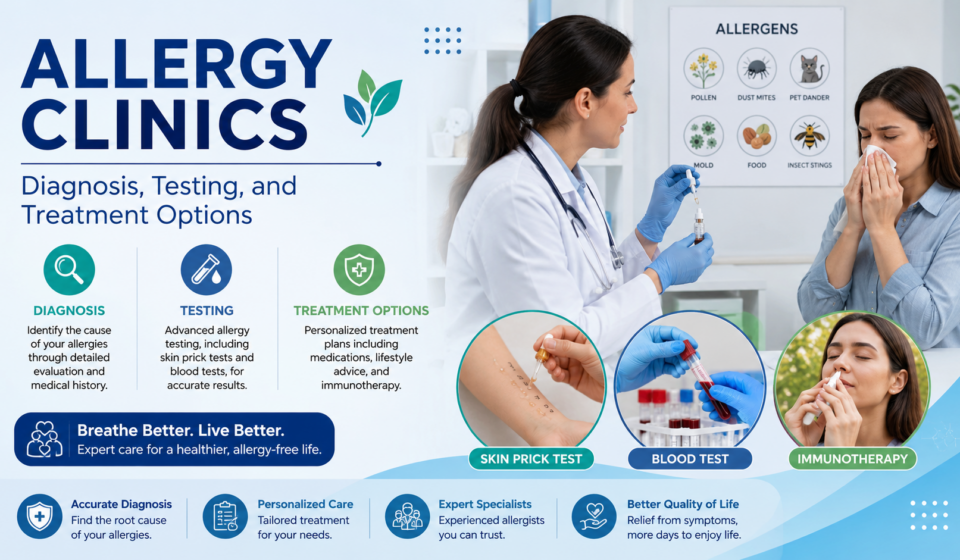

earn how allergy clinics diagnose and treat allergies through advanced testing, personalized treatment plans, immunotherapy, and preventive care. Discover symptoms, testing methods, and treatment options for long-term allergy relief.
Allergies affect millions of people worldwide and can significantly impact daily life. From seasonal pollen allergies and food sensitivities to asthma-related allergic reactions, allergies can range from mild discomfort to severe health emergencies. Allergy clinics specialize in identifying the root cause of allergic reactions and providing effective treatment plans tailored to each patient.
Modern allergy clinics use advanced diagnostic tools and evidence-based treatments to help patients manage symptoms, reduce exposure to allergens, and improve their overall quality of life. Whether you experience recurring sneezing, skin rashes, breathing difficulties, or food-related reactions, an allergy clinic can provide the expertise needed to achieve lasting relief.
Understanding Allergies
An allergy occurs when the immune system mistakenly identifies a harmless substance as a threat. These substances, known as allergens, trigger an immune response that can cause various symptoms.
Common allergens include:
- Pollen from trees, grasses, and weeds
- Dust mites
- Mold spores
- Pet dander
- Certain foods
- Insect stings
- Medications
- Latex
When exposed to these allergens, the body releases chemicals such as histamine, leading to symptoms ranging from mild irritation to severe allergic reactions.
Signs You Should Visit an Allergy Clinic
Many people live with allergy symptoms without realizing that specialized treatment can provide significant relief. You should consider visiting an allergy clinic if you experience:
Frequent Sneezing and Nasal Congestion
Persistent sneezing, a runny nose, or nasal blockage may indicate allergic rhinitis rather than a common cold.
Chronic Coughing
A lingering cough that worsens during specific seasons or environmental conditions may be linked to allergies.
Skin Reactions
Recurring eczema, hives, itching, or unexplained skin irritation may be caused by allergic triggers.
Breathing Difficulties
Wheezing, shortness of breath, or asthma symptoms may be associated with allergies.
Food Reactions
Symptoms such as swelling, digestive issues, itching, or breathing difficulties after eating certain foods require professional evaluation.
Eye Irritation
Red, watery, itchy eyes are common signs of allergic reactions.
What Happens During Your First Visit to an Allergy Clinic?
The first consultation typically involves a comprehensive assessment of your symptoms and medical history.
During the visit, an allergy specialist may:
- Review your medical history
- Discuss your symptoms and triggers
- Evaluate environmental exposures
- Assess family history of allergies
- Perform a physical examination
- Recommend allergy testing
This detailed evaluation helps identify possible allergens and guides the diagnostic process.
Allergy Diagnosis Process
Accurate diagnosis is essential for effective treatment. Allergy clinics use several methods to determine the exact cause of symptoms.
Medical History Evaluation
Your healthcare provider will ask questions about:
- Symptom frequency
- Seasonal patterns
- Exposure to pets or environmental factors
- Dietary habits
- Workplace conditions
- Family history of allergies
A detailed history often provides valuable clues about potential allergens.
Physical Examination
The doctor examines areas commonly affected by allergies, including:
- Nose and sinuses
- Eyes
- Skin
- Lungs
This examination helps identify signs of allergic inflammation and related conditions.
Common Allergy Testing Methods
Modern allergy clinics offer a variety of testing methods to accurately identify allergens.
Skin Prick Test
The skin prick test is one of the most commonly used allergy tests.
During the procedure:
- Small amounts of suspected allergens are placed on the skin.
- Tiny pricks allow the allergens to enter the skin surface.
- Reactions are monitored for approximately 15–20 minutes.
A small raised bump may indicate an allergy to that substance.
Intradermal Testing
This method involves injecting a small amount of allergen beneath the skin and is often used when skin prick test results are inconclusive.
Patch Testing
Patch testing is commonly used to diagnose contact dermatitis and skin allergies.
Allergen-containing patches are applied to the skin and monitored over several days to identify delayed allergic reactions.
Blood Tests
Blood tests measure allergy-related antibodies known as Immunoglobulin E (IgE).
Benefits include:
- Suitable for patients with skin conditions
- Useful when skin testing is not possible
- Can evaluate multiple allergens simultaneously
Food Allergy Testing
Food allergy assessments may include:
- Skin testing
- Blood testing
- Elimination diets
- Oral food challenges under medical supervision
These methods help identify food triggers while minimizing risks.
Conditions Treated at Allergy Clinics
Allergy clinics manage a wide range of allergic conditions.
Seasonal Allergies
Often triggered by pollen, seasonal allergies can cause:
- Sneezing
- Nasal congestion
- Itchy eyes
- Runny nose
Perennial Allergies
Year-round allergies are commonly linked to:
- Dust mites
- Mold
- Pet dander
Asthma
Many asthma cases have allergic components that require specialized management.
Food Allergies
Common food allergens include:
- Peanuts
- Tree nuts
- Milk
- Eggs
- Soy
- Wheat
- Shellfish
Skin Allergies
Allergy clinics frequently treat:
- Eczema
- Hives
- Contact dermatitis
Drug Allergies
Reactions to medications require careful evaluation and management.
Insect Sting Allergies
Severe reactions to bee, wasp, or hornet stings can be life-threatening and often require specialized treatment.
Allergy Treatment Options
Treatment plans are customized based on allergy type, severity, and individual health needs.
Allergen Avoidance
Avoiding triggers is often the first step in managing allergies.
Examples include:
- Using air purifiers
- Keeping windows closed during pollen seasons
- Regular cleaning to reduce dust mites
- Avoiding known food allergens
Medications
Several medications help control allergy symptoms.
Antihistamines
Antihistamines block histamine release and help reduce:
- Sneezing
- Itching
- Runny nose
- Watery eyes
Nasal Sprays
Nasal corticosteroid sprays help reduce inflammation and congestion.
Decongestants
These medications provide temporary relief from nasal blockage.
Eye Drops
Specialized eye drops help relieve itching, redness, and irritation.
Immunotherapy
Immunotherapy is one of the most effective long-term allergy treatments.
It works by gradually exposing the immune system to increasing amounts of allergens, helping reduce sensitivity over time.
Allergy Shots
Allergy shots are administered over several months or years and can significantly reduce allergic reactions.
Benefits include:
- Long-term symptom reduction
- Reduced medication dependence
- Improved quality of life
Sublingual Immunotherapy
This treatment involves placing allergy tablets or drops under the tongue.
It offers a convenient alternative to injections for certain allergies.
Emergency Allergy Management
Some allergies can cause severe reactions known as anaphylaxis.
Symptoms may include:
- Difficulty breathing
- Swelling of the throat
- Rapid drop in blood pressure
- Severe hives
- Dizziness
- Loss of consciousness
Patients at risk may be prescribed emergency epinephrine auto-injectors and educated on proper usage.
Benefits of Visiting an Allergy Clinic
Specialized allergy care provides numerous advantages.
Accurate Diagnosis
Identifying the specific allergen allows for targeted treatment.
Personalized Treatment Plans
Every patient receives care tailored to their symptoms, lifestyle, and medical history.
Improved Symptom Control
Proper management helps reduce symptom frequency and severity.
Better Quality of Life
Patients often experience improved sleep, productivity, and overall well-being.
Prevention of Complications
Early treatment can help prevent chronic sinus issues, asthma complications, and severe allergic reactions.
How to Choose the Right Allergy Clinic
When selecting an allergy clinic, consider:
- Board-certified allergy specialists
- Modern diagnostic equipment
- Comprehensive testing services
- Personalized treatment options
- Positive patient reviews
- Emergency allergy management capabilities
Choosing an experienced clinic ensures accurate diagnosis and effective long-term care.
Preventing Allergy Flare-Ups
While allergies cannot always be prevented, certain measures can minimize symptoms.
Helpful strategies include:
- Monitoring pollen forecasts
- Using high-efficiency air filters
- Maintaining indoor cleanliness
- Washing bedding regularly
- Avoiding known allergens
- Following prescribed treatment plans
Consistent preventive measures can significantly improve symptom control.
Sources
https://sl1nk.com/0cxwu1q
https://sl1nk.com/jgn4yvg
Conclusion
Allergy clinics play a crucial role in diagnosing, managing, and treating a wide range of allergic conditions. Through advanced testing methods, personalized treatment plans, and long-term management strategies, these clinics help patients gain control over their symptoms and improve their quality of life. Whether you suffer from seasonal allergies, food allergies, asthma, or chronic skin reactions, seeking care from an allergy specialist can lead to accurate diagnosis, effective treatment, and lasting relief. Early intervention and proper management can prevent complications and help you enjoy a healthier, more comfortable life.
FAQs
What is the purpose of an allergy clinic?
An allergy clinic specializes in diagnosing, treating, and managing allergic conditions such as seasonal allergies, asthma, food allergies, and skin reactions.
How is allergy testing performed?
Allergy testing may involve skin prick tests, blood tests, patch testing, or supervised food challenges to identify specific allergens.
Are allergy tests painful?
Most allergy tests cause minimal discomfort and are generally well tolerated by patients of all ages.
Can allergies be cured permanently?
While allergies may not always be completely cured, treatments such as immunotherapy can significantly reduce symptoms and improve long-term tolerance.
When should I see an allergy specialist?
You should consult an allergy specialist if you experience persistent allergy symptoms, recurrent asthma attacks, unexplained skin reactions, or suspected food allergies.