
Understanding the Connection Between Tongue Tie and Speech
Many parents become concerned when their child struggles with speech development, pronunciation, or communication skills. One possible but often overlooked cause is tongue tie, a condition that can restrict tongue movement and potentially impact speech. While not every child with tongue tie experiences speech difficulties, understanding the relationship between tongue tie and speech development can help parents make informed decisions about their child’s health and communication abilities.
In this comprehensive guide, we’ll explore how tongue tie affects speech development, common signs to watch for, available treatment options, and when parents should seek professional evaluation.
What Is Tongue Tie?
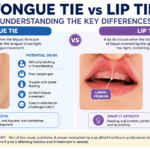
Tongue tie, medically known as ankyloglossia, is a condition present at birth where the band of tissue connecting the tongue to the floor of the mouth (called the lingual frenulum) is shorter, thicker, or tighter than normal.
This restriction can limit the tongue’s range of motion, making it difficult for a child to perform certain tongue movements necessary for feeding, oral development, and speech production.
Tongue tie can range from mild to severe. Some children experience minimal functional limitations, while others may face challenges with breastfeeding, swallowing, oral hygiene, and speech.
How Does the Tongue Help with Speech?
The tongue is one of the most important muscles involved in speech production. It works together with the lips, teeth, palate, and jaw to create sounds and words.
To speak clearly, the tongue must be able to:
- Elevate to the roof of the mouth
- Move forward and backward
- Touch the upper teeth and gums
- Create precise positions for different sounds
- Coordinate with other oral structures
When tongue mobility is restricted, certain speech sounds may become difficult to pronounce correctly.
Can Tongue Tie Cause Speech Problems?
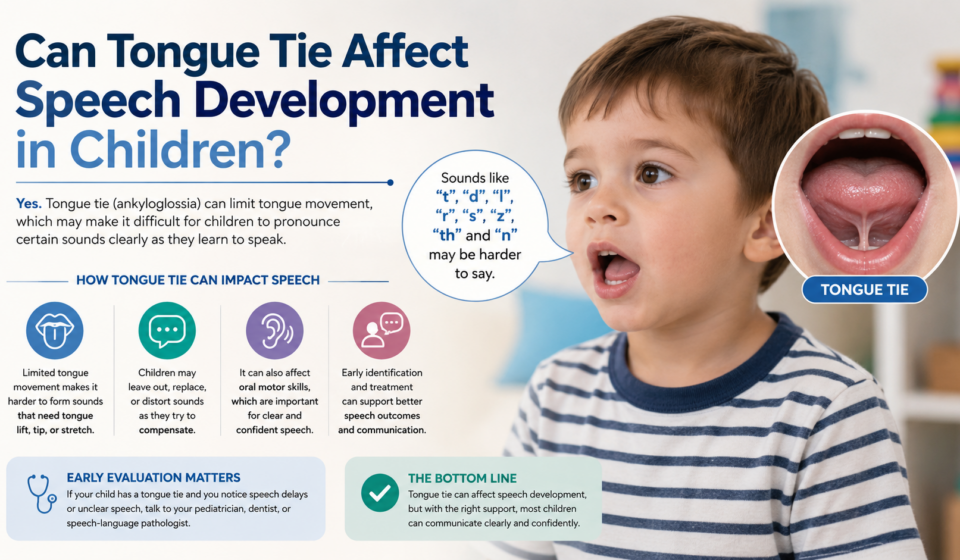
The answer is yes, tongue tie can affect speech development in some children, but it does not always cause speech difficulties.
Research and clinical experience show that the impact of tongue tie depends on factors such as:
- Severity of the restriction
- Degree of tongue mobility limitation
- Child’s oral muscle development
- Individual speech patterns
- Presence of other developmental factors
Many children with mild tongue ties develop normal speech without intervention. However, moderate to severe tongue restrictions may interfere with the production of specific sounds that require precise tongue movements.
Speech Sounds Commonly Affected by Tongue Tie
Certain speech sounds require the tongue to lift, extend, or make contact with specific areas of the mouth.
Children with tongue tie may have difficulty producing sounds such as:
Sounds Requiring Tongue Elevation
- T
- D
- N
- L
These sounds require the tongue tip to touch the ridge behind the upper front teeth.
Sounds Requiring Advanced Tongue Movement
- S
- Z
- SH
- CH
- J
Restricted tongue movement can affect proper airflow and articulation.
Sounds Often Associated with Tongue Tie
- R
- TH
These sounds demand complex tongue positioning and flexibility.
Not every child with tongue tie struggles with these sounds, but persistent articulation issues involving multiple tongue-dependent sounds may warrant evaluation.
Signs That Tongue Tie May Be Affecting Speech
Parents should monitor their child’s speech development and look for signs that may indicate functional tongue restrictions.
Potential signs include:
Difficulty Pronouncing Certain Sounds
The child consistently struggles with specific sounds beyond the expected developmental age.
Speech That Is Difficult to Understand
Family members and teachers may have trouble understanding what the child is saying.
Frustration During Communication
Children may become frustrated when others cannot understand them.
Limited Tongue Movement
The child may be unable to:
- Stick out their tongue fully
- Lift the tongue to the roof of the mouth
- Move the tongue side to side
Speech Therapy Progress Is Slow
In some cases, children receive speech therapy but continue to struggle because the underlying tongue restriction limits movement.
At What Age Can Tongue Tie Affect Speech?
Tongue tie can influence oral function from infancy through adulthood.
Infancy
Common issues include:
- Breastfeeding difficulties
- Poor latch
- Clicking sounds while feeding
- Maternal nipple pain
Toddler Years
Parents may notice:
- Delayed speech development
- Difficulty imitating sounds
- Limited oral mobility
Preschool and School Age
Speech concerns become more noticeable when children are expected to communicate clearly with peers and teachers.
This is often the stage when parents seek professional evaluation.
Does Every Child with Tongue Tie Need Treatment?
No.
Not all tongue ties require surgical intervention. Treatment decisions should be based on function rather than appearance alone.
A child may have a visible tongue tie but experience:
- Normal speech
- Normal feeding
- Normal oral development
In such cases, monitoring may be sufficient.
However, if tongue restriction is causing functional challenges, treatment may be recommended.
How Is Tongue Tie Diagnosed?
A comprehensive evaluation typically involves several healthcare professionals.
Pediatric Dentist
An airway-focused or tongue tie-trained dentist evaluates:
- Tongue mobility
- Oral anatomy
- Functional limitations
Speech-Language Pathologist
A speech therapist assesses:
- Articulation
- Speech clarity
- Oral motor function
- Language development
Lactation Consultant
For infants, breastfeeding function may also be evaluated.
A team-based approach often provides the most accurate assessment.
The Role of Speech Therapy
Speech therapy is often an important part of treatment.
A speech-language pathologist can help children:
- Learn proper tongue placement
- Improve articulation
- Strengthen oral motor skills
- Develop clear speech patterns
For some children, speech therapy alone may be sufficient.
For others, therapy may be more effective after addressing the physical restriction caused by tongue tie.
What Is a Tongue Tie Release Procedure?
When tongue restriction significantly impacts function, a healthcare provider may recommend a tongue tie release.
Common procedures include:
Frenotomy
A simple procedure that releases the restrictive tissue.
Frenectomy
A more comprehensive removal of the restrictive frenulum.
Many modern providers use laser technology because it offers:
- Precision
- Minimal bleeding
- Faster healing
- Reduced discomfort
The procedure is often completed in just a few minutes.
Can Speech Improve After Tongue Tie Release?
Many children experience improvements in tongue mobility after treatment.
Potential benefits include:
- Better articulation
- Improved speech clarity
- Enhanced oral function
- Greater tongue range of motion
However, outcomes vary depending on:
- Child’s age
- Severity of restriction
- Existing speech habits
- Participation in speech therapy
It’s important to understand that a tongue tie release is not an instant cure for speech issues. Children often need therapy and practice to learn new movement patterns.
The Importance of Myofunctional Therapy
Myofunctional therapy focuses on improving the function of the tongue, lips, cheeks, and facial muscles.
Before and after tongue tie treatment, exercises may help:
- Strengthen oral muscles
- Improve tongue coordination
- Support proper swallowing
- Enhance speech production
Many airway-focused dental practices incorporate myofunctional therapy into comprehensive care plans.
Long-Term Effects of Untreated Tongue Tie
When significant tongue restrictions remain untreated, some individuals may experience ongoing challenges.
Possible long-term concerns include:
Speech Difficulties
Persistent articulation problems may continue into adolescence or adulthood.
Oral Hygiene Challenges
Limited tongue mobility can make it difficult to remove food debris from teeth.
Swallowing Difficulties
Improper tongue function may affect swallowing patterns.
Mouth Breathing
Restricted tongue posture can contribute to airway-related issues.
Sleep Concerns
Poor tongue positioning may influence airway development and sleep quality.
Not every child will experience these issues, but functional restrictions should not be ignored.
When Should Parents Seek Professional Help?
Parents should consider an evaluation if their child:
- Has a diagnosed tongue tie
- Struggles with speech clarity
- Cannot perform normal tongue movements
- Shows feeding difficulties
- Experiences ongoing articulation problems
- Is not making expected progress in speech therapy
Early assessment can help determine whether tongue restriction is contributing to the problem.
Frequently Asked Questions
Can tongue tie cause delayed speech?
It can contribute to speech challenges in some children, particularly when tongue mobility is significantly restricted. However, speech delay can also result from many other factors.
Will speech therapy fix tongue tie?
Speech therapy can improve communication skills, but it cannot physically release restrictive tissue. A professional evaluation can determine the best treatment approach.
Is tongue tie release painful?
Modern laser procedures are generally quick and minimally invasive, with most children recovering comfortably.
What age is best for tongue tie treatment?
Treatment can be beneficial at various ages depending on symptoms and functional limitations. Early evaluation often provides the best outcomes.
Can adults benefit from tongue tie treatment?
Yes. Adults with speech, swallowing, airway, or oral function concerns related to tongue tie may benefit from evaluation and treatment.
Conclusion
Tongue tie can affect speech development in children, particularly when tongue mobility is significantly restricted. While not every child with tongue tie experiences communication difficulties, some may struggle with articulation, pronunciation, and speech clarity.
The key is focusing on function rather than appearance. If your child has difficulty speaking clearly, limited tongue movement, or ongoing speech challenges, a professional assessment can help determine whether tongue tie is contributing to the issue.
Early diagnosis, appropriate therapy, and individualized treatment can support healthy speech development and improve overall oral function. By addressing concerns promptly, parents can help their children communicate with confidence and reach their full developmental potential.