
Learn how specialty clinics coordinate care with your primary doctor to improve diagnosis, treatment planning, and patient outcomes. Discover the benefits of collaborative healthcare and why coordinated medical care matters for long-term health.
Healthcare today is more advanced than ever before. Patients often visit different doctors and specialists depending on their health conditions. While a primary care doctor handles general health concerns, specialty clinics focus on specific areas such as cardiology, dermatology, orthopedics, endocrinology, neurology, and more. However, receiving care from multiple healthcare providers can sometimes become confusing if communication is not properly managed.
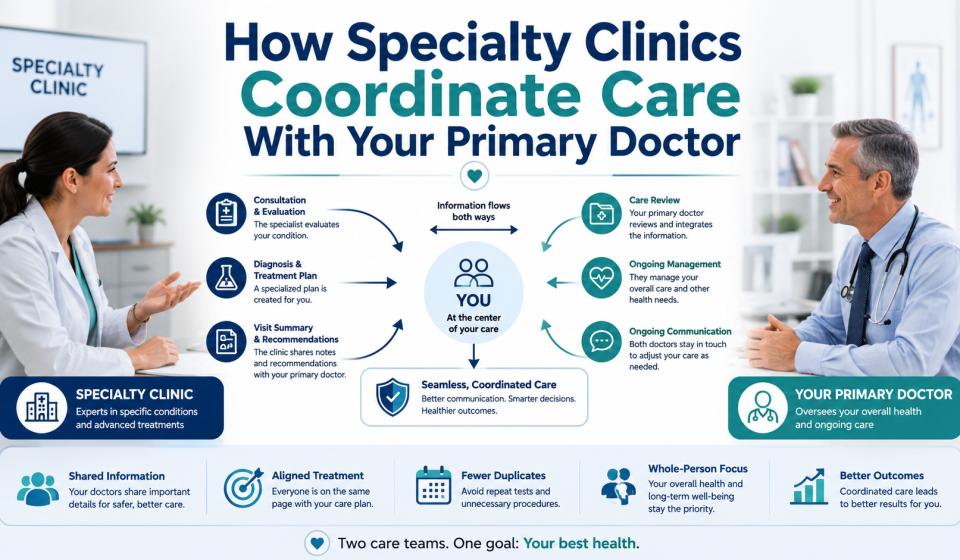
This is where coordinated healthcare becomes important. Specialty clinics and primary care physicians work together to ensure that patients receive the right treatment at the right time. Effective communication between healthcare providers helps prevent duplicate tests, reduces medication errors, and improves overall patient outcomes.
Whether a patient is managing diabetes, heart disease, arthritis, or another chronic condition, collaboration between specialists and primary doctors plays a crucial role in delivering quality healthcare.
Understanding the Role of a Primary Care Doctor
A primary care doctor is usually the first healthcare professional a patient visits when experiencing health concerns. They provide preventive care, routine checkups, vaccinations, health screenings, and treatment for common illnesses.
Primary care physicians also maintain a comprehensive medical history for each patient. Since they understand a patient’s overall health profile, they are often responsible for identifying when specialized care is needed and referring patients to the appropriate specialist.
For example, if a patient experiences persistent chest pain, the primary doctor may refer them to a cardiology clinic for further evaluation and testing.
What Are Specialty Clinics?
Specialty clinics focus on specific medical fields and provide expert diagnosis, treatment, and management of particular conditions. These clinics often have advanced diagnostic tools and healthcare professionals with specialized training.
Common specialty clinics include:
- Cardiology Clinics
- Orthopedic Clinics
- Dermatology Clinics
- Neurology Clinics
- Gastroenterology Clinics
- Endocrinology Clinics
- Pulmonology Clinics
- Women’s Health Clinics
Patients are typically referred to specialty clinics when their condition requires expertise beyond routine primary care services.
Why Coordination Between Doctors Matters
Imagine a patient with diabetes who also develops kidney complications. They may need treatment from an endocrinologist, a nephrologist, and their primary care physician simultaneously.
Without proper communication, important medical information could be missed. One doctor may prescribe medication that conflicts with another treatment plan. Duplicate tests may be ordered, resulting in unnecessary expenses.
Coordinated care ensures that every healthcare provider involved understands the patient’s condition, treatment history, medications, and healthcare goals.
Benefits of coordinated care include:
- Better treatment decisions
- Reduced medical errors
- Improved patient safety
- Faster diagnosis
- Lower healthcare costs
- Enhanced patient experience
- Better management of chronic diseases
How Specialty Clinics Share Information With Primary Doctors
Modern healthcare systems use several methods to ensure smooth communication between specialists and primary care providers.
1. Referral Reports
When a primary doctor refers a patient to a specialist, they usually send referral notes that include:
- Medical history
- Current symptoms
- Previous treatments
- Laboratory results
- Imaging reports
- Current medications
This information helps specialists understand the patient’s condition before the first appointment.
2. Consultation Notes
After evaluating the patient, the specialist prepares consultation notes and sends them back to the referring physician.
These notes often include:
- Diagnosis
- Recommended treatments
- Test results
- Medication changes
- Follow-up recommendations
This allows the primary doctor to stay updated about the patient’s care plan.
3. Electronic Health Records (EHR)
Many healthcare organizations now use Electronic Health Records (EHRs). These digital systems allow authorized healthcare providers to access patient information securely.
EHR systems help specialists and primary doctors:
- View test results
- Monitor treatment progress
- Track medications
- Review medical history
- Share clinical notes
This significantly improves communication and reduces paperwork.
4. Secure Communication Platforms
Some healthcare facilities use secure messaging systems that allow doctors to communicate directly regarding patient care.
For example, a cardiologist may quickly discuss medication adjustments with a patient’s primary physician through a secure healthcare platform.
Coordinated Care for Chronic Disease Management
Chronic diseases often require long-term care from multiple healthcare professionals.
Diabetes Management
A patient with diabetes may work with:
- Primary care physician
- Endocrinologist
- Dietitian
- Eye specialist
- Foot care specialist
Regular communication among these providers helps ensure blood sugar levels remain controlled while reducing complications.
Heart Disease Management
Patients with cardiovascular conditions often receive care from both primary physicians and cardiologists.
The specialist may focus on advanced heart treatments, while the primary doctor monitors overall health, blood pressure, lifestyle changes, and medication adherence.
Arthritis Care
Patients with arthritis may visit rheumatologists, orthopedic specialists, and physiotherapists. Coordinated treatment plans help improve mobility and quality of life.
Reducing Medication Errors Through Collaboration
Medication management is one of the most important reasons for coordinated care.
Many patients, especially older adults, take multiple medications prescribed by different healthcare providers.
Without communication, risks may include:
- Drug interactions
- Duplicate prescriptions
- Incorrect dosages
- Increased side effects
Primary doctors and specialists regularly review medication lists to ensure treatments remain safe and effective.
For example, if a specialist prescribes a new medication, the primary physician can verify whether it interacts with existing prescriptions.
The Patient’s Role in Coordinated Care
Patients also play an important role in ensuring effective communication between healthcare providers.
Patients should:
- Keep an updated medication list
- Inform every doctor about ongoing treatments
- Share test results when necessary
- Attend scheduled follow-up appointments
- Ask questions about treatment plans
- Report any side effects promptly
Being actively involved helps doctors make informed healthcare decisions.
Challenges in Care Coordination
Although healthcare coordination has improved significantly, challenges still exist.
Common challenges include:
Limited Communication Systems
Not all healthcare facilities use compatible electronic record systems.
Delayed Information Sharing
Medical reports may sometimes take time to reach other providers.
Multiple Healthcare Providers
Patients with complex conditions often see several specialists, making communication more difficult.
Patient Non-Compliance
Missed appointments or incomplete medical histories can affect care coordination.
Healthcare organizations continue investing in technology and communication tools to address these challenges.
The Future of Coordinated Healthcare
The future of healthcare is increasingly focused on integrated care models.
Advancements such as:
- Artificial Intelligence (AI)
- Telemedicine
- Advanced Electronic Health Records
- Patient Portals
- Remote Monitoring Devices
are helping doctors collaborate more effectively than ever before.
Patients can now access their medical records online, communicate with healthcare providers digitally, and participate more actively in their treatment plans.
As healthcare becomes more connected, patients will benefit from faster diagnoses, personalized treatments, and improved long-term health outcomes.
Sources
https://sl1nk.com/958yz4y
https://l1nq.com/87doze7
Conclusion
Effective coordination between specialty clinics and primary care doctors is essential for delivering high-quality healthcare. By sharing medical information, treatment plans, test results, and medication updates, healthcare providers can work together to provide safer and more effective care.
This collaborative approach reduces medical errors, improves chronic disease management, prevents unnecessary testing, and enhances patient satisfaction. As healthcare technology continues to evolve, coordination between specialists and primary physicians will become even more seamless, helping patients receive comprehensive and personalized medical care.
Frequently Asked Questions (FAQs)
1. Why does my primary doctor refer me to a specialty clinic?
Primary doctors refer patients to specialists when a condition requires advanced expertise, specialized testing, or focused treatment.
2. Will my primary doctor receive updates from the specialist?
Yes. Most specialists send consultation reports, diagnoses, treatment recommendations, and follow-up plans to the referring physician.
3. Can specialty clinics access my medical records?
Many healthcare systems use Electronic Health Records (EHRs), allowing authorized providers to access relevant patient information securely.
4. How does coordinated care improve patient outcomes?
Coordinated care reduces treatment errors, improves communication, prevents duplicate testing, and ensures all healthcare providers work toward common treatment goals.
5. What can patients do to support better care coordination?
Patients should maintain accurate medication lists, share medical histories, attend follow-ups, and keep all healthcare providers informed about ongoing treatments.