
Learn how managing multiple health conditions through one clinic can improve treatment, save time, reduce healthcare costs, and provide better patient outcomes. A complete guide for Indian patients and families.
Managing one health condition can be challenging. Managing two, three, or even more health problems at the same time can feel overwhelming. Many people in India live with multiple health conditions such as diabetes, high blood pressure, thyroid disorders, arthritis, asthma, heart disease, or kidney problems. Visiting different doctors at different locations often leads to confusion, repeated tests, higher expenses, and difficulty keeping track of treatments.
This is where a well-equipped multi-specialty clinic can make a significant difference. By bringing various healthcare services under one roof, patients can receive coordinated care that is easier to manage and often more effective.
Let’s explore how one clinic can help patients successfully manage multiple health conditions while improving their overall quality of life.
Understanding Multiple Health Conditions
When a person has two or more chronic medical conditions simultaneously, it is often called “multiple chronic conditions” or “multimorbidity.”
Common combinations include:
- Diabetes and high blood pressure
- Heart disease and kidney disease
- Thyroid disorders and obesity
- Asthma and allergies
- Arthritis and osteoporosis
- Diabetes and heart disease
These conditions often affect each other. For example, poorly controlled diabetes can increase the risk of heart disease and kidney complications. Therefore, treatment needs careful coordination.
Why Managing Multiple Conditions Can Be Difficult
Many patients face challenges such as:
- Multiple doctor appointments
- Different medications from different specialists
- Repeated diagnostic tests
- Confusing treatment plans
- Increased healthcare expenses
- Difficulty maintaining medical records
For elderly patients especially, keeping track of several prescriptions and appointments can become stressful.
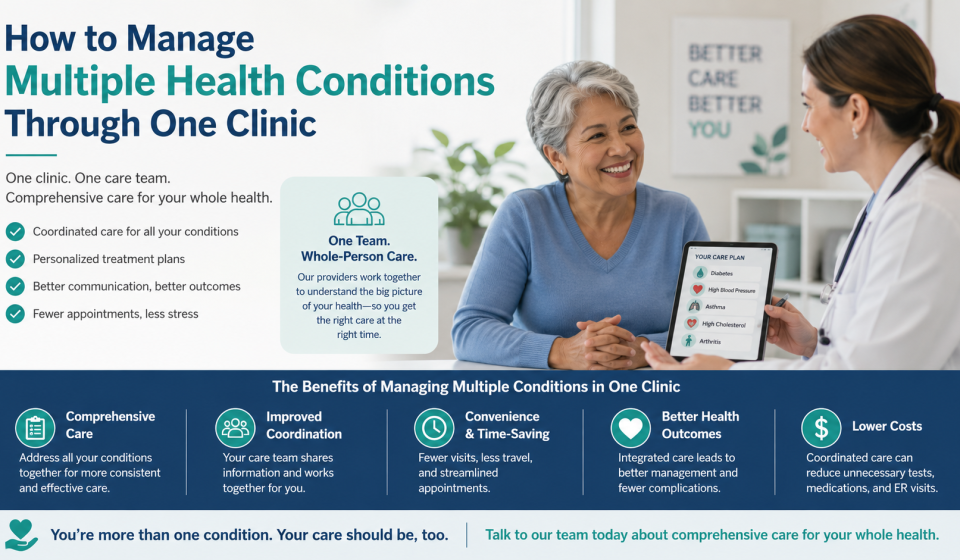
Benefits of Managing Multiple Health Conditions Through One Clinic
1. Coordinated Medical Care
One of the biggest advantages is that doctors can work together.
For example, if a patient has diabetes, hypertension, and kidney disease, the physician, diabetologist, and kidney specialist can review the same medical records and coordinate treatment decisions.
This reduces the risk of conflicting medications and improves overall care.
2. Easier Access to Specialists
A multi-specialty clinic often provides access to:
- General physicians
- Diabetologists
- Cardiologists
- Orthopedic specialists
- Gynecologists
- Dietitians
- Physiotherapists
Patients can consult multiple specialists in a single visit rather than traveling to different hospitals.
3. Better Medication Management
Patients with multiple conditions often take several medications daily.
When healthcare providers work together, they can:
- Reduce unnecessary medicines
- Avoid harmful drug interactions
- Simplify treatment schedules
- Improve medication adherence
This helps patients feel more confident about their treatment plans.
4. Faster Diagnosis and Monitoring
Many clinics now offer:
- Blood tests
- ECG
- Ultrasound
- X-rays
- Health screenings
Having these services in one location allows doctors to quickly monitor changes in a patient’s health and adjust treatments when needed.
5. Improved Preventive Care
Preventive healthcare is especially important for patients with chronic conditions.
A single clinic can help patients stay on track with:
- Regular checkups
- Vaccinations
- Blood sugar monitoring
- Blood pressure checks
- Weight management
- Lifestyle counseling
Preventive care often helps avoid serious complications later.
Real-Life Example
Consider Rajesh, a 58-year-old businessman from Ahmedabad.
He has diabetes, high blood pressure, and early-stage heart disease. Previously, he visited three different doctors at separate locations every month. He often forgot test reports and sometimes received conflicting advice.
After switching to a multi-specialty clinic, his physician coordinated care with a cardiologist and dietitian. All his medical records were available in one system. His appointments became easier to manage, his medications were streamlined, and his blood sugar and blood pressure improved significantly within six months.
This is a common experience for many patients who move toward integrated healthcare services.
The Role of Lifestyle Management
Treating multiple conditions isn’t only about medicines.
A good clinic also focuses on:
Healthy Diet
Nutrition experts can create personalized meal plans based on:
- Diabetes management
- Heart health
- Weight control
- Kidney health
Physical Activity
Regular exercise helps manage:
- Blood pressure
- Blood sugar
- Joint health
- Weight
Even a daily 30-minute walk can make a meaningful difference.
Mental Health Support
Living with chronic illnesses can affect emotional well-being.
Many clinics now provide counseling and stress management support to help patients cope better with long-term health challenges.
How Technology Makes Management Easier
Modern clinics increasingly use digital healthcare tools such as:
- Electronic health records
- Online appointment booking
- Digital prescriptions
- Teleconsultations
- Automated health reminders
These technologies help patients stay connected with their healthcare providers and improve continuity of care.
Choosing the Right Clinic
When selecting a clinic for managing multiple health conditions, look for:
- Experienced healthcare professionals
- Multiple specialties under one roof
- Diagnostic services
- Electronic medical records
- Preventive care programs
- Patient-friendly appointment systems
- Positive patient reviews
A clinic that emphasizes coordinated care can significantly improve treatment outcomes.
Sources
https://l1nq.com/qj5ye8k
https://sl1nk.com/0njdvbv
Conclusion
Managing multiple health conditions does not have to be complicated. A well-organized multi-specialty clinic can simplify healthcare by offering coordinated treatment, easier access to specialists, better medication management, and comprehensive preventive care.
For patients dealing with diabetes, heart disease, hypertension, thyroid disorders, arthritis, or other chronic conditions, receiving care through one clinic often saves time, reduces stress, and leads to better health outcomes. By combining expert medical guidance with lifestyle support and modern technology, clinics can help patients live healthier and more comfortable lives.
Frequently Asked Questions (FAQs)
1. What does it mean to manage multiple health conditions through one clinic?
It means receiving coordinated care for different medical conditions from a clinic that offers multiple healthcare services and specialists under one roof.
2. Can one clinic handle diabetes, blood pressure, and heart disease together?
Yes. Many multi-specialty clinics have physicians, diabetologists, and cardiologists who work together to manage these conditions effectively.
3. Does coordinated care reduce healthcare costs?
In many cases, yes. Coordinated care can reduce duplicate tests, unnecessary appointments, and medication-related complications, helping lower overall healthcare expenses.
4. Are multi-specialty clinics suitable for elderly patients?
Absolutely. Elderly patients often benefit from having all their healthcare services and records managed in one place.
5. How often should patients with multiple chronic conditions visit a clinic?
The frequency depends on the individual’s health status. Most patients benefit from regular follow-ups every few weeks or months as advised by their healthcare provider.