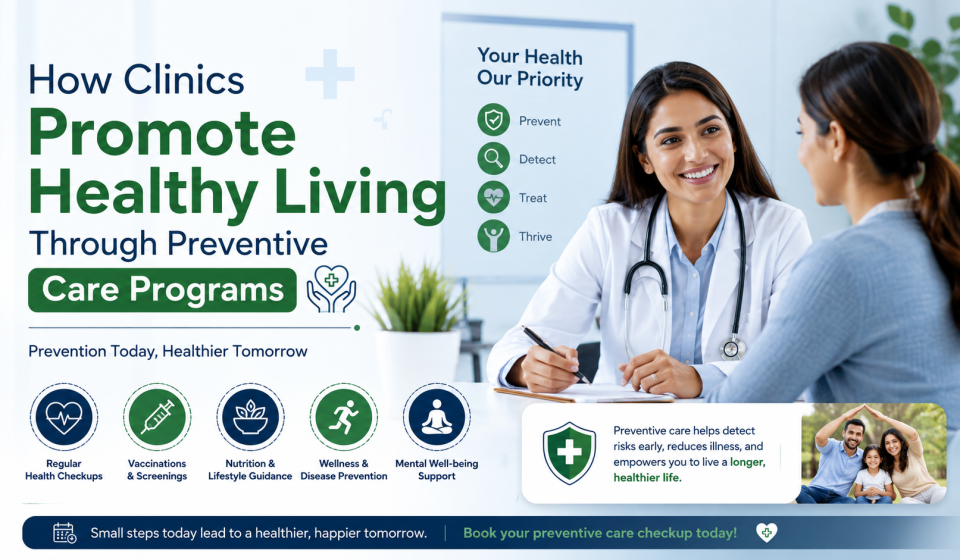

Discover how clinics promote healthy living through preventive care programs, regular screenings, vaccinations, lifestyle counseling, and wellness initiatives. Learn why preventive healthcare is essential for a healthier and longer life.
In today’s fast-paced world, many people visit a doctor only when they feel sick. However, modern healthcare is shifting from treating diseases to preventing them before they become serious. This approach, known as preventive healthcare, helps individuals maintain better health, avoid chronic illnesses, and improve their overall quality of life.
Healthcare clinics play a vital role in promoting healthy living through preventive care programs. These programs focus on early detection, health education, vaccinations, regular screenings, lifestyle counseling, and wellness initiatives that help patients stay healthy for years to come.
In India and around the world, preventive care is becoming increasingly important due to the rising cases of diabetes, hypertension, heart disease, obesity, cancer, and mental health disorders. Clinics are now investing more resources into preventive care because preventing a disease is often easier, safer, and less expensive than treating it after it develops.
This article explores how clinics promote healthy living through preventive care programs and why these programs are essential for every individual.
What Is Preventive Care?
Preventive care refers to medical services and healthcare practices designed to prevent diseases, detect health problems early, and promote overall wellness before symptoms appear. Instead of waiting for illnesses to develop, preventive healthcare focuses on reducing health risks and maintaining good health.
Preventive care programs generally include:
- Regular health checkups
- Vaccinations
- Health screenings
- Lifestyle counseling
- Nutrition guidance
- Exercise programs
- Mental health support
- Disease prevention education
- Family health history assessment
- Wellness monitoring
The primary goal is to help people live healthier and longer lives while reducing healthcare costs and complications.
Why Preventive Healthcare Matters
Many serious diseases develop silently over several years. Conditions such as diabetes, hypertension, heart disease, and certain cancers often show few symptoms during their early stages.
Preventive healthcare helps by:
- Detecting diseases early
- Reducing the risk of complications
- Lowering treatment costs
- Improving life expectancy
- Enhancing quality of life
- Promoting healthier lifestyles
- Reducing hospital admissions
For example, a simple blood pressure screening at a clinic may detect hypertension before it causes a stroke or heart attack. Similarly, regular blood sugar testing can identify prediabetes and allow patients to make lifestyle changes before developing type 2 diabetes.
How Clinics Promote Healthy Living Through Preventive Care Programs
1. Regular Health Checkup Programs
One of the most effective preventive services offered by clinics is routine health examinations.
Many clinics provide annual or biannual health checkup packages that include:
- Blood pressure monitoring
- Blood sugar testing
- Cholesterol screening
- Kidney function tests
- Liver function tests
- Body Mass Index (BMI) assessment
- Heart health evaluations
- Thyroid testing
These routine assessments help doctors identify health risks before symptoms develop.
For example, consider a 38-year-old office worker who feels healthy but attends an annual health checkup. The clinic identifies elevated cholesterol and borderline diabetes. With proper lifestyle changes and medical guidance, the patient avoids developing serious cardiovascular disease later.
2. Vaccination and Immunization Programs
Vaccinations remain one of the most successful preventive healthcare interventions worldwide.
Clinics actively promote vaccinations for:
- Children
- Adolescents
- Adults
- Pregnant women
- Senior citizens
Common vaccinations include:
- Influenza vaccine
- Hepatitis vaccine
- HPV vaccine
- Tetanus vaccine
- Pneumococcal vaccine
- COVID-19 vaccine
- Childhood immunizations
Vaccination programs protect not only individuals but entire communities by reducing disease transmission.
Modern clinics maintain vaccination schedules, provide reminders, and educate patients about the importance of immunization.
3. Screening Programs for Early Disease Detection
Early diagnosis significantly improves treatment outcomes for many diseases.
Preventive screening programs offered by clinics include:
Cancer Screening
- Breast cancer screening
- Cervical cancer screening
- Colorectal cancer screening
- Lung cancer screening
- Prostate cancer screening
Chronic Disease Screening
- Diabetes screening
- Blood pressure monitoring
- Cholesterol testing
- Heart disease risk assessment
- Osteoporosis screening
Women’s Health Screening
- Pap smear tests
- Mammography
- Hormonal evaluations
Men’s Health Screening
- Prostate examinations
- Cardiovascular risk assessments
- Testosterone evaluations when necessary
Regular screening enables healthcare professionals to detect abnormalities before symptoms become severe.
4. Lifestyle Counseling and Health Education
Modern clinics understand that medications alone cannot create a healthy society. Therefore, lifestyle counseling has become a major component of preventive healthcare.
Healthcare professionals educate patients about:
- Healthy eating habits
- Exercise routines
- Weight management
- Smoking cessation
- Alcohol reduction
- Sleep hygiene
- Stress management
Many clinics employ dietitians, wellness coaches, physiotherapists, and counselors to help patients adopt healthier lifestyles.
For example, a patient diagnosed with prediabetes may receive:
- Customized diet plans
- Exercise recommendations
- Weight loss guidance
- Monthly monitoring
- Behavioral coaching
These interventions often prevent progression to full diabetes.
5. Nutrition Counseling Programs
Poor nutrition contributes to numerous chronic illnesses, including:
- Obesity
- Diabetes
- Heart disease
- Hypertension
- Fatty liver disease
Many clinics now provide professional nutritional counseling.
Dietitians help patients:
- Create balanced meal plans
- Understand portion control
- Reduce sugar consumption
- Increase protein intake
- Improve gut health
- Manage cholesterol levels
- Maintain healthy body weight
Nutrition programs are especially valuable for:
- Children
- Pregnant women
- Elderly individuals
- Diabetic patients
- Patients with heart disease
Personalized dietary guidance significantly improves long-term health outcomes.
6. Weight Management Programs
Obesity is one of the leading risk factors for chronic diseases worldwide.
Clinics promote healthy living through structured weight management programs that include:
- BMI assessment
- Body composition analysis
- Nutritional counseling
- Exercise planning
- Behavioral therapy
- Regular follow-up visits
These programs focus on sustainable lifestyle changes rather than temporary diets.
For example, a clinic may create a six-month weight management plan that combines:
- Weekly exercise goals
- Monthly consultations
- Dietary modifications
- Progress monitoring
This comprehensive approach improves long-term success.
7. Mental Health and Wellness Support
Mental health is a crucial component of overall well-being.
Many preventive care programs now include:
- Stress management counseling
- Anxiety screening
- Depression assessments
- Sleep counseling
- Mindfulness training
- Psychological support services
Chronic stress contributes to numerous physical illnesses, including:
- High blood pressure
- Heart disease
- Obesity
- Diabetes
- Digestive disorders
By addressing mental health early, clinics help patients maintain both physical and emotional wellness.
8. Community Health Awareness Programs
Many healthcare clinics extend preventive care beyond their facilities through community outreach programs.
Examples include:
- Health awareness camps
- Free medical checkups
- Educational seminars
- School health programs
- Workplace wellness initiatives
- Women’s health awareness campaigns
These programs educate communities about:
- Disease prevention
- Healthy lifestyles
- Nutrition
- Exercise
- Mental health
- Early warning signs of diseases
Community-based prevention creates broader public health benefits.
9. Digital Health Monitoring and Telemedicine
Technology has transformed preventive healthcare.
Modern clinics now use:
- Electronic health records
- Telemedicine consultations
- Mobile health applications
- Wearable devices
- Remote patient monitoring
- Automated reminders
Patients receive reminders for:
- Vaccinations
- Health screenings
- Annual checkups
- Medication reviews
- Follow-up appointments
Digital tools help patients remain actively involved in managing their health.
10. Personalized Preventive Healthcare Programs
Preventive healthcare is becoming increasingly personalized.
Clinics now consider factors such as:
- Age
- Gender
- Family history
- Lifestyle habits
- Medical history
- Occupational risks
- Genetic predispositions
For example:
A patient with a family history of heart disease may receive:
- More frequent cholesterol screening
- Cardiac evaluations
- Specialized nutrition plans
- Exercise recommendations
- Lifestyle modification counseling
Personalized preventive programs improve outcomes and maximize healthcare effectiveness.
Benefits of Preventive Care Programs Offered by Clinics
Preventive care programs provide numerous advantages:
For Patients
- Better overall health
- Longer life expectancy
- Early disease detection
- Lower medical expenses
- Improved quality of life
- Reduced complications
For Families
- Reduced caregiving burden
- Lower financial stress
- Better family health awareness
For Healthcare Systems
- Lower hospitalization rates
- Reduced treatment costs
- Improved public health outcomes
- Better healthcare resource utilization
Challenges in Preventive Healthcare
Despite its benefits, preventive healthcare faces several challenges:
- Lack of awareness
- Busy lifestyles
- Fear of medical testing
- Financial barriers
- Limited access in rural areas
- Poor follow-up compliance
Healthcare clinics continue to address these challenges through education, affordable screening programs, and digital healthcare services.
The Future of Preventive Care in Clinics
The future of preventive healthcare is highly promising.
Emerging trends include:
- Artificial intelligence in risk prediction
- Genetic screening
- Wearable health devices
- Personalized medicine
- Telehealth monitoring
- Predictive analytics
- Digital wellness platforms
As technology advances, clinics will become even more effective at preventing diseases before they develop.
Sources
https://l1nq.com/axo0j0i
https://l1nq.com/zey5sb2
Conclusion
Preventive healthcare represents one of the most important advancements in modern medicine. Instead of simply treating illnesses after they occur, clinics now focus on helping individuals maintain lifelong health through prevention, education, early detection, and healthy lifestyle promotion.
Through health screenings, vaccinations, nutritional counseling, wellness programs, mental health support, and community outreach initiatives, clinics play a critical role in promoting healthy living. These preventive care programs not only reduce disease risk but also improve quality of life, lower healthcare costs, and help individuals live healthier, longer lives.
Investing in preventive healthcare today can prevent serious health problems tomorrow, making preventive care programs one of the smartest healthcare decisions anyone can make.
Frequently Asked Questions (FAQs)
1. What is preventive healthcare?
Preventive healthcare focuses on preventing diseases and detecting health problems early through screenings, vaccinations, counseling, and healthy lifestyle practices.
2. Why are preventive care programs important?
Preventive care programs help detect diseases early, reduce healthcare costs, improve quality of life, and prevent serious health complications.
3. What services are included in preventive healthcare programs?
Services typically include health checkups, screenings, vaccinations, nutrition counseling, exercise guidance, mental health support, and wellness education.
4. How often should adults undergo preventive health checkups?
Most adults should have a preventive health checkup annually, although frequency may vary depending on age, medical history, and risk factors.
5. Can preventive healthcare reduce the risk of chronic diseases?
Yes. Preventive healthcare can significantly reduce the risk of chronic diseases such as diabetes, hypertension, heart disease, obesity, and certain cancers through early intervention and lifestyle modifications.