
Discover how regular health checkups help detect diseases early, improve treatment outcomes, and promote a healthier life. Learn about the importance of preventive healthcare and routine screenings.
In today’s fast-paced world, many people visit a doctor only when they experience pain or noticeable symptoms. However, by the time symptoms appear, some diseases may have already progressed significantly. This is where regular health checkups play a crucial role. Routine medical examinations help identify health issues at an early stage, allowing timely treatment and improving the chances of recovery.
Preventive healthcare is becoming increasingly important, especially in countries like India, where lifestyle-related diseases such as diabetes, hypertension, obesity, and heart disease are on the rise. Regular health checkups not only help detect diseases early but also provide valuable insights into your overall health and lifestyle habits.
What Are Regular Health Checkups?
Regular health checkups are routine medical examinations conducted periodically to assess an individual’s overall health condition. These checkups may include physical examinations, blood tests, urine tests, imaging scans, and screenings based on age, gender, family history, and risk factors.
The primary purpose of regular health checkups is to:
- Detect diseases before symptoms appear
- Monitor existing health conditions
- Identify risk factors
- Promote preventive healthcare
- Improve long-term health outcomes
Healthcare professionals often recommend annual or biannual checkups depending on a person’s age, lifestyle, and medical history.
Why Early Detection Matters
Early detection can make a significant difference in the treatment and management of many diseases. When a disease is diagnosed in its early stages, treatment is often simpler, less expensive, and more effective.
For example:
- Early-stage cancer may be treated successfully with surgery or medication.
- Diabetes can be managed effectively before complications develop.
- High blood pressure can be controlled before causing heart attacks or strokes.
- Kidney disease can be slowed down if diagnosed early.
Without regular health checkups, these conditions may remain unnoticed for years because many serious diseases do not show symptoms initially.
Diseases That Can Be Detected Early Through Regular Checkups
1. Diabetes
Type 2 diabetes is one of the fastest-growing health problems worldwide. Many individuals remain unaware they have diabetes until complications occur.
Regular tests such as:
- Fasting blood sugar
- HbA1c test
- Random blood glucose test
can identify diabetes or prediabetes early, allowing lifestyle changes and treatment before severe complications develop.
2. High Blood Pressure (Hypertension)
Hypertension is often called the “silent killer” because it rarely causes symptoms. However, uncontrolled blood pressure can lead to:
- Heart attacks
- Stroke
- Kidney failure
- Vision problems
A simple blood pressure check during routine visits can identify hypertension before serious damage occurs.
3. Heart Disease
Cardiovascular diseases remain one of the leading causes of death worldwide. Regular health screenings can identify risk factors such as:
- High cholesterol
- Elevated blood pressure
- Obesity
- Irregular heartbeat
Doctors may recommend ECGs, lipid profiles, and stress tests for individuals at higher risk.
4. Cancer
Many types of cancer can be detected early through routine screening tests.
Examples include:
- Breast cancer through mammograms
- Cervical cancer through Pap smear tests
- Colorectal cancer through colonoscopy
- Oral cancer screenings
- Prostate cancer screening
Early diagnosis significantly increases treatment success rates.
5. Kidney Disease
Kidney problems often progress silently. Routine checkups including:
- Urine analysis
- Blood creatinine tests
- Kidney function tests
can identify kidney disease before permanent damage occurs.
6. Liver Disorders
Regular liver function tests help detect:
- Fatty liver disease
- Hepatitis
- Liver inflammation
- Alcohol-related liver damage
Early treatment can prevent severe liver complications.
7. Thyroid Disorders
Thyroid problems are particularly common among women. Symptoms often develop gradually and may go unnoticed.
Routine thyroid tests help identify:
- Hypothyroidism
- Hyperthyroidism
- Thyroid gland abnormalities
Early diagnosis can improve quality of life significantly.
The Role of Preventive Healthcare
Preventive healthcare focuses on preventing diseases rather than treating them after they occur. Regular health checkups form the foundation of preventive medicine.
Benefits include:
- Reduced healthcare costs
- Improved quality of life
- Increased life expectancy
- Better disease management
- Reduced hospitalization risk
Preventive healthcare encourages individuals to make healthier lifestyle choices and adopt long-term wellness habits.
What Happens During a Routine Health Checkup?
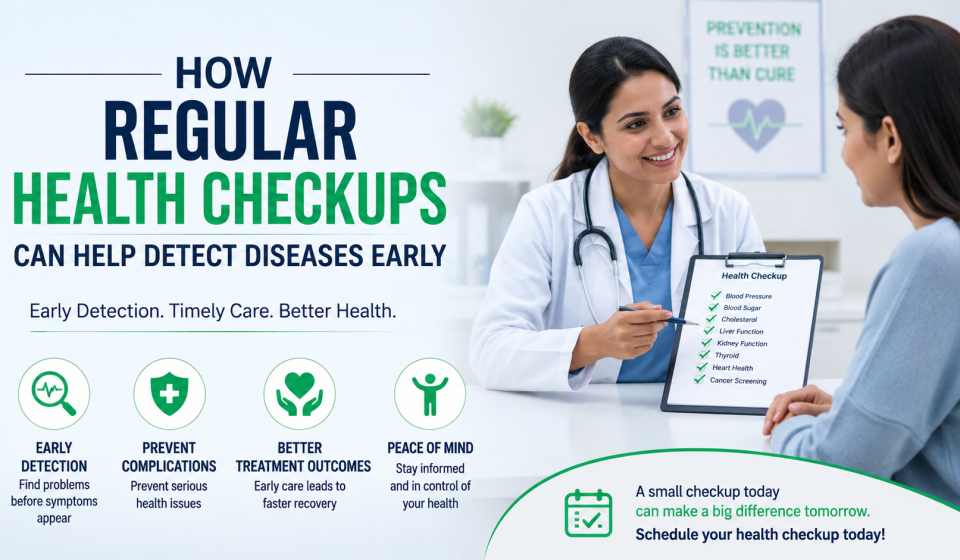
A comprehensive health checkup usually includes:
Physical Examination
Doctors assess:
- Height and weight
- Body Mass Index (BMI)
- Blood pressure
- Pulse rate
- Respiratory rate
Blood Tests
Common blood tests include:
- Complete Blood Count (CBC)
- Blood sugar levels
- Lipid profile
- Liver function tests
- Kidney function tests
- Thyroid profile
Urine Analysis
Urine tests help evaluate:
- Kidney function
- Diabetes
- Urinary tract infections
Imaging Tests
Depending on age and risk factors:
- X-rays
- Ultrasound
- ECG
- Echocardiogram
- Mammography
may be recommended.
Who Should Get Regular Health Checkups?
The answer is simple: everyone.
However, some groups require more frequent health screenings:
Adults Above 30
After age 30, the risk of lifestyle diseases increases. Annual health checkups become increasingly important.
Individuals with Family History
If family members have:
- Diabetes
- Heart disease
- Cancer
- Hypertension
regular screening becomes essential.
People with Unhealthy Lifestyle Habits
Individuals who:
- Smoke
- Consume alcohol excessively
- Have poor diet habits
- Exercise less
- Experience high stress
should prioritize preventive screenings.
Women
Women should undergo routine screenings for:
- Breast cancer
- Cervical cancer
- Hormonal disorders
- Bone health
Senior Citizens
Older adults often require more frequent monitoring due to age-related health risks.
Real-Life Example: The Importance of Early Detection
Consider the case of Rajesh, a 42-year-old office employee from Ahmedabad. He felt perfectly healthy but decided to undergo an annual health checkup because his company offered preventive screening.
His blood tests revealed early-stage diabetes and elevated cholesterol levels. Because the conditions were detected early, Rajesh was able to control them through dietary changes, exercise, and medication. Five years later, he remains healthy and has avoided serious complications.
Had he ignored routine health checkups, his condition could have progressed into severe diabetes and heart disease.
Mental Health Screening Is Also Important
Health checkups are not limited to physical illnesses. Mental health plays an equally important role in overall well-being.
Routine healthcare visits can help identify:
- Anxiety disorders
- Depression
- Stress-related illnesses
- Sleep disorders
Early mental health intervention often leads to better recovery and improved quality of life.
How Often Should You Get a Health Checkup?
The frequency depends on age and risk factors.
Ages 20–30
- Every 2–3 years if healthy
Ages 30–40
- Every year
Ages 40–60
- Annual comprehensive health screening
Above 60
- Every 6–12 months as recommended by a doctor
Individuals with chronic illnesses may require more frequent monitoring.
Benefits of Regular Health Checkups
Regular health examinations provide numerous benefits:
Early Disease Detection
Diseases can be identified before symptoms develop.
Better Treatment Outcomes
Early treatment generally leads to faster recovery.
Lower Medical Expenses
Preventing disease progression reduces healthcare costs.
Improved Life Expectancy
Preventive care helps people live longer, healthier lives.
Peace of Mind
Knowing your health status reduces anxiety and uncertainty.
Health Education
Doctors can provide guidance regarding diet, exercise, stress management, and lifestyle changes.
Tips to Prepare for Your Health Checkup
Before attending your appointment:
- Fast if required by your doctor
- Carry previous medical records
- Prepare a list of medications
- Share family medical history
- Discuss symptoms honestly
- Ask questions about your health risks
Honest communication helps doctors provide accurate recommendations.
The Future of Preventive Healthcare
Modern healthcare is increasingly moving toward preventive medicine through:
- Artificial intelligence diagnostics
- Wearable health devices
- Genetic testing
- Personalized healthcare plans
- Telemedicine consultations
These innovations will make early disease detection more accessible and effective in the future.
Sources
https://l1nq.com/f1ig78c
https://sl1nk.com/7ntz85g
Conclusion
Regular health checkups are one of the most effective ways to protect your long-term health. They help identify diseases before symptoms appear, allowing early treatment and preventing serious complications. Whether it’s diabetes, heart disease, cancer, hypertension, or mental health conditions, early detection significantly improves outcomes and quality of life.
Rather than waiting for illness to occur, individuals should adopt a preventive approach to healthcare. Scheduling routine health checkups is not merely a medical recommendation—it’s an investment in a healthier, longer, and more fulfilling life. By prioritizing preventive care today, you can reduce future health risks and ensure better well-being for yourself and your family.
Frequently Asked Questions (FAQs)
1. Why are regular health checkups important?
Regular health checkups help detect diseases early, monitor overall health, reduce medical expenses, and improve treatment outcomes.
2. How often should adults undergo health checkups?
Most adults should have a comprehensive health checkup annually, especially after the age of 30.
3. Can health checkups detect cancer early?
Yes. Many cancers, including breast, cervical, colorectal, and prostate cancers, can be detected early through routine screening tests.
4. Are health checkups necessary if I feel healthy?
Absolutely. Many serious diseases develop silently without noticeable symptoms, making preventive screening essential.
5. What tests are usually included in a routine health checkup?
Common tests include blood pressure measurement, blood sugar testing, cholesterol profile, CBC, liver function tests, kidney function tests, urine analysis, and age-specific screenings.