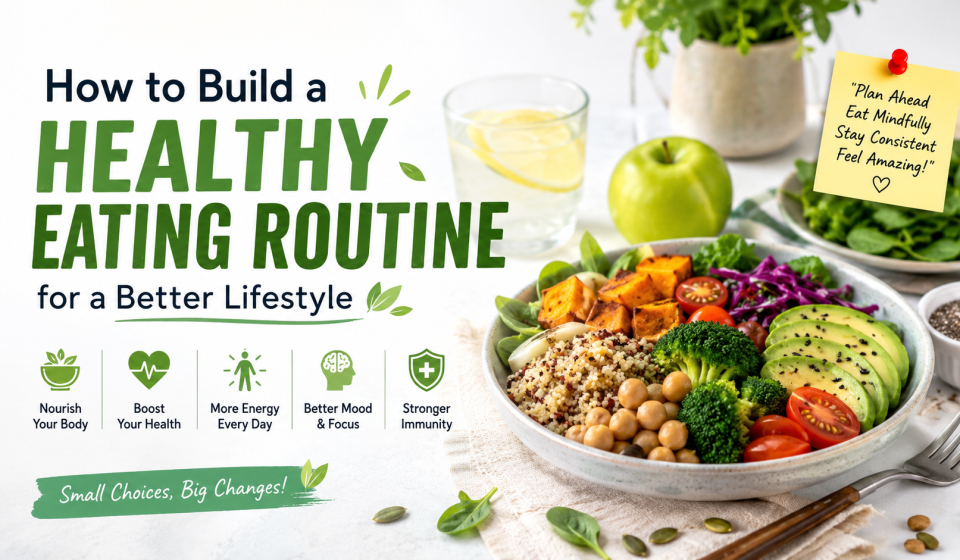

Learn how to build a healthy eating routine for a better lifestyle with practical tips, balanced meal planning, healthy food choices, hydration advice, and long-term habits that improve overall health and well-being.
In today’s fast-paced world, maintaining a healthy eating routine has become more challenging than ever. Busy schedules, processed foods, late-night snacking, and unhealthy lifestyle habits often prevent people from making nutritious choices. However, building a healthy eating routine doesn’t mean following a strict diet or giving up your favorite foods forever. Instead, it means creating sustainable eating habits that nourish your body, improve your energy levels, strengthen your immune system, and support long-term health.
Healthy eating is one of the most important pillars of a better lifestyle. Along with regular physical activity, quality sleep, and stress management, nutritious food helps reduce the risk of chronic diseases such as obesity, diabetes, heart disease, and high blood pressure. It also improves mental health, boosts concentration, enhances digestion, and promotes overall well-being.
The good news is that anyone can develop healthy eating habits with small, consistent changes. This guide explains practical strategies that will help you build a healthy eating routine that fits your lifestyle and supports your health goals.
Why Is a Healthy Eating Routine Important?
A healthy eating routine provides your body with the nutrients it needs to function properly every day. When you eat balanced meals at regular intervals, your body maintains steady energy levels and better metabolic function.
Some major benefits include:
- Improved digestion
- Better weight management
- Increased energy throughout the day
- Stronger immune system
- Better heart health
- Improved mood and mental clarity
- Reduced risk of chronic diseases
- Better sleep quality
- Healthier skin and hair
- Increased productivity
Healthy eating is not about perfection—it is about making better choices consistently.
Understand What Healthy Eating Really Means
Healthy eating doesn’t mean eating salads every day or avoiding carbohydrates completely. Instead, it means consuming a balanced variety of foods that provide essential nutrients.
A balanced diet typically includes:
- Whole grains
- Fresh fruits
- Vegetables
- Lean proteins
- Healthy fats
- Dairy or dairy alternatives
- Plenty of water
Each food group plays an important role in keeping your body healthy.
Start with Small Changes
One of the biggest mistakes people make is trying to change everything overnight.
Instead of making drastic changes, begin with simple improvements like:
- Drinking more water
- Eating one extra serving of vegetables
- Replacing sugary drinks with water
- Choosing whole grains instead of refined grains
- Cooking at home more often
Small improvements become long-term habits.
Never Skip Breakfast
Breakfast provides your body with energy after an overnight fast.
A nutritious breakfast can improve:
- Concentration
- Memory
- Energy
- Blood sugar control
- Appetite throughout the day
Healthy breakfast ideas include:
- Oatmeal with fruits
- Vegetable omelet
- Greek yogurt with berries
- Whole-grain toast with peanut butter
- Smoothies with spinach and fruits
Avoid sugary cereals and processed breakfast foods whenever possible.
Eat Balanced Meals
Every meal should contain a combination of:
Protein
Protein helps repair tissues, build muscles, and keep you full longer.
Healthy protein sources:
- Eggs
- Fish
- Chicken
- Lentils
- Beans
- Tofu
- Cottage cheese
- Greek yogurt
Complex Carbohydrates
Complex carbohydrates provide steady energy.
Examples:
- Brown rice
- Oats
- Quinoa
- Sweet potatoes
- Whole wheat bread
- Millets
Healthy Fats
Healthy fats support brain function and hormone production.
Sources include:
- Avocados
- Nuts
- Seeds
- Olive oil
- Fatty fish
Vegetables
Aim to fill half your plate with colorful vegetables.
Examples:
- Spinach
- Broccoli
- Carrots
- Bell peppers
- Tomatoes
- Cucumbers
Plan Your Meals Ahead
Meal planning reduces unhealthy food choices.
Benefits include:
- Saves time
- Saves money
- Reduces food waste
- Helps control portions
- Makes grocery shopping easier
You can prepare meals for several days in advance to avoid ordering unhealthy fast food.
Eat at Regular Times
Your body performs better when meals are eaten consistently.
Try eating:
- Breakfast
- Mid-morning snack
- Lunch
- Evening snack
- Dinner
Avoid skipping meals because it often leads to overeating later.
Control Portion Sizes
Even healthy foods can contribute to weight gain if eaten excessively.
Helpful portion control tips:
- Use smaller plates
- Eat slowly
- Stop eating when comfortably full
- Avoid eating directly from large packages
- Measure serving sizes occasionally
Listening to your body’s hunger signals is essential.
Drink Enough Water
Hydration is often overlooked.
Water helps:
- Digest food
- Transport nutrients
- Regulate body temperature
- Prevent constipation
- Maintain healthy skin
Most adults should drink around 2–3 liters of water daily, depending on activity level and climate.
Increase water intake if you exercise regularly.
Reduce Processed Foods
Highly processed foods often contain:
- Excess sugar
- Salt
- Unhealthy fats
- Artificial additives
Examples include:
- Chips
- Sugary drinks
- Instant noodles
- Fast food
- Processed meats
- Candy
Choose whole foods whenever possible.
Include More Fruits and Vegetables
Experts recommend eating a variety of colorful fruits and vegetables every day.
Benefits include:
- Fiber
- Vitamins
- Minerals
- Antioxidants
Try to “eat the rainbow” by including different colors such as:
- Red tomatoes
- Orange carrots
- Yellow peppers
- Green spinach
- Purple cabbage
- Blueberries
Different colors provide different nutrients.
Limit Added Sugar
Too much added sugar increases the risk of:
- Obesity
- Diabetes
- Fatty liver
- Heart disease
- Tooth decay
Common hidden sources include:
- Soft drinks
- Flavored yogurt
- Packaged juices
- Cookies
- Cakes
- Breakfast cereals
Read nutrition labels carefully.
Choose Healthy Snacks
Healthy snacks help prevent overeating during meals.
Good snack options include:
- Fresh fruits
- Mixed nuts
- Yogurt
- Boiled eggs
- Roasted chickpeas
- Cottage cheese
- Vegetable sticks with hummus
Avoid highly processed snack foods whenever possible.
Practice Mindful Eating
Mindful eating means paying full attention to your food.
Tips include:
- Eat without distractions
- Chew slowly
- Enjoy each bite
- Recognize hunger and fullness cues
- Appreciate food flavors
Mindful eating often improves digestion and reduces overeating.
Learn to Read Nutrition Labels
Nutrition labels help you make informed food choices.
Pay attention to:
- Calories
- Protein
- Fiber
- Sugar
- Sodium
- Saturated fat
Choose foods with:
- Higher fiber
- Lower added sugar
- Moderate sodium
- Healthy ingredients
Cook More Meals at Home
Home-cooked meals usually contain:
- Less salt
- Less sugar
- Better ingredients
- Healthier cooking methods
Cooking at home also allows you to control portion sizes and ingredients.
Simple cooking methods include:
- Grilling
- Steaming
- Baking
- Stir-frying with minimal oil
Don’t Completely Eliminate Your Favorite Foods
Completely restricting favorite foods often leads to cravings.
Instead:
- Enjoy treats occasionally
- Practice moderation
- Follow the 80/20 approach
This means eating nutritious foods most of the time while allowing occasional indulgences.
Build Healthy Habits Gradually
Healthy eating is a lifestyle—not a temporary diet.
Focus on habits like:
- Grocery shopping with a list
- Keeping healthy snacks available
- Preparing meals in advance
- Drinking water regularly
- Eating more vegetables
- Sleeping well
Consistency matters more than perfection.
Pair Healthy Eating with Physical Activity
Nutrition works best alongside regular exercise.
Recommended activities include:
- Walking
- Cycling
- Swimming
- Yoga
- Strength training
- Dancing
Exercise supports:
- Weight management
- Heart health
- Bone strength
- Mental well-being
Common Mistakes to Avoid
Many people unknowingly make mistakes while trying to eat healthier.
Avoid these common pitfalls:
- Skipping meals
- Following extreme diets
- Eating too quickly
- Drinking sugary beverages regularly
- Ignoring portion sizes
- Emotional eating
- Depending heavily on supplements instead of whole foods
- Eating late-night heavy meals frequently
Sample Healthy Daily Eating Routine
Breakfast
Oatmeal with banana, almonds, and low-fat milk.
Mid-Morning Snack
Apple with a handful of nuts.
Lunch
Brown rice, grilled chicken (or lentils), mixed vegetables, and salad.
Evening Snack
Greek yogurt or roasted chickpeas.
Dinner
Grilled fish (or tofu), steamed vegetables, and whole wheat chapati.
Before Bed
A glass of warm milk (optional).
Tips for Maintaining a Healthy Eating Routine Long-Term
Maintaining healthy habits over the long term requires planning and flexibility.
Helpful strategies include:
- Set realistic goals.
- Track your eating habits with a journal or app.
- Avoid comparing your diet with others.
- Shop mostly around the fresh food sections of grocery stores.
- Keep unhealthy snacks out of easy reach.
- Involve family members in meal planning and cooking.
- Prepare healthy lunches for work or school.
- Allow flexibility for social events without guilt.
- Celebrate progress instead of aiming for perfection.
Remember that sustainable routines are built over months, not days. Small, consistent improvements are more effective than short-term restrictive diets.
Sources
https://sl1nk.com/l527hr7
https://sl1nk.com/gi7zhg6
Conclusion
Building a healthy eating routine is one of the most valuable investments you can make in your overall well-being. Rather than following fad diets or making extreme changes, focus on creating balanced, sustainable habits that fit your daily life. Eating a variety of nutrient-rich foods, staying hydrated, planning meals, practicing portion control, and enjoying food mindfully can significantly improve your physical and mental health over time.
Consistency is the key to lasting success. Every healthy meal is a step toward better energy, stronger immunity, improved digestion, and a lower risk of chronic diseases. By making thoughtful food choices and maintaining realistic expectations, you can develop a healthy eating routine that supports a happier, healthier, and more active lifestyle for years to come.
Frequently Asked Questions (FAQs)
1. What is a healthy eating routine?
A healthy eating routine is a consistent pattern of consuming balanced meals and nutritious snacks at regular intervals while including fruits, vegetables, whole grains, lean proteins, healthy fats, and adequate water.
2. How long does it take to build healthy eating habits?
Research suggests that forming a new habit can take several weeks to a few months, depending on the individual. Consistency is more important than speed.
3. Is it okay to eat snacks while following a healthy diet?
Yes. Healthy snacks such as fruits, nuts, yogurt, boiled eggs, or roasted chickpeas can help maintain energy levels and prevent overeating during meals.
4. Can healthy eating help with weight loss?
Yes. A balanced eating routine combined with regular physical activity can support healthy weight management by improving satiety, reducing overeating, and providing the nutrients your body needs.
5. Do I need to completely avoid my favorite foods?
No. Enjoying favorite foods occasionally in moderation is part of a sustainable healthy eating routine. The goal is long-term balance rather than strict restriction.