
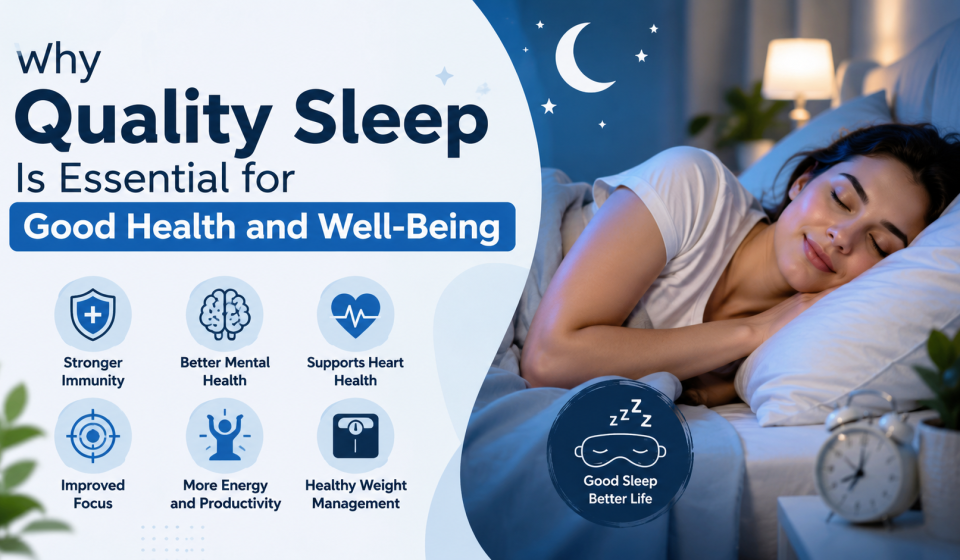

Discover why quality sleep is essential for good health and well-being. Learn the benefits of healthy sleep, common causes of poor sleep, practical tips to improve sleep quality, and how proper rest supports physical, mental, and emotional wellness.
In today’s fast-paced world, many people sacrifice sleep to meet work deadlines, study for exams, binge-watch their favorite shows, or spend extra time on social media. While this may seem harmless, consistently getting poor-quality sleep can seriously affect both physical and mental health.
Sleep is much more than simply resting your body. During sleep, your brain processes information, repairs damaged tissues, strengthens your immune system, balances hormones, and prepares your body for the next day. Good-quality sleep is as important as eating nutritious food, drinking enough water, and exercising regularly.
According to health experts, adults generally need 7–9 hours of quality sleep every night. However, sleep quality matters just as much as sleep duration. Sleeping for eight hours but waking up multiple times throughout the night may still leave you tired and affect your overall health.
In this article, we’ll explore why quality sleep is essential for good health and well-being, its benefits, common sleep problems, and practical ways to improve your sleep naturally.
What Is Quality Sleep?
Quality sleep means sleeping long enough while allowing your body to move naturally through all stages of the sleep cycle without frequent interruptions.
Good-quality sleep includes:
- Falling asleep within 20–30 minutes
- Staying asleep most of the night
- Waking up feeling refreshed
- Feeling energetic throughout the day
- Maintaining a consistent sleep schedule
It’s not just about the number of hours you spend in bed—it’s about how restorative your sleep is.
Why Sleep Matters for Overall Health
Your body performs several essential functions while you sleep.
These include:
- Repairing muscles and tissues
- Building stronger immunity
- Supporting brain function
- Regulating hormones
- Improving memory
- Balancing emotions
- Restoring energy levels
- Maintaining heart health
Without enough quality sleep, these important processes become less effective, increasing your risk of illness and poor health.
Benefits of Quality Sleep
1. Boosts Brain Function
One of sleep’s most important roles is improving brain performance.
Quality sleep helps:
- Improve concentration
- Enhance learning
- Strengthen memory
- Increase creativity
- Improve decision-making
- Boost productivity
Students who sleep well often perform better academically because their brains process and store information more effectively.
Professionals also make fewer mistakes and stay focused longer after a good night’s sleep.
2. Strengthens the Immune System
Your immune system works hardest while you’re sleeping.
During deep sleep, the body produces proteins called cytokines that help fight infections and inflammation.
People who consistently get enough sleep:
- Recover faster from illnesses
- Get sick less often
- Heal more quickly
- Respond better to vaccines
Poor sleep weakens immune defenses, making infections more likely.
3. Supports Heart Health
Healthy sleep plays an important role in maintaining cardiovascular health.
Quality sleep helps:
- Regulate blood pressure
- Reduce inflammation
- Lower stress hormones
- Maintain healthy cholesterol levels
- Improve circulation
Chronic sleep deprivation has been linked with an increased risk of:
- Heart disease
- Stroke
- High blood pressure
- Irregular heartbeat
4. Helps Maintain a Healthy Weight
Sleep directly influences hormones that control hunger and fullness.
When you don’t sleep enough:
- Hunger hormone (ghrelin) increases
- Fullness hormone (leptin) decreases
As a result, you may:
- Feel hungrier
- Crave sugary foods
- Eat larger portions
- Snack more often
- Gain weight over time
Quality sleep supports healthy metabolism and makes it easier to maintain a balanced diet.
5. Improves Mental Health
Good sleep is closely connected to emotional well-being.
People who sleep well often experience:
- Better mood
- Reduced stress
- Lower anxiety
- Improved emotional control
- Greater resilience
Poor sleep can worsen symptoms of:
- Anxiety
- Depression
- Mood swings
- Irritability
- Burnout
Improving sleep is often an important part of managing mental health.
6. Enhances Physical Performance
Athletes and physically active individuals rely on quality sleep for recovery.
Benefits include:
- Faster muscle repair
- Increased endurance
- Better coordination
- Improved reaction time
- Reduced injury risk
Even recreational exercisers notice improved performance after adequate rest.
7. Balances Hormones
Many hormones are regulated during sleep.
These include hormones involved in:
- Growth
- Appetite
- Stress
- Blood sugar control
- Reproductive health
Poor sleep may contribute to hormonal imbalances that affect overall well-being.
8. Supports Healthy Skin
Your skin repairs itself while you sleep.
Good sleep:
- Promotes collagen production
- Reduces puffiness
- Improves skin hydration
- Supports wound healing
- Helps maintain a healthy complexion
Lack of sleep can contribute to dark circles, dull skin, and signs of premature aging.
9. Improves Memory and Learning
During sleep, the brain organizes and stores information learned throughout the day.
Students who prioritize sleep often:
- Remember information better
- Learn new concepts more effectively
- Perform better on exams
- Stay mentally alert
Sleep is an essential part of the learning process.
10. Increases Daily Energy
Quality sleep restores your body’s energy reserves.
People who sleep well generally:
- Feel less fatigued
- Stay active longer
- Complete tasks efficiently
- Have better motivation
- Experience improved overall productivity
Signs You’re Not Getting Quality Sleep
You may have poor sleep quality if you:
- Wake up tired every morning
- Feel sleepy during the day
- Need excessive caffeine
- Have difficulty concentrating
- Wake up frequently at night
- Snore heavily
- Experience headaches after waking
- Feel irritable or anxious
- Struggle with memory
If these symptoms persist, it’s worth discussing them with a healthcare professional.
Common Causes of Poor Sleep
Many factors can interfere with healthy sleep.
Stress and Anxiety
Constant worrying keeps the brain active, making it difficult to fall asleep.
Excessive Screen Time
Blue light from phones, tablets, and computers suppresses melatonin production.
Caffeine
Coffee, tea, energy drinks, and some soft drinks consumed late in the day may delay sleep.
Irregular Sleep Schedule
Sleeping and waking at different times every day disrupts the body’s internal clock.
Poor Sleep Environment
A noisy, bright, or uncomfortable bedroom affects sleep quality.
Medical Conditions
Conditions like sleep apnea, chronic pain, asthma, acid reflux, and restless leg syndrome can interrupt sleep.
Health Risks of Long-Term Sleep Deprivation
Chronic poor sleep has been associated with numerous health problems, including:
- Obesity
- Type 2 diabetes
- High blood pressure
- Heart disease
- Depression
- Anxiety disorders
- Weakened immunity
- Poor concentration
- Memory problems
- Increased accident risk
Getting enough restorative sleep can help lower these risks.
Tips to Improve Sleep Quality
Maintain a Regular Sleep Schedule
Go to bed and wake up at the same time every day—even on weekends.
Create a Relaxing Bedtime Routine
Try activities such as:
- Reading
- Meditation
- Gentle stretching
- Deep breathing
- Listening to calming music
Limit Screen Time Before Bed
Avoid electronic devices for at least 30–60 minutes before bedtime
Make Your Bedroom Sleep-Friendly
Your bedroom should be:
- Quiet
- Dark
- Cool
- Comfortable
- Free from distractions
Watch Your Diet
Avoid:
- Heavy meals before bed
- Excess caffeine in the evening
- Alcohol close to bedtime
Instead, choose light, balanced evening meals.
Exercise Regularly
Regular physical activity improves sleep quality.
Aim for at least 150 minutes of moderate exercise each week, but avoid intense workouts immediately before bedtime.
Manage Stress
Practicing relaxation techniques such as mindfulness, yoga, journaling, or breathing exercises can help calm the mind and improve sleep.
Get Natural Daylight
Morning sunlight helps regulate your body’s internal clock, making it easier to fall asleep at night.
Sleep Recommendations by Age
General sleep recommendations include:
| Age Group | Recommended Sleep |
|---|---|
| Newborns | 14–17 hours |
| Infants | 12–16 hours |
| Children | 9–12 hours |
| Teenagers | 8–10 hours |
| Adults | 7–9 hours |
| Older Adults | 7–8 hours |
Individual needs may vary depending on health and lifestyle.
When Should You See a Doctor?
Consult a healthcare provider if you:
- Cannot sleep for several weeks
- Snore loudly with breathing pauses
- Experience severe daytime sleepiness
- Wake up gasping for air
- Frequently wake during the night
- Feel exhausted despite sleeping long hours
Early evaluation can help identify underlying sleep disorders and improve long-term health.
Building Healthy Sleep Habits for Life
Improving sleep doesn’t require drastic changes overnight. Small, consistent habits—such as keeping a regular bedtime, limiting caffeine late in the day, creating a relaxing nighttime routine, and maintaining a comfortable sleep environment—can make a significant difference over time.
Treat sleep as a vital part of your health routine rather than something to sacrifice. By prioritizing quality rest, you support your body, sharpen your mind, and improve your overall quality of life.
Sources
https://www.cdc.gov/sleep
https://www.nhlbi.nih.gov/health/sleep
Conclusion
Quality sleep is one of the most important pillars of good health and overall well-being. It supports brain function, strengthens the immune system, improves heart health, balances hormones, enhances mood, boosts productivity, and helps the body recover from daily stress. While many people focus on diet and exercise, sleep is equally essential for maintaining physical, mental, and emotional wellness.
By adopting healthy sleep habits and making rest a daily priority, you can improve your energy, reduce your risk of chronic diseases, and enjoy a healthier, more balanced life. If sleep problems continue despite lifestyle changes, seeking professional medical advice is an important step toward better health.
Frequently Asked Questions (FAQs)
1. How many hours of sleep do adults need?
Most healthy adults need 7–9 hours of quality sleep each night for optimal physical and mental health.
2. Why is sleep important for mental health?
Quality sleep helps regulate emotions, reduces stress, supports memory, improves concentration, and lowers the risk of anxiety and depression.
3. Can poor sleep lead to weight gain?
Yes. Inadequate sleep can disrupt hunger-regulating hormones, increase cravings for high-calorie foods, and reduce motivation for physical activity, contributing to weight gain.
4. What are some natural ways to improve sleep quality?
Maintaining a consistent sleep schedule, limiting screen time before bed, exercising regularly, managing stress, avoiding caffeine late in the day, and creating a comfortable sleep environment can all improve sleep quality.
5. When should I seek medical help for sleep problems?
You should consult a healthcare professional if you experience persistent insomnia, loud snoring with breathing pauses, excessive daytime sleepiness, or continue feeling tired despite getting enough sleep.