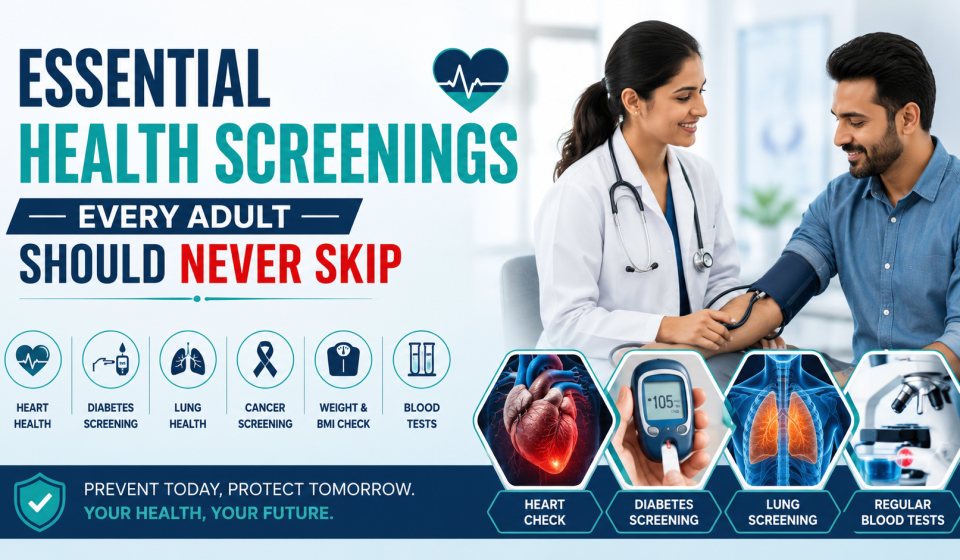

Discover the Essential Health Screenings Every Adult Should Never Skip. Learn about 12 important medical tests, recommended screening schedules, benefits, risk factors, and preventive healthcare tips to detect diseases early and stay healthier for longer.
rather than treatment, and one of the most effective ways to stay healthy is through routine health screenings. Many serious illnesses—including heart disease, diabetes, cancer, and osteoporosis—develop silently without noticeable symptoms. By the time symptoms appear, treatment may become more complicated and expensive.
This is why understanding the Essential Health Screenings Every Adult Should Never Skip is so important. Regular screenings help detect diseases in their earliest stages, when they are easier to treat and often prevent long-term complications.
Whether you’re in your 20s building lifelong healthy habits or in your 60s managing age-related risks, preventive screenings are one of the smartest investments you can make in your health.
In this comprehensive guide, you’ll learn about the most important health screenings every adult should consider, when to get them, and why they matter.
Why Health Screenings Matter
Health screenings are medical tests performed before symptoms develop. Their purpose is to identify health problems early, allowing timely treatment and reducing the risk of severe illness.
Benefits include:
- Early disease detection
- Lower healthcare costs
- Improved treatment success
- Better quality of life
- Reduced risk of disability
- Longer life expectancy
Many chronic diseases progress silently for years. Routine screenings give doctors an opportunity to intervene before permanent damage occurs.
1. Blood Pressure Screening
High blood pressure, also known as hypertension, is often called the “silent killer.” Millions of adults have hypertension without realizing it because symptoms rarely appear until complications develop.
Why It Matters
Untreated high blood pressure increases the risk of:
- Heart attack
- Stroke
- Kidney disease
- Heart failure
- Vision loss
Recommended Frequency
- Adults 18–39 with normal readings: Every 3–5 years
- Adults 40+ or those at higher risk: Every year
Healthy Reading
- Normal: Below 120/80 mmHg
Lifestyle changes such as regular exercise, maintaining a healthy weight, limiting salt intake, and reducing stress can help keep blood pressure under control.
2. Cholesterol Screening
Cholesterol plays a vital role in the body, but excessive LDL (“bad”) cholesterol can clog arteries and increase the risk of cardiovascular disease.
Tests Include
- Total cholesterol
- LDL cholesterol
- HDL cholesterol
- Triglycerides
Risk Factors
- Smoking
- Obesity
- Diabetes
- Family history
- High-fat diet
Screening Schedule
- Every 4–6 years for healthy adults
- More often if you have cardiovascular risk factors
Managing cholesterol through diet, exercise, and medication when necessary can significantly reduce heart disease risk.
3. Diabetes Screening
Type 2 diabetes often develops gradually without noticeable symptoms.
Screening Test
- Fasting Blood Sugar
- HbA1c Test
- Oral Glucose Tolerance Test
Risk Factors
- Age over 35
- Overweight
- Family history
- Physical inactivity
- High blood pressure
Why Early Detection Helps
Early diagnosis can prevent complications involving:
- Eyes
- Kidneys
- Nerves
- Heart
- Blood vessels
Lifestyle modifications can often delay or even prevent diabetes progression.
4. Body Mass Index (BMI) and Waist Circumference
Maintaining a healthy weight lowers the risk of numerous chronic diseases.
BMI Categories
- Underweight
- Normal
- Overweight
- Obese
Waist circumference is equally important because excess abdominal fat increases the risk of:
- Diabetes
- Heart disease
- Stroke
Regular monitoring encourages healthy lifestyle habits.
5. Cancer Screenings
Cancer is one of the leading causes of death worldwide, but many cancers are highly treatable when detected early.
Breast Cancer
Women should discuss mammograms with their healthcare provider beginning around age 40–50 depending on personal risk factors.
Cervical Cancer
Women should receive:
- Pap smear
- HPV testing
These tests can detect abnormal cells before cancer develops.
Colorectal Cancer
Adults generally begin screening around age 45.
Available tests include:
- Colonoscopy
- Stool-based tests
- CT colonography
Prostate Cancer
Men should discuss PSA testing with their physician based on age, family history, and personal risk.
Lung Cancer
Annual low-dose CT scans may benefit adults with a significant smoking history.
6. Eye Examination
Vision naturally changes with age.
Regular eye exams help detect:
- Glaucoma
- Cataracts
- Macular degeneration
- Diabetic retinopathy
Adults without vision problems should still receive periodic comprehensive eye examinations.
7. Dental Examination
Oral health affects overall health more than many people realize.
Poor dental hygiene has been associated with:
- Heart disease
- Diabetes
- Pregnancy complications
- Respiratory infections
Visit your dentist every six months for:
- Cleaning
- Gum disease evaluation
- Oral cancer screening
- Cavity detection
8. Skin Cancer Screening
Skin cancer is among the most common cancers, but it is also highly treatable when caught early.
Watch for:
- Changing moles
- Irregular borders
- Color changes
- Bleeding lesions
- Rapidly growing spots
Individuals with significant sun exposure should have regular skin evaluations by a dermatologist.
9. Bone Density Test
Bone density decreases naturally with age, particularly in women after menopause.
Recommended For
- Women over 65
- Men over 70
- Adults with osteoporosis risk factors
Early diagnosis helps prevent fractures through medications, calcium, vitamin D, and weight-bearing exercise.
10. Mental Health Screening
Mental health is an essential part of overall wellness.
Healthcare providers may screen for:
- Depression
- Anxiety
- Stress disorders
- Substance misuse
Ignoring emotional well-being can negatively affect physical health, relationships, and work performance.
11. Vaccination Review
Preventive healthcare includes staying current with vaccinations.
Adults should review vaccines such as:
- Influenza
- COVID-19 (as recommended)
- Tetanus booster
- Shingles
- Pneumococcal vaccines (for eligible adults)
- Hepatitis vaccines (based on risk)
Vaccinations protect both individuals and the broader community.
12. Routine Blood Tests
Routine laboratory testing provides valuable insight into your overall health.
Common blood tests include:
- Complete Blood Count (CBC)
- Liver Function Tests
- Kidney Function Tests
- Thyroid Function Tests
- Vitamin D
- Vitamin B12
- Iron Studies
- Electrolytes
Doctors recommend these tests based on age, symptoms, medical history, and risk factors.
Recommended Screening Schedule by Age
Ages 18–29
- Blood pressure
- BMI
- Dental exam
- Eye exam
- STI screening (if applicable)
- Mental health assessment
Ages 30–39
- Cholesterol
- Diabetes screening (if at risk)
- Cervical cancer screening
- Routine blood work
Ages 40–49
- Mammograms (as appropriate)
- Blood sugar
- Cholesterol
- Blood pressure
- Colon cancer screening discussion
Ages 50–64
- Colonoscopy
- Bone health evaluation (as indicated)
- Prostate screening discussion
- Vision and hearing tests
Ages 65+
- Bone density
- Comprehensive eye exam
- Hearing evaluation
- Fall risk assessment
- Vaccination updates
- Cognitive health screening
Lifestyle Habits That Support Better Screening Results
Health screenings are only one part of preventive care. Healthy daily habits work hand in hand with routine medical checkups.
Focus on:
- Eating a balanced diet rich in fruits, vegetables, whole grains, and lean proteins
- Exercising for at least 150 minutes each week
- Sleeping 7–9 hours nightly
- Avoiding tobacco products
- Limiting alcohol consumption
- Managing stress through mindfulness, hobbies, or counseling
- Staying hydrated
- Maintaining a healthy weight
These habits can reduce your risk of chronic diseases and improve overall well-being.
Common Myths About Health Screenings
Myth 1: I Feel Fine, So I Don’t Need Screenings
Many conditions such as hypertension, diabetes, and high cholesterol often have no early symptoms.
Myth 2: Screenings Are Only for Older Adults
Adults of all ages benefit from preventive care, especially if they have risk factors or a family history of disease.
Myth 3: Screenings Are Too Expensive
Preventive care is often less costly than treating advanced illnesses. Many health insurance plans also cover recommended preventive services.
Myth 4: One Normal Test Means I’m Healthy Forever
Health risks change with age, lifestyle, and family history. Regular follow-up screenings remain important.
Myth 5: Cancer Screenings Always Find Cancer
Screenings are designed to detect abnormalities early. Most screening results do not indicate cancer, but they help identify issues that may require further evaluation.
When Should You See a Doctor Immediately?
Even if you’re up to date with routine screenings, seek prompt medical attention if you experience:
- Chest pain
- Sudden weakness or numbness
- Difficulty breathing
- Persistent unexplained weight loss
- Blood in stool or urine
- Severe headaches
- New or changing skin lesions
- Persistent fatigue
- Difficulty swallowing
- Unusual bleeding
These symptoms warrant medical evaluation regardless of your screening schedule.
Sources
https://www.cdc.gov
https://l1nq.com/h1xh1q4
Conclusion
Routine preventive care is one of the most effective ways to protect your long-term health. The Essential Health Screenings Every Adult Should Never Skip can detect hidden diseases before they become serious, helping you avoid complications, reduce healthcare costs, and improve your quality of life.
Remember that screening recommendations vary based on your age, sex, family history, lifestyle, and personal risk factors. Partner with your healthcare provider to create a personalized screening schedule that meets your individual needs. A small investment of time today can lead to a healthier, longer future.
Frequently Asked Questions (FAQs)
1. At what age should adults begin routine health screenings?
Most adults should start basic screenings such as blood pressure, BMI, and mental health assessments at age 18. Additional screenings like cholesterol, diabetes, and cancer tests are recommended based on age and individual risk factors.
2. How often should I have a complete health checkup?
Healthy adults should generally have a routine checkup every one to three years when younger and annually after age 40, or as recommended by their healthcare provider.
3. Which health screening is considered the most important?
There isn’t a single most important screening. Blood pressure, cholesterol, diabetes, and age-appropriate cancer screenings are all critical because they help detect common conditions early.
4. Are health screenings necessary if I have no symptoms?
Yes. Many serious diseases, including hypertension, diabetes, and some cancers, may not cause symptoms in their early stages. Preventive screenings help identify these conditions before they progress.
5. Can lifestyle changes reduce the need for medical screenings?
Healthy habits lower disease risk but do not replace routine screenings. Even physically active individuals should continue age-appropriate preventive health checks.