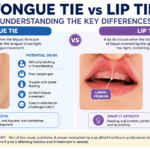

Tongue tie, medically known as ankyloglossia, is a condition where the thin band of tissue connecting the tongue to the floor of the mouth (the lingual frenulum) is too short, thick, or tight. This restriction can limit tongue movement and lead to a variety of issues in infants, children, and adults.
For babies, tongue tie may cause breastfeeding difficulties, poor latch, and inadequate weight gain. In children and adults, it can contribute to speech challenges, mouth breathing, sleep-disordered breathing, oral health concerns, and reduced tongue mobility.
One of the most advanced and effective treatments available today is laser tongue tie release, also known as a laser frenectomy. This minimally invasive procedure offers a safe, precise, and comfortable solution for patients experiencing tongue tie symptoms.
In this guide, we’ll explore the benefits of laser tongue tie release, what happens during the procedure, recovery expectations, and why many families choose laser treatment over traditional surgical methods.
What Is a Laser Tongue Tie Release?
A laser tongue tie release is a procedure that uses specialized dental lasers to gently release the restricted tissue under the tongue.
Unlike traditional methods that rely on scissors or a scalpel, laser technology allows practitioners to remove or reshape the tight frenulum with exceptional precision.
The goal of the procedure is to restore normal tongue mobility, enabling improved feeding, swallowing, speaking, breathing, and overall oral function.
Laser frenectomies can be performed on:
- Newborns
- Infants
- Children
- Teenagers
- Adults
The procedure is generally quick, often taking only a few minutes.
Signs That a Tongue Tie May Need Treatment
Not all tongue ties require intervention. However, treatment may be recommended when symptoms impact daily function.
In Infants
Common signs include:
- Difficulty latching during breastfeeding
- Clicking sounds while nursing
- Frequent feeding sessions
- Poor milk transfer
- Slow weight gain
- Maternal nipple pain
- Frustrated feeding behavior
In Children
Symptoms may include:
- Speech difficulties
- Difficulty sticking out the tongue
- Challenges licking lips or ice cream
- Gagging issues
- Mouth breathing
- Dental development concerns
In Adults
Adults with untreated tongue ties may experience:
- Jaw tension
- Neck discomfort
- Speech limitations
- Sleep-related breathing concerns
- Difficulty swallowing
- Chronic mouth breathing
A comprehensive assessment by a trained provider can determine whether treatment is beneficial.
Benefits of Laser Tongue Tie Release
1. Greater Precision
Laser technology allows practitioners to target only the restricted tissue while minimizing impact on surrounding structures.
This precision helps create an accurate release tailored to the patient’s unique anatomy.
2. Minimal Bleeding
One of the most appreciated advantages of laser treatment is reduced bleeding.
The laser seals small blood vessels as it works, making the procedure cleaner and more comfortable than traditional methods.
3. Faster Procedure
Most laser tongue tie releases are completed within minutes.
For infants, the procedure is often performed during a single appointment, allowing parents to return home shortly afterward.
4. Reduced Discomfort
Many patients experience less discomfort compared to conventional surgical approaches.
Because lasers minimize tissue trauma, recovery tends to be smoother and more manageable.
5. Lower Risk of Infection
Laser technology naturally sterilizes the treatment area during the procedure.
This may help reduce the risk of infection and support healthy healing.
6. Faster Healing
Laser procedures often promote efficient tissue healing.
Many patients notice significant improvements within days after treatment.
7. Improved Feeding Outcomes
For breastfeeding infants, tongue tie release can lead to:
- Better latch
- Improved milk transfer
- More effective feeding sessions
- Reduced maternal discomfort
- Better weight gain
8. Better Tongue Function
After release, patients often experience enhanced tongue mobility, which can support:
- Speech development
- Proper swallowing
- Oral hygiene
- Airway function
What Happens Before the Procedure?
Before recommending treatment, providers conduct a detailed evaluation.
The assessment may include:
Medical History Review
The practitioner will discuss:
- Feeding concerns
- Speech issues
- Breathing patterns
- Sleep habits
- Previous treatments
Functional Assessment
Rather than focusing solely on appearance, providers evaluate how the tongue functions.
They may assess:
- Tongue elevation
- Lateral movement
- Extension
- Coordination
Collaborative Care
Many tongue tie providers collaborate with:
- Lactation consultants
- Pediatricians
- Speech therapists
- Myofunctional therapists
This team-based approach helps ensure comprehensive care.
What to Expect During a Laser Tongue Tie Release
The procedure is typically straightforward and efficient.
For Infants
Parents are usually present throughout the appointment.
The provider may:
- Examine the tongue and oral tissues.
- Position the baby comfortably.
- Use a dental laser to release the restricted frenulum.
- Reassess tongue movement.
The procedure often takes less than five minutes.
Many babies can breastfeed immediately afterward.
For Older Children and Adults
The process may include:
- Topical anesthetic or local anesthesia
- Protective eyewear
- Precise laser release
- Functional movement assessment
Patients are typically able to return home shortly after treatment.
Recovery After Laser Tongue Tie Release
Recovery is generally smooth, but proper aftercare is essential.
First 24 Hours
Patients may experience:
- Mild soreness
- Temporary fussiness in infants
- Increased saliva production
- Minor discomfort while eating
These symptoms are usually short-lived.
Feeding After Treatment
Many babies feed immediately following the procedure.
Some infants show instant improvement, while others require time to adapt to their new tongue mobility.
Parents may notice:
- Improved latch
- Less clicking
- Better milk transfer
- More efficient feeding
Oral Exercises
Post-procedure stretches and exercises are often recommended.
These exercises help:
- Prevent reattachment
- Encourage mobility
- Support optimal healing
Consistency is critical for successful outcomes.
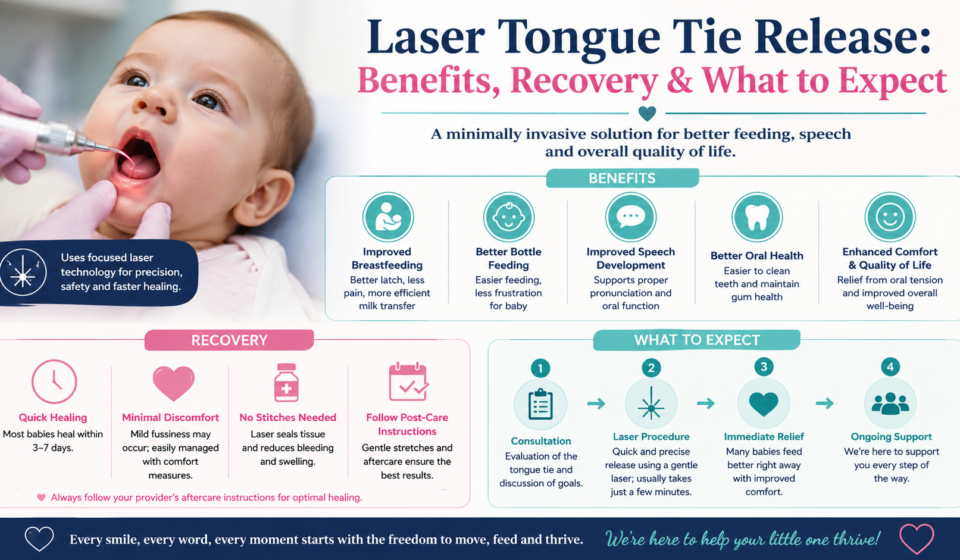
Healing Timeline
Days 1–3
- Initial healing begins
- Mild tenderness may occur
- White or yellow healing tissue develops
Days 4–7
- Improved mobility becomes more noticeable
- Feeding and speech function may improve
Weeks 2–4
- Tissue continues maturing
- Functional gains become more established
1–3 Months
- Full adaptation often occurs
- Long-term improvements become evident
Importance of Myofunctional Therapy
Many providers recommend myofunctional therapy before and after treatment.
Myofunctional therapy focuses on strengthening and coordinating the muscles of the mouth, tongue, and face.
Benefits include:
- Improved tongue posture
- Better swallowing patterns
- Enhanced breathing function
- Reduced risk of reattachment
For older children and adults, therapy can significantly improve outcomes.
Potential Risks and Considerations
Laser tongue tie release is generally safe when performed by qualified professionals.
However, as with any procedure, potential risks include:
- Temporary discomfort
- Swelling
- Minor bleeding
- Reattachment if aftercare is not followed
- Temporary feeding adjustments
Choosing an experienced provider helps minimize risks and optimize results.
When Will You Notice Results?
Results vary depending on age, severity, and individual circumstances.
Infants
Some families notice improvements immediately after treatment, including:
- Better latch
- Less maternal pain
- More effective feeding
Others experience gradual progress over several weeks.
Children
Improvements may occur in:
- Speech clarity
- Eating habits
- Tongue coordination
Adults
Adults often report:
- Increased tongue mobility
- Easier swallowing
- Reduced tension in the jaw and neck
- Improved breathing awareness
Consistent therapy and exercises can accelerate progress.
Is Laser Tongue Tie Release Worth It?
For individuals experiencing significant functional limitations, laser tongue tie release can be life-changing.
Potential benefits include:
- Easier breastfeeding
- Better speech development
- Improved oral function
- Enhanced airway health
- Greater comfort and mobility
The procedure’s precision, minimal discomfort, and quick recovery make it a preferred option for many patients and healthcare providers.
Choosing the Right Tongue Tie Provider
When selecting a provider, look for:
- Specialized tongue tie training
- Experience with laser frenectomies
- Comprehensive functional assessments
- Collaboration with lactation and therapy professionals
- Clear aftercare guidance
A thorough evaluation ensures treatment recommendations are based on function, not just appearance.
Conclusion
Laser tongue tie release is a modern, minimally invasive treatment that helps restore healthy tongue function in infants, children, and adults. With benefits such as improved precision, reduced discomfort, minimal bleeding, and faster healing, laser frenectomy has become a preferred solution for many families.
Whether addressing breastfeeding difficulties, speech concerns, oral function issues, or airway-related challenges, proper diagnosis and treatment can make a meaningful difference in quality of life.
If you suspect a tongue tie may be affecting you or your child, consult an experienced provider for a comprehensive evaluation. Early intervention and appropriate support can lead to improved feeding, communication, breathing, and overall well-being.
SEO Meta Title:
Laser Tongue Tie Release: Benefits, Recovery & What to Expect
Meta Description:
Learn everything about laser tongue tie release, including benefits, recovery timeline, procedure details, risks, and what to expect before and after treatment. Ideal guide for parents and adults considering tongue tie treatment.
Focus Keyword:
Laser Tongue Tie Release
Related Keywords:
- Tongue Tie Treatment
- Laser Frenectomy
- Infant Tongue Tie
- Tongue Tie Surgery
- Tongue Tie Recovery
- Breastfeeding and Tongue Tie
- Adult Tongue Tie Treatment
- Tongue Tie Symptoms
- Laser Tongue Tie Procedure
- Frenectomy Benefits