
Many parents face feeding challenges with their newborns but may not immediately understand the underlying cause. Two common oral conditions that can affect infants, children, and even adults are tongue tie and lip tie. While these conditions share similarities, they affect different parts of the mouth and can lead to unique symptoms and complications.
Understanding the differences between tongue tie and lip tie is essential for early diagnosis and effective treatment. Whether your baby struggles with breastfeeding, experiences poor weight gain, or has difficulties with speech development later in life, recognizing these conditions can help you seek appropriate care.
In this comprehensive guide, we’ll explore tongue tie vs lip tie, their symptoms, causes, diagnosis, treatment options, and when to seek professional help.
What Is a Tongue Tie?
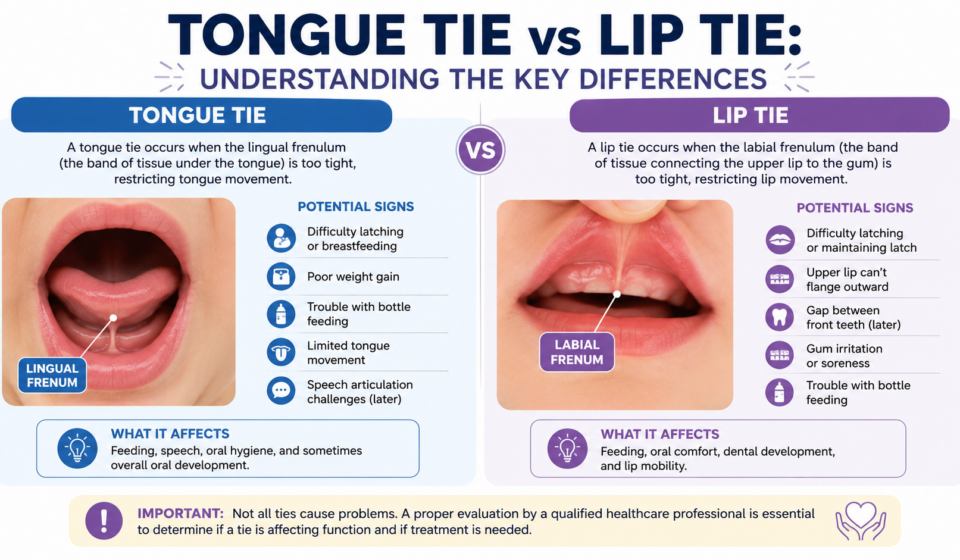
Tongue tie, medically known as ankyloglossia, occurs when the lingual frenulum—the thin band of tissue connecting the underside of the tongue to the floor of the mouth—is unusually short, thick, or tight.
This restriction limits the tongue’s range of motion and may interfere with essential oral functions such as:
- Breastfeeding
- Swallowing
- Speaking
- Chewing
- Oral development
Tongue tie can range from mild to severe. Some individuals experience minimal symptoms, while others face significant challenges with feeding and communication.
What Is a Lip Tie?
A lip tie occurs when the labial frenulum—the tissue connecting the upper lip to the gum—is unusually tight or thick. This condition restricts the upper lip’s ability to move freely.
The upper lip plays an important role during breastfeeding because it helps create a proper seal around the breast. When movement is restricted, babies may struggle to latch effectively and transfer milk efficiently.
Like tongue tie, lip ties vary in severity and may occur independently or alongside a tongue tie.
Tongue Tie vs Lip Tie: Key Differences
Although both conditions involve restrictive oral tissues, they affect different structures and create different functional challenges.
Location
Tongue Tie
- Affects the tissue under the tongue
- Restricts tongue movement
Lip Tie
- Affects the tissue connecting the upper lip to the gum
- Restricts upper lip movement
Primary Function Affected
Tongue Tie
- Tongue mobility
- Breastfeeding
- Speech development
- Swallowing
Lip Tie
- Latch quality during feeding
- Milk transfer
- Oral hygiene
Long-Term Impact
Tongue Tie
- Speech difficulties
- Feeding issues
- Oral function problems
- Airway concerns
Lip Tie
- Feeding difficulties
- Dental spacing concerns
- Oral hygiene challenges
Signs and Symptoms of Tongue Tie
The symptoms of tongue tie vary depending on age and severity.
In Babies
Common signs include:
- Difficulty latching during breastfeeding
- Clicking sounds while nursing
- Frequent feeding sessions
- Poor weight gain
- Gassiness and excessive air intake
- Milk leaking from the sides of the mouth
- Frustration during feeding
- Falling asleep quickly while nursing
In Mothers
Mothers breastfeeding a baby with tongue tie may experience:
- Painful nursing
- Cracked or bleeding nipples
- Incomplete breast drainage
- Reduced milk supply
- Recurrent plugged ducts
- Mastitis
In Older Children
Signs may include:
- Speech articulation difficulties
- Trouble licking lips
- Difficulty eating certain foods
- Challenges with oral hygiene
- Mouth breathing
- Sleep disturbances
In Adults
Adults with untreated tongue tie may experience:
- Jaw tension
- Neck pain
- Difficulty speaking clearly
- Sleep-related breathing issues
- Challenges with oral function
Signs and Symptoms of Lip Tie
Lip ties often present differently than tongue ties.
In Infants
Common symptoms include:
- Shallow latch during breastfeeding
- Difficulty maintaining suction
- Frequent unlatching
- Excessive gas
- Clicking sounds while feeding
- Slow weight gain
- Long feeding sessions
Physical Signs
Parents may notice:
- Upper lip cannot flange outward properly
- Tight tissue connecting lip to gum
- Blanching or whitening of the tissue when the lip is lifted
In Older Children
Potential issues include:
- Difficulty brushing upper front teeth
- Increased risk of cavities
- Gap between front teeth
- Oral hygiene challenges
Can a Baby Have Both Tongue Tie and Lip Tie?
Yes. Many babies diagnosed with tongue tie also have a lip tie.
When both conditions are present, feeding difficulties can become more significant because:
- The tongue cannot move effectively.
- The upper lip cannot create a proper seal.
- Milk transfer becomes inefficient.
- Breastfeeding may become painful for mothers.
A comprehensive oral evaluation can determine whether one or both conditions are contributing to feeding difficulties.
Causes of Tongue Tie and Lip Tie
The exact cause of tongue tie and lip tie remains unclear.
Research suggests these conditions develop during fetal growth when oral tissues do not separate completely before birth.
Potential contributing factors include:
- Genetics
- Family history
- Developmental variations during pregnancy
These conditions are congenital, meaning they are present at birth.
How Are Tongue Tie and Lip Tie Diagnosed?
Early diagnosis is crucial for successful treatment.
A healthcare professional may evaluate:
Tongue Function
The provider assesses:
- Tongue elevation
- Tongue extension
- Side-to-side movement
- Feeding effectiveness
Lip Function
The provider examines:
- Lip flexibility
- Ability to flange outward
- Attachment location of the frenulum
Feeding Assessment
For infants, a feeding evaluation may include:
- Latch quality
- Milk transfer
- Weight gain patterns
- Maternal breastfeeding comfort
A thorough assessment helps determine whether symptoms are truly caused by tongue tie, lip tie, or another condition.
Potential Complications If Left Untreated
Not every tongue tie or lip tie requires intervention. However, untreated cases may contribute to long-term issues.
Tongue Tie Complications
Potential complications include:
- Ongoing breastfeeding difficulties
- Speech problems
- Swallowing dysfunction
- Oral development concerns
- Mouth breathing
- Sleep-disordered breathing
- Increased muscle tension
Lip Tie Complications
Potential concerns include:
- Feeding challenges
- Tooth decay risk
- Gum irritation
- Gap between front teeth
- Oral hygiene difficulties
Early evaluation helps determine whether treatment may be beneficial.
Treatment Options for Tongue Tie and Lip Tie
Treatment depends on symptom severity and functional impact.
Conservative Approaches
Mild cases may improve with:
- Lactation support
- Feeding position adjustments
- Oral exercises
- Myofunctional therapy
- Regular monitoring
Not all ties require surgical treatment.
Frenectomy Procedure
When restrictions significantly affect function, a frenectomy may be recommended.
A frenectomy involves releasing the restrictive tissue to improve movement and function.
Benefits may include:
- Improved breastfeeding
- Better tongue mobility
- Enhanced oral function
- Reduced feeding discomfort
Laser Frenectomy
Many providers now use laser technology for tongue tie and lip tie release.
Potential advantages include:
- Precision treatment
- Minimal bleeding
- Reduced discomfort
- Faster healing
- Short procedure time
Laser frenectomy has become a preferred option for many families seeking treatment.
Recovery After Tongue Tie or Lip Tie Release
Recovery is generally quick.
Parents may notice improvements in:
- Latch quality
- Feeding efficiency
- Weight gain
- Maternal comfort during nursing
Healthcare providers may recommend:
- Post-procedure stretches
- Follow-up visits
- Feeding support
- Myofunctional exercises
Following aftercare instructions is important for optimal healing.
When Should Parents Seek Professional Help?
Consider scheduling an evaluation if your baby experiences:
- Difficulty breastfeeding
- Poor weight gain
- Clicking sounds during feeding
- Frequent gas or reflux symptoms
- Maternal nipple pain
- Long feeding sessions
- Inability to maintain a latch
Early intervention can often prevent prolonged feeding struggles and support healthy development.
Choosing the Right Provider
When seeking treatment for tongue tie or lip tie, look for a provider experienced in:
- Infant feeding evaluations
- Oral function assessments
- Laser frenectomy procedures
- Airway-focused care
- Collaborative breastfeeding support
A multidisciplinary approach often provides the best outcomes.
Conclusion
Understanding the difference between tongue tie and lip tie is essential for identifying feeding and oral function challenges early. While tongue tie restricts tongue movement and can impact breastfeeding, speech, and oral development, lip tie primarily affects the upper lip’s ability to create an effective seal during feeding.
Some babies experience one condition, while others may have both. Early diagnosis, comprehensive assessment, and appropriate treatment can significantly improve feeding success, comfort, and long-term oral health.
If you suspect your baby may have a tongue tie, lip tie, or both, consulting an experienced provider can help determine the best course of action and support your child’s healthy growth and development.
SEO Meta Title
Tongue Tie vs Lip Tie: Key Differences, Symptoms & Treatment Guide
SEO Meta Description
Learn the key differences between tongue tie and lip tie, including symptoms, causes, diagnosis, treatment options, and how they affect breastfeeding and oral development.
Focus Keyword
Tongue Tie vs Lip Tie
Related Keywords
- Tongue tie symptoms
- Lip tie symptoms
- Tongue tie treatment
- Lip tie treatment
- Laser frenectomy
- Tongue tie in babies
- Lip tie in newborns
- Breastfeeding difficulties
- Infant feeding problems
- Oral function disorders