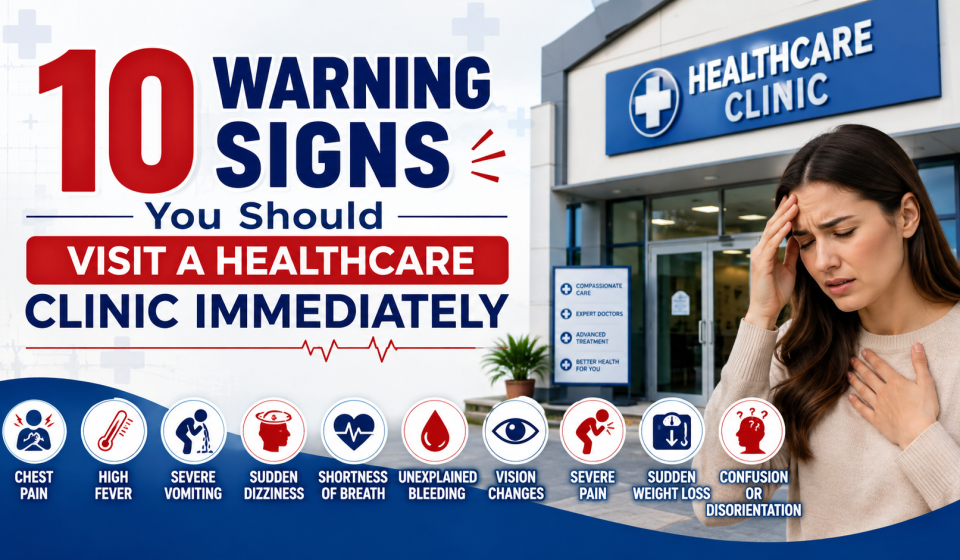

Learn 10 warning signs you should visit a healthcare clinic immediately, including chest pain, breathing problems, stroke symptoms, severe pain, and more.
Your body often gives you warning signals when something is wrong. While many symptoms are mild and disappear with rest or simple treatment, some symptoms can indicate a serious medical problem that requires prompt professional attention. Knowing when to visit a healthcare clinic—or when to skip the clinic and seek emergency care—can make an important difference.
Medical emergencies can include severe breathing problems, chest pain, sudden weakness, uncontrolled bleeding, loss of consciousness, severe abdominal pain, and sudden neurological changes. MedlinePlus advises seeking immediate medical attention for symptoms such as severe chest pain, difficulty breathing, sudden inability to speak or move, heavy bleeding, fainting, and sudden severe pain.
This guide explains 10 important warning signs that should not be ignored, what they may indicate, and when you should seek professional medical help.
Why You Should Not Ignore Warning Signs
People sometimes delay medical care because they believe a symptom will disappear on its own. Others may confuse serious symptoms with indigestion, tiredness, stress, dehydration, or a minor infection.
The problem is that some serious conditions can initially produce symptoms that seem relatively ordinary. For example, heart-related problems may cause chest discomfort, shortness of breath, nausea, sweating, weakness, or pain that spreads to the jaw, arm, back, or stomach.
Similarly, stroke symptoms can appear suddenly and include facial drooping, weakness on one side, speech difficulties, vision changes, dizziness, and severe unexplained headache. Fast treatment is important when a stroke is suspected.
Understanding these warning signs can help you make a safer decision about when to seek medical attention.
1. Severe or Persistent Chest Pain
Chest pain is one of the most important symptoms that should never be casually dismissed.
Chest discomfort may feel like:
- Pressure or squeezing
- Tightness or heaviness
- Burning or aching
- Crushing discomfort
- Pain in the center of the chest
- Pain that spreads toward the arm, shoulder, back, neck, or jaw
Chest pain can have many causes, including digestive problems, muscle strain, anxiety, lung conditions, and heart problems. However, certain types of chest pain may indicate a heart attack or another serious condition.
According to MedlinePlus, sudden crushing, squeezing, tightening, or pressure in the chest—particularly when accompanied by shortness of breath, sweating, nausea, dizziness, or pain spreading to the jaw or arm—requires emergency medical attention.
What should you do?
If chest pain is severe, sudden, persistent, or associated with breathing difficulty, sweating, fainting, or other concerning symptoms, do not wait for a routine clinic appointment. Seek emergency medical care immediately.
2. Sudden Difficulty Breathing
Shortness of breath after intense exercise can sometimes be normal. However, sudden or severe difficulty breathing is a serious warning sign.
You should seek immediate medical attention if you:
- Suddenly cannot catch your breath
- Have difficulty speaking because of breathlessness
- Feel severe chest tightness
- Become dizzy or faint
- Develop blue or grey lips or skin
- Experience breathing difficulty while resting
- Suddenly develop severe breathlessness
Breathing problems can result from asthma, pneumonia, allergic reactions, heart problems, blood clots, or other conditions.
MedlinePlus recommends emergency care when breathing difficulty begins suddenly, seriously interferes with breathing or talking, or when someone stops breathing.
Do not ignore worsening breathlessness
If your breathing becomes progressively worse or is accompanied by chest pain, fainting, confusion, or bluish skin, emergency care is more appropriate than waiting to visit a healthcare clinic.
3. Sudden Weakness, Numbness, or Facial Drooping
Sudden weakness or numbness—especially on one side of the body—can be a warning sign of a stroke.
Watch for:
- One side of the face drooping
- One arm becoming weak or numb
- Difficulty lifting one arm
- Slurred speech
- Difficulty understanding others
- Sudden confusion
- Sudden vision problems
- Sudden difficulty walking
- Loss of balance or coordination
A useful way to remember the main stroke warning signs is F.A.S.T.:
F – Face: Does one side of the face droop?
A – Arms: Is one arm weak or drifting downward?
S – Speech: Is speech slurred, strange, or difficult to understand?
T – Time: Seek emergency medical help immediately.
Stroke symptoms often develop suddenly, and quick treatment can improve outcomes.
Why timing matters
A person experiencing stroke symptoms should not simply rest and wait to see whether the symptoms disappear. Even if symptoms improve after a short period, urgent medical assessment is important because a transient ischemic attack (TIA) can be a warning of a future stroke.
4. Uncontrolled or Heavy Bleeding
Small cuts usually stop bleeding after appropriate pressure is applied. However, bleeding that does not stop or appears excessive requires immediate medical attention.
Seek urgent help if:
- Bleeding continues despite firm pressure
- Blood is flowing heavily
- You are vomiting blood
- You are coughing up blood
- You have black or bloody stools
- You have suffered a deep or large wound
- You feel weak, dizzy, confused, or faint after blood loss
Uncontrolled bleeding is listed among the warning signs of a medical emergency.
What can you do while waiting?
If external bleeding is severe, apply firm pressure with clean cloth or gauze if possible and seek emergency assistance. Do not delay professional care because the bleeding temporarily appears to slow.
5. Loss of Consciousness or Severe Fainting
Fainting can sometimes happen because of dehydration, prolonged standing, heat, or a temporary drop in blood pressure. But unexplained loss of consciousness can also be associated with heart, neurological, or other serious problems.
You should seek urgent medical evaluation if someone:
- Completely loses consciousness
- Does not quickly return to normal
- Faints during physical activity
- Faints with chest pain
- Faints with severe headache
- Has difficulty breathing
- Experiences seizure-like movements
- Becomes confused afterward
- Has suffered an injury during the episode
MedlinePlus identifies fainting or loss of consciousness among symptoms requiring urgent assessment, particularly when associated with other serious symptoms.
If a person is unconscious and not breathing normally, emergency assistance is required immediately.
6. Severe or Sudden Headache
Most headaches are not emergencies. However, a headache that is sudden, unusually severe, or completely different from your usual headaches should be taken seriously.
Seek immediate medical attention if a severe headache occurs with:
- Sudden onset
- Confusion
- Weakness or numbness
- Difficulty speaking
- Vision problems
- Loss of balance
- Fainting
- Seizures
- Repeated vomiting
- Fever and stiff neck
- Recent significant head injury
A sudden severe headache with no known cause is recognized as a possible warning sign of a serious medical emergency.
Do not assume that an unusually intense headache is simply a migraine, particularly if you have never experienced that type of headache before.
7. Severe Abdominal Pain
Mild stomach discomfort may result from indigestion, gas, constipation, or a minor infection. Severe or rapidly worsening abdominal pain, however, may require urgent evaluation.
Visit a healthcare professional promptly if abdominal pain is:
- Severe or sudden
- Getting worse quickly
- Associated with persistent vomiting
- Associated with fainting or weakness
- Accompanied by blood in vomit or stool
- Associated with a rigid or very tender abdomen
- Accompanied by fever or significant dehydration
- Occurring after a serious injury
Severe abdominal pain and persistent vomiting or diarrhea are among the symptoms that can require urgent medical evaluation.
The exact cause cannot be determined from symptoms alone. Conditions affecting the digestive system, gallbladder, appendix, kidneys, or other organs can produce abdominal pain.
8. Persistent Vomiting or Diarrhea
Occasional vomiting or diarrhea can happen because of infections, food-related illness, medication side effects, or other temporary conditions. The bigger concern is when symptoms are severe, persistent, or causing dehydration.
Warning signs include:
- Repeated vomiting
- Diarrhea that does not stop
- Inability to keep fluids down
- Very little urine
- Severe weakness
- Dizziness when standing
- Confusion
- Blood in vomit or stool
- Severe abdominal pain
- High fever
Persistent vomiting or diarrhea can result in significant fluid and electrolyte loss. MedlinePlus lists severe or persistent vomiting or diarrhea among medical-emergency warning signs.
When should you seek care?
If symptoms are mild and improving, monitoring and hydration may sometimes be appropriate. However, persistent symptoms, severe dehydration, blood loss, confusion, or severe pain warrant urgent medical assessment.
9. Sudden Confusion, Difficulty Speaking, or Major Behavior Changes
A sudden change in mental status should not be ignored.
Warning signs include:
- Sudden confusion
- Difficulty understanding simple instructions
- Trouble speaking
- Unusual behavior
- Severe disorientation
- Extreme drowsiness
- Difficulty waking up
- Sudden inability to communicate normally
Sudden confusion or inability to speak can be associated with neurological emergencies, including stroke.
In older adults, sudden confusion can also occur with infections, medication problems, metabolic disturbances, dehydration, or other illnesses. Because there are many possible causes, sudden changes should be assessed by a healthcare professional.
10. Severe Allergic Reaction or Sudden Swelling
Allergic reactions can range from mild skin irritation to life-threatening reactions.
Seek emergency help if someone develops:
- Swelling of the face, lips, tongue, or throat
- Difficulty breathing
- Wheezing
- Severe dizziness
- Fainting
- Widespread hives accompanied by breathing problems
- Rapid deterioration after exposure to a suspected allergen
Swelling of the face, eyes, or tongue and severe allergic reactions involving breathing difficulty are recognized as emergency warning signs.
If a person has been prescribed an emergency allergy medication such as an epinephrine auto-injector for a known severe allergy, it should be used according to their medical instructions while emergency help is obtained.
Clinic Visit vs. Emergency Department: What’s the Difference?
Not every concerning symptom means you need an emergency department. Some problems require a same-day or prompt clinic appointment, while others need emergency treatment.
A healthcare clinic may be appropriate for:
- Mild but persistent fever
- A cough that is not improving
- Minor infections
- Mild skin rashes
- Persistent but non-severe digestive symptoms
- Minor injuries
- Ongoing fatigue
- Recurring headaches without emergency warning signs
- Medication-related concerns
- Routine health assessments
Emergency care may be more appropriate for:
- Severe chest pain
- Severe breathing difficulty
- Stroke symptoms
- Loss of consciousness
- Uncontrolled bleeding
- Severe allergic reactions
- Seizures
- Sudden severe neurological symptoms
- Severe injuries
- Sudden severe pain
MedlinePlus emphasizes choosing the appropriate level of care based on whether a condition is potentially life-threatening or could cause permanent disability.
What Information Should You Give the Healthcare Provider?
When you seek medical care, try to provide clear information about your symptoms.
Tell the healthcare professional:
- When the symptoms started
- Whether they appeared suddenly or gradually
- How severe they are
- Whether symptoms are getting better or worse
- What other symptoms occurred
- Any medications or supplements you take
- Known allergies
- Existing medical conditions
- Recent injuries, travel, infections, or procedures
- Anything that makes the symptoms better or worse
This information can help the healthcare professional understand what may be happening and determine whether additional testing or treatment is required.
How to Prepare for Unexpected Medical Problems
You cannot predict every health emergency, but you can prepare for one.
Keep important information easily available, including:
- Emergency contact numbers
- Current medications
- Known allergies
- Important medical history
- Healthcare provider information
- Health insurance information, if applicable
- Emergency contact details
It is also helpful to know the location of the nearest emergency department and understand how to contact your local emergency medical service.
MedlinePlus recommends knowing the quickest route to the nearest emergency department before an emergency occurs.
Common Mistakes to Avoid
When serious symptoms occur, several common mistakes can delay treatment.
1. Waiting too long
Do not repeatedly wait for severe symptoms to disappear.
2. Searching online instead of seeking care
Online information can help you understand general symptoms, but it cannot replace an examination when an emergency is possible.
3. Driving yourself when severely unwell
If you have severe chest pain, major breathing difficulty, fainting, confusion, or stroke symptoms, emergency medical assistance may be safer than driving yourself.
4. Assuming young people cannot have emergencies
Serious medical conditions can affect people of different ages. Symptoms should be evaluated based on their severity rather than age alone.
5. Ignoring symptoms because they improve
Some serious symptoms may temporarily improve. Stroke-like symptoms that disappear, for example, can still require urgent evaluation because they may represent a TIA.
Sources
https://l1nq.com/rvnke8g
https://sl1nk.com/dncnrmc
Final Thoughts
Recognizing the 10 warning signs you should visit a healthcare clinic immediately can help you make faster and safer healthcare decisions. Severe chest pain, sudden breathing problems, stroke symptoms, uncontrolled bleeding, loss of consciousness, severe headaches, intense abdominal pain, persistent vomiting or diarrhea, sudden confusion, and severe allergic reactions should never be casually dismissed.
However, remember that some symptoms described in this article are medical emergencies rather than routine clinic problems. Severe chest pain, major breathing difficulty, sudden weakness or facial drooping, unconsciousness, uncontrolled bleeding, and severe allergic reactions may require emergency services rather than waiting for a clinic appointment.
The safest approach is to pay attention to sudden, severe, unusual, or rapidly worsening symptoms. When you are uncertain about the seriousness of a symptom, contact a qualified healthcare professional or your local emergency service for guidance.
Frequently Asked Questions
1. When should I visit a healthcare clinic immediately?
You should seek prompt medical care when symptoms are persistent, worsening, unusual, or interfering significantly with normal activities. Examples include persistent fever, worsening infection symptoms, recurring severe headaches, ongoing digestive problems, or unexplained weakness. If symptoms are potentially life-threatening, seek emergency care instead of waiting for a clinic appointment.
2. Is chest pain always a medical emergency?
Not every type of chest pain is caused by a heart problem, but sudden or severe chest pressure, squeezing, crushing discomfort, or chest pain accompanied by shortness of breath, sweating, nausea, dizziness, or pain spreading to the arm or jaw requires immediate medical attention.
3. What are the main warning signs of a stroke?
The main warning signs include sudden facial drooping, weakness or numbness on one side of the body, difficulty speaking or understanding speech, sudden vision problems, dizziness, difficulty walking, and a sudden severe headache. Use the F.A.S.T. approach and seek emergency medical help immediately if these symptoms occur.
4. When does shortness of breath require urgent medical care?
Sudden or severe difficulty breathing requires emergency medical attention, especially if it prevents normal talking or is accompanied by chest pain, fainting, confusion, or bluish skin.
5. Should I seek medical care if symptoms disappear?
Yes, depending on the symptom. Some serious conditions can temporarily improve. For example, stroke-like symptoms that disappear may represent a TIA and still require urgent medical evaluation.