
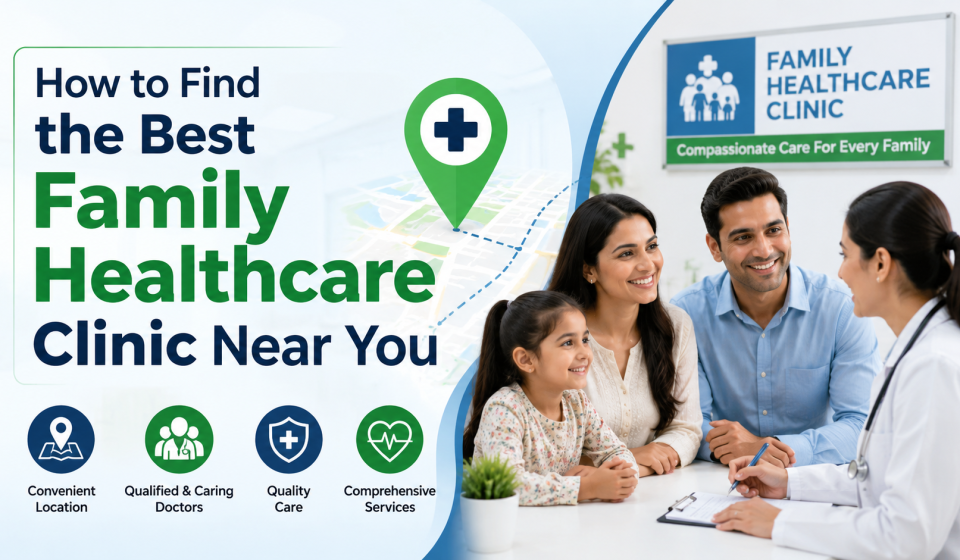

Learn how to find the best family healthcare clinic near you. Compare doctors, services, costs, reviews, location, preventive care, and appointment options.
Finding the right family healthcare clinic is one of the most important decisions you can make for your family’s long-term health. A good clinic should not only treat common illnesses but also provide preventive care, routine checkups, health education, referrals, and ongoing support for different members of your family.
Whether you are looking for a doctor for children, adults, older family members, or general healthcare needs, choosing a clinic requires more than simply searching for the closest option. Factors such as medical qualifications, services, clinic hours, communication, affordability, accessibility, and patient experience can all influence your decision.
A primary care provider can become an important long-term healthcare partner. Primary care commonly includes preventive care, treatment of common health problems, assessment of symptoms, and referrals to specialists when needed.
This guide explains how to find the best family healthcare clinic near you, what factors to compare, what questions to ask before choosing a clinic, and which warning signs you should not ignore.
What Is a Family Healthcare Clinic?
A family healthcare clinic is a medical facility that provides general and primary healthcare services to individuals and, in many cases, multiple members of the same family.
Depending on the clinic, services may include:
- Routine health checkups
- Preventive healthcare
- Treatment of common illnesses
- Blood pressure and blood sugar monitoring
- Vaccinations
- Pediatric care
- Adult healthcare
- Women’s healthcare
- Senior healthcare
- Minor injuries and common medical concerns
- Chronic disease management
- Health screenings
- Lifestyle and nutrition guidance
- Specialist referrals
- Follow-up care
The exact services vary from one clinic to another, so it is important to confirm what is available before making your choice.
A primary care provider may serve as the first point of contact for non-emergency health concerns and can coordinate care with specialists when necessary.
Why Choosing the Right Family Clinic Matters
Healthcare is not something you usually need only once. Families may require medical assistance at different stages of life, from childhood vaccinations and routine checkups to adult preventive care and healthcare needs associated with aging.
Choosing a reliable clinic can make healthcare more convenient and organized.
A good family healthcare clinic can help you:
- Maintain regular health checkups.
- Identify potential health problems early.
- Keep medical records organized.
- Manage ongoing health conditions.
- Receive preventive healthcare advice.
- Get appropriate referrals when specialist care is needed.
- Build a long-term relationship with healthcare professionals.
- Save time by having several healthcare services available in one location.
MedlinePlus recommends considering factors such as location, insurance coverage, accreditation, availability, and your comfort with the healthcare provider when selecting healthcare services.
1. Start With Your Family’s Healthcare Needs
Before searching for a clinic, identify what your family actually needs.
For example, a family with young children may prioritize pediatric services and vaccinations. A family with older adults may need chronic disease management, medication reviews, and regular monitoring. Another family may primarily need preventive checkups and treatment for common illnesses.
Make a simple list of your requirements.
Consider:
- How many people need healthcare?
- Are there children in the family?
- Are there older adults?
- Does anyone require regular monitoring?
- Do you need vaccination services?
- Do you need women’s healthcare?
- Are routine laboratory tests important?
- Do you need weekend or evening appointments?
- Do you prefer in-person appointments, telehealth, or both?
Understanding your requirements makes it easier to compare clinics.
2. Search for Clinics in a Convenient Location
Location is one of the most practical factors when selecting a family healthcare clinic.
A clinic may have excellent doctors, but if it takes a long time to reach the facility, routine appointments may become inconvenient.
Look for clinics that are reasonably accessible from:
- Your home
- Workplace
- Children’s school
- Public transportation
- Major roads
- Parking facilities
For families, convenience becomes especially important when a child is sick, an older adult needs an appointment, or you require repeated follow-up visits.
However, do not choose a clinic based solely on distance. A nearby clinic is not necessarily the best clinic. Balance convenience with quality, services, healthcare professionals, and affordability.
MedlinePlus also recommends considering how close a healthcare facility is to where you live or work.
3. Check the Qualifications of Healthcare Professionals
One of the most important steps is checking who provides care at the clinic.
Look for appropriately qualified and licensed healthcare professionals. Depending on your family’s needs, the clinic may have family physicians, general physicians, pediatricians, nurses, nurse practitioners, or other healthcare professionals.
You can research:
- Educational qualifications
- Medical specialization
- Professional registration or licensing
- Years of experience
- Areas of clinical interest
- Additional certifications
- Hospital affiliations, where relevant
A primary care provider may be a physician or another appropriately trained healthcare professional, depending on the healthcare system and practice.
Do not hesitate to ask the clinic about the qualifications of the professionals who will be treating your family.
4. Check Whether the Clinic Offers Family-Friendly Services
A family healthcare clinic should ideally be able to address the healthcare needs of different age groups or provide appropriate referrals.
Ask whether the clinic offers:
Children’s healthcare
Check for services such as:
- Routine pediatric consultations
- Vaccination guidance
- Growth and development monitoring
- Common childhood illness care
- Nutrition advice
Adult healthcare
Look for:
- Routine checkups
- Preventive screenings
- Blood pressure monitoring
- Diabetes risk assessment
- Lifestyle counseling
- Common illness treatment
Women’s healthcare
Depending on the clinic, services may include:
- Routine women’s health consultations
- Preventive screenings
- Reproductive health guidance
- Pregnancy-related referrals
- Menstrual health concerns
Senior healthcare
Older adults may require more coordinated care, medication management, monitoring, and specialist referrals.
Not every family clinic will provide all these services directly, so ask about available services and referral arrangements.
5. Look at Preventive Healthcare Services
A good family healthcare clinic should not focus only on treating illness.
Preventive healthcare helps people stay informed about their health and identify certain problems before they become more serious.
Preventive services may include:
- Routine physical examinations
- Blood pressure checks
- Blood sugar testing
- Cholesterol testing
- Age-appropriate screenings
- Vaccinations
- Lifestyle counseling
- Nutrition guidance
- Health-risk assessments
The appropriate screenings and preventive services depend on factors such as age, sex, personal health, family history, and risk factors. MedlinePlus recommends reviewing family health history and asking whether you are due for screenings or vaccines before a checkup.
6. Check the Clinic’s Hours
Clinic hours can make a major difference in your healthcare experience.
Before choosing a clinic, check whether its schedule fits your family’s routine.
Ask:
- Is the clinic open early in the morning?
- Does it offer evening appointments?
- Is it open on weekends?
- How are urgent same-day appointments handled?
- Can appointments be booked online?
- How far in advance must routine appointments be scheduled?
If your family has school and work commitments during regular business hours, evening or weekend availability can be particularly useful.
7. Understand Appointment Availability
A clinic may have excellent doctors but still be difficult to use if appointments are consistently unavailable.
Check how quickly new patients can receive an appointment and how the clinic handles urgent but non-emergency problems.
You should also ask whether the same doctor is usually available for follow-up visits.
Continuity can be valuable because a healthcare professional who knows your medical history may better understand changes in your health over time.
8. Evaluate Communication With Patients
Good communication is an important part of healthcare.
You should feel comfortable explaining symptoms, asking questions, discussing concerns, and requesting clarification.
During your first appointment, consider:
- Does the provider listen carefully?
- Do they explain things clearly?
- Do they encourage questions?
- Do they discuss treatment options?
- Do they respect your preferences?
- Do they explain when follow-up is necessary?
- Can you contact the clinic after your appointment?
MedlinePlus notes that effective communication between patients and healthcare providers is an important part of good healthcare. Patients are encouraged to prepare questions, discuss concerns honestly, and ask for clarification when they do not understand something.
9. Compare Clinic Reviews Carefully
Online reviews can provide useful information, but they should not be the only reason you choose a clinic.
When reading reviews, look for repeated patterns rather than focusing on one extremely positive or negative comment.
Pay attention to comments about:
- Staff behavior
- Appointment scheduling
- Waiting times
- Communication
- Cleanliness
- Professionalism
- Billing experience
- Overall patient experience
Remember that online reviews represent individual experiences and may not provide a complete picture of clinical quality.
Use reviews as one part of your research rather than as the final decision-making factor.
10. Check Healthcare Costs and Insurance Coverage
Cost is another major consideration.
Before making an appointment, ask about:
- Consultation fees
- Follow-up charges
- Diagnostic test costs
- Vaccination fees
- Specialist referral costs
- Insurance acceptance
- Payment options
- Additional administrative charges
If you have health insurance, confirm whether the clinic and relevant healthcare professionals are included in your plan.
Healthcare plans can have different networks, referral requirements, and out-of-pocket costs, so checking coverage before receiving care can help prevent unexpected expenses.
Even if a clinic is affordable for a basic consultation, additional services may have separate costs. Ask for clarification when necessary.
11. Check the Clinic’s Facilities and Cleanliness
The physical environment can also tell you something about how the clinic operates.
When visiting, observe whether:
- The waiting area is clean.
- Examination rooms appear well maintained.
- Staff follow appropriate hygiene practices.
- Patient privacy is respected.
- Equipment appears properly maintained.
- Signage and procedures are clear.
Quality matters when selecting a healthcare facility, and MedlinePlus recommends considering the quality of the facility along with location and coverage.
12. Ask About Medical Records
Good medical record management is important, especially for families who visit the clinic regularly.
Ask whether the clinic provides:
- Electronic medical records
- Online patient portals
- Digital prescriptions where applicable
- Access to laboratory results
- Vaccination records
- Appointment history
- Secure communication
Having organized medical information can make future appointments easier and can help healthcare professionals understand previous diagnoses, medications, tests, and treatments.
13. Check Laboratory and Diagnostic Services
Some family clinics have laboratories or diagnostic services onsite, while others work with external facilities.
If your family frequently requires blood tests or other investigations, ask:
- Are laboratory tests available at the clinic?
- Are samples collected onsite?
- How are results delivered?
- How long do results usually take?
- Does the clinic coordinate with external laboratories?
Convenient access to testing can reduce the number of separate appointments you need to manage.
14. Ask About Specialist Referrals
A family healthcare clinic does not need to provide every medical specialty itself.
However, it should have a clear process for referring patients to appropriate specialists when necessary.
Ask:
- Which specialists does the clinic commonly refer to?
- Does the clinic help coordinate referrals?
- Can medical records be transferred securely?
- Does the clinic receive specialist reports?
Care coordination is an important part of primary care. AHRQ emphasizes the value of effective referral processes and communication between primary care practices and specialists.
15. Consider Telehealth and Digital Services
Many clinics now offer digital healthcare options for certain situations.
Depending on the clinic and local regulations, services may include:
- Video consultations
- Telephone consultations
- Online appointment booking
- Digital prescriptions
- Secure messaging
- Online test results
Telehealth may be convenient for follow-up discussions or certain non-emergency concerns, but it is not appropriate for every medical situation.
Ask the clinic which conditions can be managed remotely and when an in-person examination is required.
16. Ask How the Clinic Handles Urgent Problems
A family clinic should clearly explain what patients should do when they have an urgent health concern.
Ask:
- Can you call the clinic for urgent advice?
- Are same-day appointments available?
- Is there an after-hours number?
- Where should patients go outside clinic hours?
- When should patients seek emergency medical care?
Remember that a routine family healthcare clinic is not a substitute for emergency services.
Severe symptoms or medical emergencies require immediate emergency medical attention rather than waiting for a routine clinic appointment.
17. Consider Your Family’s Long-Term Needs
Do not choose a clinic only for your current situation.
Think about whether the clinic can support your family over the next several years.
For example, children may eventually need adolescent healthcare, adults may require preventive screenings, and older family members may develop more complex healthcare needs.
A strong primary care relationship can support ongoing healthcare and help coordinate care as needs change.
Questions to Ask Before Choosing a Family Healthcare Clinic
Before becoming a regular patient, consider asking these questions:
- Which healthcare professionals are available?
- What services are provided?
- Do you treat children and older adults?
- What are your clinic hours?
- Do you offer same-day appointments?
- Do you accept my insurance?
- What are the consultation fees?
- Do you provide preventive health checkups?
- Are laboratory services available?
- How can I access my medical records?
- Do you offer telehealth?
- How are specialist referrals handled?
- What should I do if I need medical help after hours?
The answers can help you compare several clinics objectively.
Common Mistakes to Avoid When Choosing a Clinic
Choosing only because it is nearby
Convenience matters, but healthcare quality, professional qualifications, services, and communication should also be considered.
Focusing only on online ratings
Reviews can be helpful, but they do not replace your own evaluation.
Ignoring total costs
A low consultation fee does not necessarily mean the overall healthcare cost will be low. Ask about additional services and testing.
Not checking appointment availability
A clinic may be highly rated but difficult to access when you actually need an appointment.
Not asking about referrals
Find out whether the clinic can coordinate specialist care when necessary.
Ignoring communication style
If you do not feel comfortable asking questions, it may be difficult to build a productive long-term healthcare relationship.
A Simple Checklist for Finding the Best Family Healthcare Clinic
Use this checklist when comparing clinics:
- Convenient location
- Qualified healthcare professionals
- Family-friendly services
- Suitable clinic hours
- Reasonable appointment availability
- Preventive healthcare services
- Clear communication
- Good patient experience
- Transparent pricing
- Insurance compatibility
- Clean and organized facility
- Accessible medical records
- Laboratory or diagnostic access
- Specialist referral system
- After-hours guidance
- Telehealth options, if needed
The clinic that checks the most important boxes for your family’s specific needs is generally a stronger choice than simply selecting the clinic with the highest online rating.
Sources
https://sl1nk.com/4z9uit4
https://sl1nk.com/yl8q9pq
Conclusion
Finding the best family healthcare clinic near you requires a little research, but the effort can make your family’s healthcare more convenient and organized.
Start by identifying your family’s healthcare needs. Then compare clinics based on location, healthcare professionals, services, appointment availability, preventive care, communication, costs, insurance coverage, facilities, medical records, and specialist referrals.
Most importantly, look for a clinic where you and your family feel comfortable communicating with healthcare professionals. A long-term primary care relationship can help support preventive care, treatment of common conditions, and coordination with specialists when needed.
Do not rush your decision based on distance or online reviews alone. Visit or contact a few clinics, ask questions, compare their services and costs, and choose the one that best fits your family’s current and future healthcare needs.
FAQs
1. How do I find the best family healthcare clinic near me?
Start by searching for clinics in convenient locations and then compare their healthcare professionals, services, hours, appointment availability, costs, insurance coverage, reviews, and patient communication. Choose a clinic based on your family’s healthcare needs rather than location alone.
2. What services should a family healthcare clinic provide?
Common services may include routine checkups, preventive healthcare, treatment of common illnesses, vaccinations, health screenings, chronic condition management, and referrals to specialists. Services vary by clinic, so confirm what is available before choosing one.
3. Should I choose a clinic based on online reviews?
Online reviews can help you understand other patients’ experiences, but they should not be your only deciding factor. Also consider professional qualifications, healthcare services, communication, accessibility, costs, and appointment availability.
4. How important is the location of a family healthcare clinic?
Location is important because a convenient clinic is easier to visit for routine checkups, follow-up appointments, and family healthcare needs. However, quality, professional qualifications, services, and communication should also be considered.
5. What questions should I ask before selecting a family healthcare clinic?
Ask about healthcare professionals, services, clinic hours, appointment availability, consultation fees, insurance acceptance, preventive care, medical records, urgent-care procedures, telehealth options, and specialist referrals. These questions can help you determine whether the clinic is suitable for your family.