
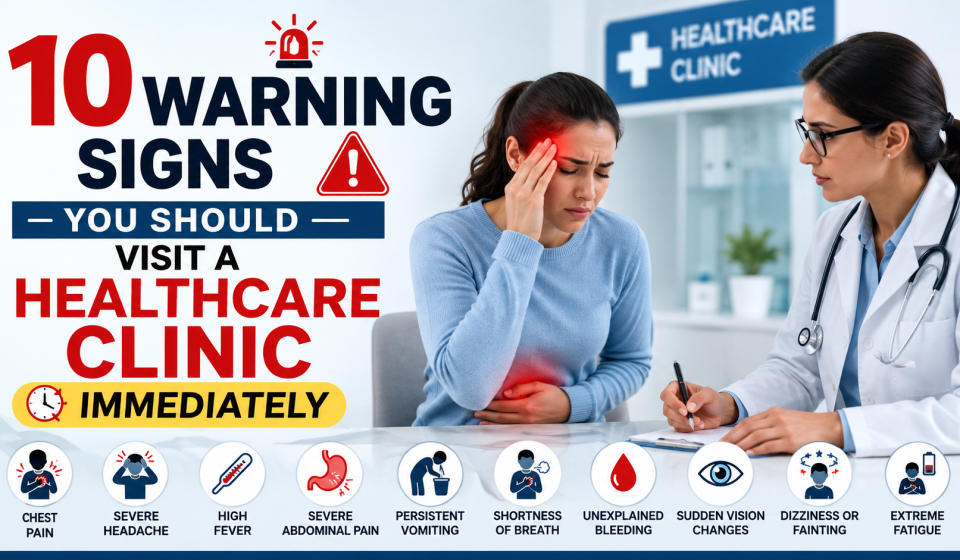

Learn 10 warning signs you should visit a healthcare clinic immediately, including chest pain, breathing problems, stroke symptoms, severe pain, fainting, and more.
Your body constantly sends signals when something is wrong. Some symptoms are mild and may improve with rest, hydration, or simple home care. However, certain warning signs should never be ignored because they can indicate a serious health problem that requires immediate medical evaluation.
Knowing when to visit a healthcare clinic or seek emergency medical care can make a major difference. Symptoms such as sudden chest pain, difficulty breathing, unexplained weakness, severe abdominal pain, or sudden changes in speech or vision may sometimes indicate potentially life-threatening conditions.
It is also important to understand the difference between a routine clinic visit and an emergency. If symptoms are severe, sudden, rapidly worsening, or associated with loss of consciousness or difficulty breathing, do not wait for a regular appointment. Contact your local emergency medical service or go to the nearest emergency department.
The following are 10 warning signs you should visit a healthcare clinic immediately or seek urgent medical attention.
1. Sudden or Severe Chest Pain
Chest pain is one of the most important symptoms that should not be ignored. While chest discomfort can have many causes, including acid reflux, muscle strain, anxiety, or respiratory problems, sudden or severe chest pain may be a sign of a heart attack or another serious condition.
Heart attack symptoms can include pressure, squeezing, fullness, or pain in the center or left side of the chest. The discomfort may last for several minutes or disappear and return. Pain may also spread to the arm, shoulder, back, neck, jaw, or upper abdomen.
Other warning signs can include:
- Shortness of breath
- Cold sweating
- Nausea or vomiting
- Light-headedness
- Unusual weakness or tiredness
- Feeling faint
According to the CDC, heart attack symptoms require immediate emergency medical attention because faster treatment can help reduce heart damage.
What to do: If chest pain is sudden, severe, persistent, or accompanied by breathing difficulty, sweating, faintness, or pain spreading to other areas, seek emergency medical care immediately.
2. Sudden Difficulty Breathing
Mild breathlessness after intense exercise may be normal. However, sudden or severe difficulty breathing without an obvious explanation should be treated as an emergency.
Breathing problems may be associated with conditions such as asthma attacks, severe allergic reactions, pneumonia, heart problems, or blood clots in the lungs.
Warning signs include:
- Severe shortness of breath
- Gasping or choking
- Inability to speak normally because of breathlessness
- Blue, grey, or unusually pale lips or skin
- Chest tightness or heaviness
- Sudden confusion
- Rapid breathing
Severe difficulty breathing can require immediate emergency treatment. The NHS advises urgent emergency care when someone is gasping, choking, unable to get words out, or experiencing severe breathing difficulty.
What to do: Do not wait for symptoms to disappear if breathing becomes severely difficult. Seek emergency medical assistance immediately.
3. Signs of a Stroke
A stroke occurs when blood supply to part of the brain is blocked or when a blood vessel in the brain ruptures. Because brain cells can become damaged rapidly, recognizing stroke symptoms quickly is extremely important.
The CDC highlights sudden symptoms such as:
- Numbness or weakness of the face, arm, or leg, particularly on one side
- Sudden confusion
- Difficulty speaking or understanding speech
- Sudden vision problems
- Sudden dizziness or loss of balance
- Difficulty walking
- A sudden severe headache without a known cause
A useful way to remember the major symptoms is B.E. F.A.S.T.:
B – Balance: Sudden loss of balance or coordination
E – Eyes: Sudden vision changes
F – Face: One side of the face may droop
A – Arms: One arm may become weak or numb
S – Speech: Speech may become slurred or difficult
T – Time: Seek emergency help immediately
The CDC emphasizes that every minute counts during a stroke and recommends emergency medical assistance when these symptoms appear.
What to do: Note the time the symptoms started and seek emergency medical care immediately. Do not wait to see whether the symptoms improve.
4. Severe or Persistent Abdominal Pain
Occasional mild stomach discomfort may result from indigestion, gas, or dietary changes. However, severe, sudden, or persistent abdominal pain can sometimes indicate a condition requiring urgent medical attention.
Potential causes can include appendicitis, gallbladder problems, intestinal obstruction, kidney stones, severe infections, or other abdominal conditions.
Seek prompt medical evaluation if abdominal pain is:
- Sudden and severe
- Getting progressively worse
- Associated with repeated vomiting
- Accompanied by fever
- Associated with abdominal swelling
- Accompanied by blood in vomit or stool
- Associated with fainting or severe weakness
The location and nature of the pain can also provide useful information to healthcare professionals. For example, pain that moves or becomes progressively worse may require immediate evaluation.
What to do: Do not attempt to diagnose severe abdominal pain yourself. Contact a healthcare professional or seek emergency care if the pain is intense, sudden, or accompanied by other serious symptoms.
5. Unexplained Fainting or Loss of Consciousness
Fainting occurs when someone temporarily loses consciousness, often because of reduced blood flow to the brain. Sometimes it can be caused by dehydration, standing up quickly, emotional stress, or low blood pressure.
However, unexplained fainting can occasionally be associated with heart rhythm problems, cardiovascular disease, neurological conditions, internal bleeding, or other serious problems.
Medical evaluation becomes particularly important if fainting occurs with:
- Chest pain
- Difficulty breathing
- Severe headache
- Irregular or racing heartbeat
- Injury from the fall
- Confusion after waking
- Seizure-like movements
- Repeated episodes
If someone suddenly becomes unresponsive and is not breathing normally, this may indicate cardiac arrest and requires emergency assistance immediately.
What to do: Any unexplained or repeated loss of consciousness deserves medical evaluation, especially when accompanied by other warning signs.
6. Sudden Severe Headache
Headaches are common and are often caused by stress, dehydration, lack of sleep, migraines, or other relatively common conditions. But a sudden, extremely severe headache that appears without warning can be a medical emergency.
A particularly concerning headache may:
- Begin suddenly and intensely
- Feel significantly different from previous headaches
- Be accompanied by weakness or numbness
- Cause confusion
- Occur with vision changes
- Be accompanied by difficulty speaking
- Occur with loss of balance
- Be associated with vomiting or loss of consciousness
Sudden severe headache is among the warning signs of stroke identified by the CDC.
What to do: If a severe headache develops suddenly or occurs together with neurological symptoms, seek emergency medical care rather than waiting for it to resolve.
7. Uncontrolled or Heavy Bleeding
Minor cuts can usually be managed with basic first aid. However, heavy bleeding that does not stop with firm pressure requires urgent medical attention.
Potentially dangerous bleeding may occur because of:
- Serious injuries
- Deep cuts
- Internal bleeding
- Gastrointestinal conditions
- Certain medications
- Blood-clotting problems
Warning signs include:
- Blood that continues to flow despite pressure
- Large amounts of blood
- Vomiting blood
- Coughing up blood
- Black or bloody stools
- Severe weakness
- Dizziness or fainting
- Pale or clammy skin
Heavy blood loss can cause shock, which can become life-threatening.
What to do: Apply firm pressure to external bleeding with a clean cloth or dressing while seeking emergency medical assistance. Do not delay professional care if bleeding is severe or uncontrolled.
8. Sudden Vision Loss or Major Vision Changes
A sudden change in vision should never automatically be dismissed as eye strain.
Sudden partial or complete vision loss can sometimes be associated with problems affecting the eye, brain, blood vessels, or nervous system. Sudden vision changes can also occur as part of a stroke.
You should seek urgent medical attention if you experience:
- Sudden loss of vision in one or both eyes
- Double vision
- Sudden severe blurred vision
- New visual disturbances accompanied by weakness
- Vision changes accompanied by difficulty speaking
- Vision loss accompanied by severe headache or dizziness
The CDC lists sudden trouble seeing in one or both eyes among the warning signs of stroke.
What to do: Sudden vision loss requires prompt medical evaluation. If it occurs together with stroke symptoms, treat it as an emergency.
9. Severe Allergic Reaction
Allergic reactions can range from mild skin irritation to life-threatening anaphylaxis. A severe allergic reaction can develop quickly and requires immediate treatment.
Warning signs can include:
- Difficulty breathing
- Swelling of the lips, tongue, throat, or face
- Difficulty swallowing
- Widespread hives
- Wheezing
- Severe dizziness
- Fainting
- Sudden weakness
Severe allergic reactions can affect breathing and circulation. Waiting for symptoms to improve on their own can be dangerous.
What to do: If a severe allergic reaction is suspected, seek emergency medical assistance immediately. If the person has a prescribed emergency medication such as an epinephrine auto-injector, it should be used according to their medical instructions.
10. Sudden Weakness, Confusion, or Major Changes in Mental Status
Sudden confusion or unexplained changes in mental status should not be ignored, particularly in older adults or people with existing medical conditions.
Sudden confusion may be associated with:
- Stroke
- Severe infection
- Low blood sugar
- Medication effects
- Dehydration
- Oxygen problems
- Neurological conditions
- Other serious medical problems
A person may suddenly have difficulty answering simple questions, recognizing familiar people, speaking clearly, walking normally, or following instructions.
When confusion occurs together with facial drooping, arm weakness, speech problems, dizziness, or vision changes, stroke should be considered an emergency.
What to do: Sudden unexplained confusion or weakness needs prompt medical evaluation. If the symptoms appeared suddenly, seek emergency care.
When Should You Visit a Healthcare Clinic?
Not every health problem requires an emergency room visit. A healthcare clinic or primary care provider can often help with symptoms that are concerning but not immediately life-threatening.
You should consider making a prompt clinic appointment for symptoms such as:
- Persistent cough
- Recurrent headaches
- Ongoing digestive problems
- Unexplained fatigue
- Persistent mild pain
- Repeated dizziness
- Changes in appetite
- Unexplained weight changes
- Sleep problems
- Recurring infections
- Symptoms that continue despite home care
A healthcare professional can review your symptoms, medical history, medications, lifestyle factors, and risk factors to determine whether further tests or specialist care are necessary.
Clinic Visit vs. Emergency Care: What Is the Difference?
Understanding where to seek care can prevent dangerous delays.
Healthcare clinic
A clinic or primary care provider may be appropriate for symptoms that are:
- Mild to moderate
- Persistent but stable
- Not rapidly worsening
- Not associated with major breathing problems
- Not associated with loss of consciousness
- Not suggestive of a heart attack or stroke
Emergency medical care
Emergency care is more appropriate when symptoms are:
- Sudden and severe
- Life-threatening
- Rapidly worsening
- Associated with severe breathing difficulty
- Associated with chest pressure or severe chest pain
- Associated with stroke symptoms
- Associated with unconsciousness
- Associated with uncontrolled bleeding
- Associated with severe allergic reactions
When in doubt, especially with potentially life-threatening symptoms, it is safer to seek urgent professional evaluation.
Why You Should Not Ignore Warning Signs
People sometimes delay medical care because they assume symptoms will disappear. Others may worry about the cost of treatment or believe that their symptoms are caused by stress or tiredness.
However, some serious conditions can initially appear mild.
For example, heart attack symptoms can vary from person to person, and some people may experience symptoms such as shortness of breath, nausea, unusual tiredness, or light-headedness in addition to chest discomfort.
Similarly, stroke symptoms can sometimes disappear temporarily. A transient ischemic attack, or TIA, can be a warning sign of a future stroke and still requires medical attention.
Getting medical help early can improve the chances of receiving appropriate treatment and may reduce the risk of serious complications.
What Information Should You Give the Healthcare Provider?
When visiting a clinic or emergency department, try to provide accurate information about your symptoms.
Important details include:
- When the symptoms started
- Whether they appeared suddenly or gradually
- What makes symptoms better or worse
- Any medications you take
- Existing medical conditions
- Recent injuries
- Recent illnesses or infections
- Allergies
- Recent changes in diet or medication
- Previous episodes of the same symptoms
If symptoms are severe, do not delay emergency treatment simply to gather information. Medical professionals can obtain additional details after you receive immediate care.
How to Reduce Your Risk of Serious Health Problems
While not every emergency can be prevented, healthy habits can reduce the risk of many chronic diseases and complications.
Important habits include:
- Get regular health checkups.
- Monitor blood pressure when recommended.
- Maintain a balanced diet.
- Stay physically active.
- Avoid tobacco products.
- Limit alcohol consumption.
- Get enough quality sleep.
- Maintain a healthy weight.
- Take prescribed medicines correctly.
- Learn the warning signs of heart attack and stroke.
- Manage existing health conditions.
- Seek professional care when symptoms persist or worsen.
Regular healthcare visits can also help identify health problems before they become more serious.
Sources
https://l1nq.com/a7p6vg5
https://sl1nk.com/7rrtlr9
Conclusion
Recognizing 10 warning signs you should visit a healthcare clinic immediately can help you make better decisions about your health. Symptoms such as severe chest pain, difficulty breathing, sudden weakness, stroke symptoms, severe abdominal pain, unexplained fainting, sudden vision changes, heavy bleeding, severe allergic reactions, and sudden confusion should never be casually dismissed.
Some symptoms may have harmless causes, but it is not always possible to determine the cause without professional evaluation. When symptoms are sudden, severe, rapidly worsening, or associated with difficulty breathing, unconsciousness, or neurological changes, emergency medical care is more appropriate than waiting for a regular clinic appointment.
Most importantly, trust significant changes in your health and seek professional advice when you are concerned. Early evaluation can help identify serious problems and ensure that appropriate treatment begins as quickly as possible.
Frequently Asked Questions
1. What are the most serious warning signs that require immediate medical care?
Sudden chest pain, severe difficulty breathing, stroke symptoms, loss of consciousness, uncontrolled bleeding, severe allergic reactions, and sudden severe neurological symptoms can require immediate emergency care.
2. Should I visit a clinic for persistent symptoms?
Yes. Symptoms that continue, repeatedly return, or gradually worsen should be evaluated by a healthcare professional. Persistent symptoms may require physical examination, laboratory tests, imaging, or other investigations.
3. How can I recognize a stroke quickly?
Remember B.E. F.A.S.T.: Balance problems, Eye or vision changes, Face drooping, Arm weakness, Speech difficulty, and Time to seek emergency help. Sudden stroke symptoms require immediate medical attention.
4. Is every type of chest pain an emergency?
Not every case of chest pain is caused by a heart problem. However, sudden or persistent chest pain, particularly when accompanied by shortness of breath, sweating, nausea, dizziness, or pain spreading to the arm, back, neck, or jaw, should be treated as an emergency.
5. What should I do if my symptoms suddenly become worse?
If symptoms become severe, sudden, or life-threatening, seek emergency medical assistance immediately rather than waiting for a routine clinic appointment. If possible, note when the symptoms began and provide that information to healthcare professionals.