
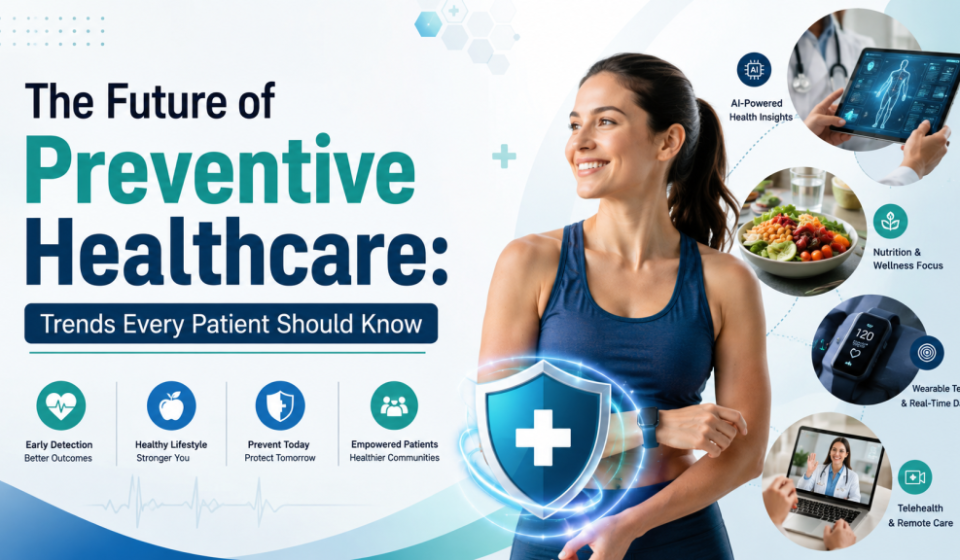

Discover the future of preventive healthcare, including AI, wearable technology, telehealth, personalized screening, remote monitoring, and emerging health trends patients should know.
Preventive healthcare is changing rapidly. Instead of waiting for symptoms to appear and then treating a disease, modern healthcare is increasingly focused on identifying risks early, monitoring health continuously, and helping people make better decisions before serious problems develop.
This shift is especially important as chronic diseases, mental health concerns, aging populations, environmental pressures, and lifestyle-related health risks continue to influence healthcare systems. The World Health Organization (WHO) highlights primary healthcare as a central part of responding to chronic disease, mental health needs, technological change, and other emerging health challenges.
Technology is also becoming an important part of preventive healthcare. In 2026, WHO South-East Asia and The George Institute for Global Health India announced collaboration on digital health and artificial intelligence (AI) for primary care and prevention and management of noncommunicable diseases.
For patients, this means preventive healthcare may soon become more personalized, convenient, data-driven, and proactive.
What Is Preventive Healthcare?
Preventive healthcare refers to medical care and healthy lifestyle practices designed to reduce the risk of illness, detect health problems early, and maintain overall well-being.
It includes activities such as:
- Regular health checkups
- Blood pressure and cholesterol monitoring
- Cancer screenings
- Vaccinations
- Diabetes screening
- Healthy eating
- Regular physical activity
- Maintaining a healthy weight
- Mental health screening
- Dental and eye examinations
- Avoiding tobacco and excessive alcohol
- Monitoring family and genetic health risks
Preventive care can generally be divided into three levels.
1. Primary Prevention
Primary prevention aims to stop a disease before it develops.
Examples include vaccination, healthy nutrition, exercise, tobacco avoidance, and maintaining a healthy body weight.
2. Secondary Prevention
Secondary prevention focuses on detecting diseases or risk factors at an early stage.
Examples include blood pressure checks, diabetes screening, cancer screening, and cholesterol testing.
3. Tertiary Prevention
Tertiary prevention focuses on reducing complications after a disease has already been diagnosed.
Examples include managing diabetes to prevent kidney or eye complications and controlling blood pressure to reduce cardiovascular risks.
The future of preventive healthcare is expected to place greater emphasis on all three levels.
Why Is Preventive Healthcare Becoming More Important?
Healthcare systems around the world are dealing with increasing chronic disease, aging populations, mental health concerns, and changing lifestyles.
Many serious conditions can develop gradually without obvious symptoms. High blood pressure, elevated blood sugar, high cholesterol, and some cancers may remain unnoticed for years.
For example, the U.S. Preventive Services Task Force recommends screening adults for hypertension and notes that early detection and treatment can substantially reduce cardiovascular events.
This demonstrates an important principle: feeling healthy does not always mean that every health risk is absent.
Preventive care helps patients identify potential problems before they become more difficult to manage.
1. Personalized Preventive Healthcare
One of the biggest future trends will be personalized prevention.
Traditional healthcare often uses broad recommendations based on age, sex, and general risk factors. Future preventive care is likely to consider a much wider range of information.
This may include:
- Family medical history
- Lifestyle habits
- Previous medical records
- Physical activity
- Nutrition
- Sleep patterns
- Blood pressure
- Blood glucose
- Cholesterol
- Genetic information
- Environmental exposure
- Wearable-device data
Instead of giving everyone exactly the same preventive plan, healthcare professionals can increasingly create individualized strategies.
For example, two people of the same age may have very different risks because of family history, lifestyle, weight, blood pressure, or previous medical conditions.
Personalized prevention aims to answer a more useful question:
“What preventive care is most appropriate for this individual?”
2. Artificial Intelligence in Preventive Healthcare
Artificial intelligence is becoming one of the most discussed technologies in modern healthcare.
AI can analyze large amounts of medical information and potentially help healthcare professionals identify patterns that may otherwise be difficult to recognize.
Potential applications include:
- Risk prediction
- Medical image analysis
- Early disease detection
- Patient monitoring
- Clinical decision support
- Personalized health recommendations
- Identifying patients who may need follow-up
- Population health management
AI is particularly relevant to preventive healthcare because prevention often depends on identifying risk before a patient develops serious symptoms.
In June 2026, WHO South-East Asia and The George Institute for Global Health India announced a collaboration focused on evidence-based digital health and AI interventions for primary healthcare and noncommunicable disease prevention and management.
However, AI should support—not replace—qualified healthcare professionals. Patients should be cautious about treating AI-generated health information as a diagnosis.
3. Wearable Health Technology
Smartwatches, fitness trackers, smart rings, and other wearable devices are making health monitoring more accessible.
Many devices can track information such as:
- Heart rate
- Physical activity
- Sleep
- Steps
- Calories
- Blood oxygen estimates
- Heart rhythm information
- Exercise patterns
The future may bring even more sophisticated wearable monitoring.
Instead of relying only on occasional measurements during a doctor’s visit, patients may be able to share longer-term health trends with healthcare professionals.
This could help identify changes that might otherwise go unnoticed.
For example, a persistent change in resting heart rate, sleep quality, or activity level may encourage a person to discuss their health with a clinician.
However, wearable devices are not perfect diagnostic tools. Abnormal readings should be interpreted in context and, when appropriate, confirmed through clinical evaluation.
4. Remote Patient Monitoring
Remote patient monitoring is another important trend.
Instead of requiring patients to visit a clinic for every measurement, certain health information can be collected at home and shared with healthcare professionals.
Examples include:
- Blood pressure monitoring
- Blood glucose monitoring
- Weight monitoring
- Heart rhythm monitoring
- Oxygen measurements
- Medication adherence information
This can be especially useful for people managing long-term health conditions.
Remote monitoring can also make healthcare more convenient for people who live far from medical facilities or have difficulty attending frequent appointments.
The future of preventive healthcare will likely combine home monitoring with professional medical oversight rather than replacing traditional healthcare completely.
5. Telehealth and Virtual Preventive Care
Telehealth has changed how patients interact with healthcare professionals.
Virtual consultations can make certain preventive services easier to access, particularly when an in-person physical examination is not necessary.
Patients may use telehealth for:
- Health counseling
- Lifestyle discussions
- Medication reviews
- Mental health support
- Follow-up consultations
- Preventive-care planning
- Reviewing health-monitoring data
The biggest advantage is convenience.
Patients may be more likely to discuss health concerns when getting professional advice does not always require travel, waiting rooms, or taking significant time away from work.
However, some screenings, physical examinations, vaccinations, laboratory tests, and diagnostic procedures still require in-person healthcare.
6. Earlier and Smarter Health Screening
Screening will remain one of the most important areas of preventive healthcare.
Modern preventive care increasingly emphasizes evidence-based screening rather than testing everyone for everything.
For example, USPSTF recommendations include screening for conditions such as hypertension, colorectal cancer, diabetes, depression, and certain cancers based on factors such as age and risk.
This is important because more testing is not automatically better.
Unnecessary tests can result in:
- False-positive results
- Anxiety
- Additional testing
- Unnecessary procedures
- Increased healthcare costs
The future will therefore focus on appropriate screening for the right person at the right time.
Patients should discuss their personal risk factors and screening schedule with their healthcare professional instead of following generic internet recommendations.
7. Genetic and Genomic Risk Assessment
Genetic technology may also play a growing role in preventive healthcare.
Genetic testing can sometimes identify inherited variations associated with an increased risk of certain diseases.
This information may help healthcare professionals recommend:
- Earlier screening
- More frequent monitoring
- Lifestyle interventions
- Genetic counseling
- Preventive strategies
However, genetic testing is not appropriate for everyone and can raise questions about privacy, interpretation, emotional impact, and medical decision-making.
Patients should understand what a genetic test can and cannot tell them before testing.
A genetic risk does not necessarily mean that someone will develop a particular disease.
8. Mental Health as a Core Part of Prevention
Preventive healthcare is no longer limited to physical health.
Mental health is increasingly being incorporated into preventive care.
Screening and early support for conditions such as depression and anxiety can help people receive appropriate care before problems become more severe.
The USPSTF currently includes recommendations related to depression and anxiety screening in its preventive-care recommendations.
Future preventive healthcare may place greater emphasis on:
- Stress management
- Sleep
- Emotional well-being
- Social connection
- Workplace mental health
- Early identification of anxiety and depression
- Access to counseling and behavioral interventions
This represents an important shift toward treating health as a combination of physical, mental, and social well-being.
9. Preventive Nutrition and Lifestyle Coaching
Lifestyle remains one of the most important parts of disease prevention.
Technology can make lifestyle management more personalized.
Patients may increasingly receive recommendations based on:
- Eating patterns
- Physical activity
- Sleep
- Weight changes
- Blood pressure
- Blood glucose
- Personal goals
Digital platforms may help patients track habits and receive reminders.
However, technology should not encourage extreme diets or unverified health trends.
A sustainable preventive approach generally focuses on balanced nutrition, regular movement, adequate sleep, stress management, and avoiding harmful substances.
The USPSTF also recommends behavioral counseling interventions promoting healthy diet and physical activity for certain adults based on cardiovascular risk.
10. Greater Focus on Cardiovascular Prevention
Heart disease and other cardiovascular conditions remain major health concerns worldwide.
Preventive healthcare is increasingly focusing on identifying cardiovascular risks earlier.
Important measures include:
- Blood pressure
- Cholesterol
- Blood glucose
- Weight
- Physical activity
- Smoking status
- Diet
- Family history
Blood pressure screening is particularly important because hypertension may not cause noticeable symptoms.
The USPSTF recommends screening adults aged 18 years and older for hypertension and recommends confirmation outside the clinical setting before treatment when appropriate.
In the future, continuous monitoring and risk prediction may help clinicians identify cardiovascular risks earlier.
11. Preventive Healthcare for an Aging Population
As people live longer, preventive healthcare will increasingly focus on healthy aging.
Prevention for older adults may include:
- Fall prevention
- Bone health
- Vaccination
- Cancer screening where appropriate
- Vision and hearing care
- Medication reviews
- Cognitive health
- Physical activity
- Nutrition
- Social connection
The goal is not simply to increase lifespan but also to improve healthspan—the number of years a person can live independently and with good quality of life.
Preventive strategies may therefore become increasingly focused on maintaining mobility, independence, cognitive function, and social well-being.
12. Vaccination and Preventive Immunization
Vaccination remains one of the most established forms of disease prevention.
Future preventive healthcare will continue to use vaccination across different stages of life.
Depending on individual circumstances, preventive vaccination may include routine childhood vaccines, adult immunizations, seasonal vaccines, travel-related vaccines, and vaccines recommended for older adults or people with specific risk factors.
Patients should maintain an up-to-date vaccination record and discuss recommended vaccines with a healthcare professional.
13. Digital Health Records and Health Data
Another important trend is the increasing use of digital health records.
When health information is organized and accessible, healthcare professionals can potentially see a patient’s:
- Previous diagnoses
- Test results
- Medication history
- Vaccination history
- Screening history
- Allergies
- Relevant risk factors
This can make preventive planning more coordinated.
However, the growth of digital healthcare also makes privacy and cybersecurity extremely important.
Patients should understand how their health information is collected, stored, shared, and protected.
14. Predictive Healthcare
Preventive healthcare is gradually moving toward predictive healthcare.
Traditional healthcare often follows this pattern:
Symptoms → Diagnosis → Treatment
The future may increasingly look like:
Risk identification → Early intervention → Monitoring → Prevention
Predictive healthcare uses available information to estimate which individuals may be at higher risk of developing certain conditions.
This does not mean that doctors can predict the future with certainty.
Rather, risk information can help prioritize preventive actions.
For example, a patient with several cardiovascular risk factors may benefit from earlier lifestyle intervention and closer monitoring.
15. Patient-Centered Preventive Care
Patients are becoming active participants in healthcare rather than passive recipients.
Future preventive care is likely to emphasize shared decision-making.
Patients may have greater access to:
- Their medical records
- Test results
- Health dashboards
- Screening schedules
- Medication information
- Personalized risk assessments
- Digital appointment systems
The role of healthcare professionals will remain essential because medical information needs context and interpretation.
The best preventive model is therefore likely to be a partnership between patients, healthcare professionals, and technology.
What Patients Can Do Today
You do not have to wait for future technology to benefit from preventive healthcare.
Start with simple steps:
- Schedule regular health checkups appropriate for your age and risk factors.
- Monitor your blood pressure when recommended.
- Follow appropriate cancer-screening recommendations.
- Keep vaccinations up to date.
- Maintain regular physical activity.
- Eat a balanced and varied diet.
- Avoid tobacco.
- Limit harmful alcohol consumption.
- Prioritize adequate sleep.
- Pay attention to mental health.
- Know your family medical history.
- Keep a record of important medical information.
- Ask your healthcare professional which screenings are appropriate for you.
- Use wearable devices as health-monitoring tools, not as replacements for medical diagnosis.
- Discuss unusual or persistent symptoms with a qualified healthcare professional.
Challenges of the Future of Preventive Healthcare
Although technology offers significant opportunities, preventive healthcare also has challenges.
Data Privacy
Health data is highly sensitive. Strong privacy protections will be essential as more information moves through apps, wearable devices, and digital platforms.
Health Inequality
Not everyone has equal access to smartphones, wearable devices, reliable internet, or healthcare professionals.
Technology should improve healthcare access rather than widen existing healthcare inequalities.
False Alarms
Continuous monitoring can produce abnormal readings that are not clinically significant.
Patients may become unnecessarily anxious if every unusual measurement is interpreted as a disease.
Overdiagnosis
More screening does not always produce better outcomes. Preventive programs need to balance potential benefits against unnecessary testing and treatment.
AI Reliability
AI systems can make mistakes. Healthcare professionals must continue to evaluate information critically.
Patient Understanding
People need clear, understandable explanations of health risks and screening recommendations.
What Will Preventive Healthcare Look Like in the Future?
The future of preventive healthcare will probably not be based on one revolutionary technology.
Instead, it will involve several technologies and healthcare practices working together.
A patient may use a wearable device to collect health information, a digital platform to organize the data, AI to identify potential patterns, and a healthcare professional to interpret those findings and recommend appropriate action.
This could make healthcare more proactive.
However, the goal should always remain the same:
Detect problems early, reduce preventable risks, and help people live healthier lives.
Technology should make preventive healthcare more accessible and personalized without replacing professional medical judgment.
Sources
https://l1nq.com/0n9kvij
https://sl1nk.com/29sh7al
Conclusion
The future of preventive healthcare is moving from occasional checkups toward continuous, personalized, and proactive health management.
Artificial intelligence, wearable technology, telehealth, remote monitoring, genetic information, digital health records, predictive analytics, and personalized screening are likely to play increasingly important roles.
At the same time, traditional prevention—healthy nutrition, physical activity, vaccination, appropriate screening, mental health support, and regular medical care—will remain essential.
For patients, the most important lesson is simple: prevention should begin before symptoms appear.
Rather than waiting until a health problem becomes serious, people can work with healthcare professionals to understand their individual risks, follow evidence-based screening recommendations, and build healthier habits.
The future of preventive healthcare will be most effective when technology and human medical expertise work together to provide the right care at the right time.
Frequently Asked Questions (FAQs)
1. What is the future of preventive healthcare?
The future of preventive healthcare is expected to become more personalized, digital, proactive, and data-driven. AI, wearable devices, remote monitoring, telehealth, genetic information, and predictive analytics may help identify health risks earlier.
2. How can AI help with preventive healthcare?
AI can analyze large amounts of health information and help identify patterns, support risk assessment, assist with medical image analysis, and help healthcare professionals prioritize patients who may need additional evaluation. AI should not be treated as a substitute for professional medical diagnosis.
3. Are wearable health devices useful for preventive healthcare?
Wearable devices can help people monitor activity, sleep, heart rate, and other health-related measurements. They can provide useful trends, but they are not always diagnostic. Unusual readings should be discussed with a healthcare professional when appropriate.
4. What preventive health screenings should patients get?
Screenings depend on factors such as age, sex, family history, lifestyle, existing health risks, and local medical guidelines. Examples can include blood pressure, diabetes, cholesterol, and certain cancer screenings. Patients should ask their healthcare professional which screenings are appropriate for them.
5. Can preventive healthcare completely prevent disease?
No. Preventive healthcare can reduce risk and help detect certain conditions early, but it cannot eliminate every possibility of disease. Genetics, environmental factors, age, and other circumstances can influence health. The goal is to reduce preventable risks and improve early detection and management.